

What is goethite?
Goethite is FeO(OH). Natural iron-rich coatings and masses commonly contain goethite mixed with hematite, ferrihydrite, clay, manganese oxides, silica, and water; the historical field term limonite often describes such mixtures.
What does goethite look like?
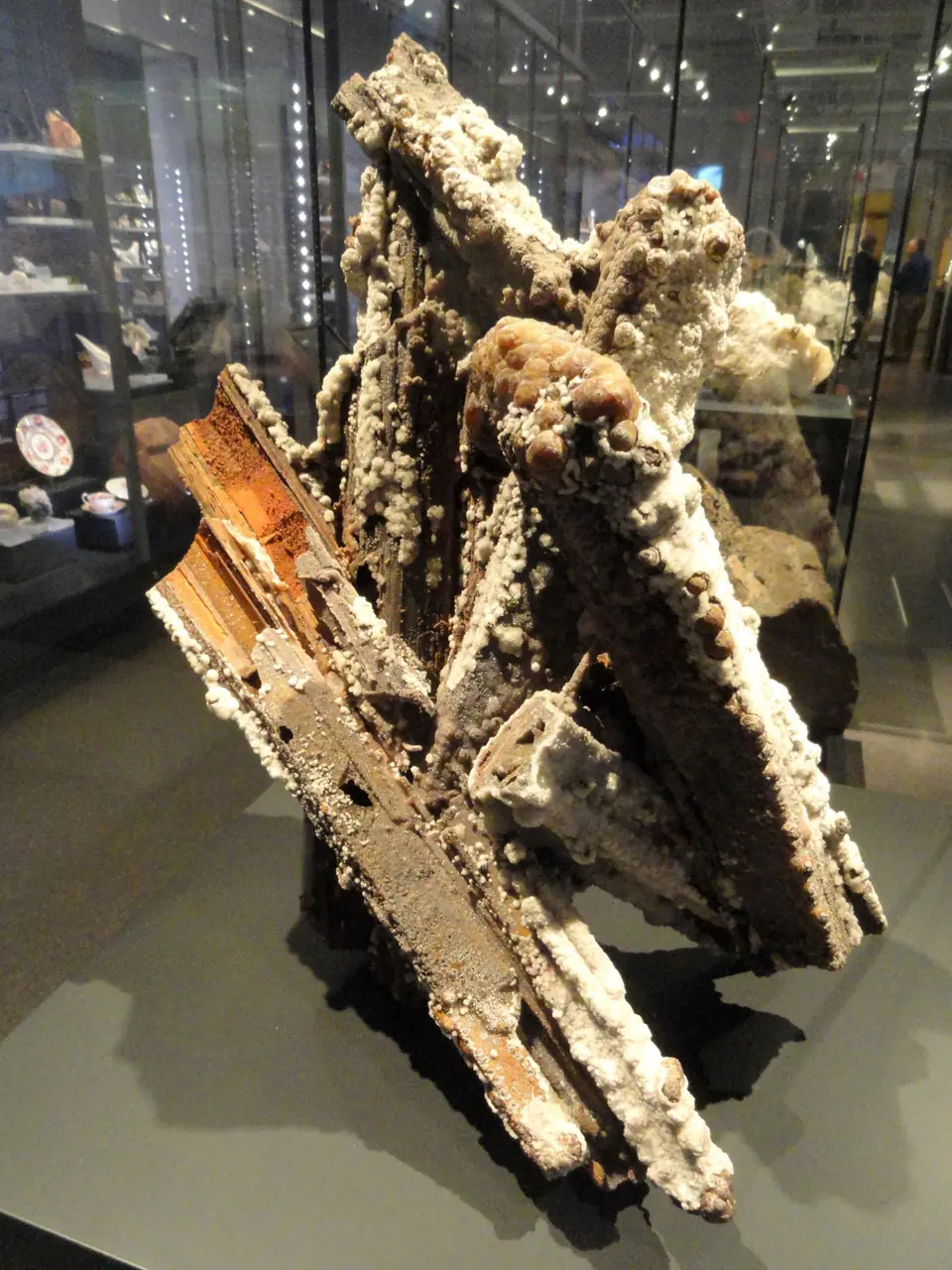
Goethite forms slender crystals, radiating fibers, rounded botryoidal crusts, stalactites, earthy ocher, and dense blackish masses. Fresh surfaces range from dull and earthy to silky or submetallic.
Weathering and mixtures produce broad color variation. The powder color is generally more reliable than the surface.
Identification tests
Begin with observation and use the least destructive test first. Results can change with weathering, mixtures, coatings, and grain size. Review the step-by-step field-test methods before altering an unfamiliar specimen.
Streak
Yellowish-brown to ocherThe most useful distinction from red-brown-streaking hematite.
Hardness
Commonly about 5 to 5.5, but aggregates varyEarthy material may seem much softer than compact crystals.
Magnetism
Generally not strongly magneticStrong attraction suggests magnetite or another magnetic phase.
Habit
Botryoidal, fibrous, stalactitic, earthy, or massiveSupports an iron-oxide weathering mineral but not purity.
Useful procedures: Mineral streak test · Mohs hardness test · Mineral magnetism test
Common lookalikes
Hematite
Leaves a red to reddish-brown streak rather than yellow-brown.
Limonite
A field term for mixed hydrated iron oxides commonly containing goethite rather than a single accepted mineral species.
Manganese oxides
Often black with a black or dark-brown streak and may soil fingers strongly.
How does it form?
Goethite forms through weathering and oxidation of iron-bearing minerals and through precipitation from iron-rich groundwater or hydrothermal fluids.
It occurs in soils, ironstone, bog iron, gossans, mine drainage deposits, concretions, and oxidized ore zones and may alter to or coexist with hematite.
Geologic setting and occurrence
Goethite is widespread wherever iron-bearing material weathers under oxidizing conditions and is common in soils, gossans, bog deposits, and mine-affected environments.
Iron staining does not demonstrate an ore deposit, and mine drainage precipitates may contain hazardous metals.
Uses and significance
Goethite has been mined as iron ore and used as a natural yellow-brown pigment. It is also important in soils, environmental geochemistry, and the mobility of metals and nutrients.
Field notes
- Use streak rather than surface color.
- Avoid mine drainage sludge and dusty gossan material that may contain hazardous metals.
- Do not call every rusty coating goethite without additional evidence.
This guide supports preliminary field identification, not a laboratory determination, appraisal, hazard assessment, or statement of ownership or collecting permission. Verify land status and local rules before handling or collecting material.
Authoritative sources
LithoMap wrote this guide in original language using the scientific concepts and physical-property standards supported by these sources.
- Iron Ore Statistics and Information U.S. Geological Survey
- Minerals and their physical properties U.S. National Park Service
- Mohs Hardness Scale U.S. National Park Service
- Natural Gemstones: Mineral Gemstones U.S. Geological Survey
Editorial review: September 17, 2026.