Physical-property field guide

Mineral identification guides

Move beyond color. Compare hardness, streak, luster, cleavage, fracture, density, magnetism, and geologic setting to identify common minerals with greater confidence.

Download LithoMapPut U.S. geology in your pocket.Choose Google Play or the App Store.

Use converging evidence

One clue starts the test—not the answer

Observe first, test gently, and verify with at least two independent properties. Mixed grains, coatings, alteration, and weathering can change the result.

Learn the field-test procedures
  1. LookHabit, luster, transparency, color, and fresh surfaces.
  2. TestHardness, streak, cleavage, magnetism, and safe reactions.
  3. ConfirmCompare lookalikes and the mineral’s geologic setting.

Foundation collection

Common field minerals

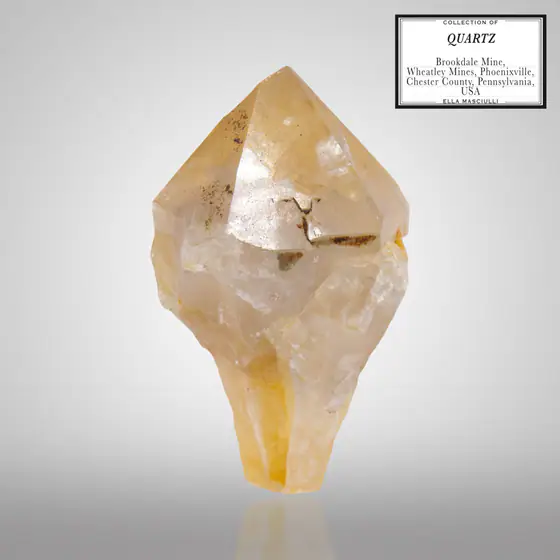
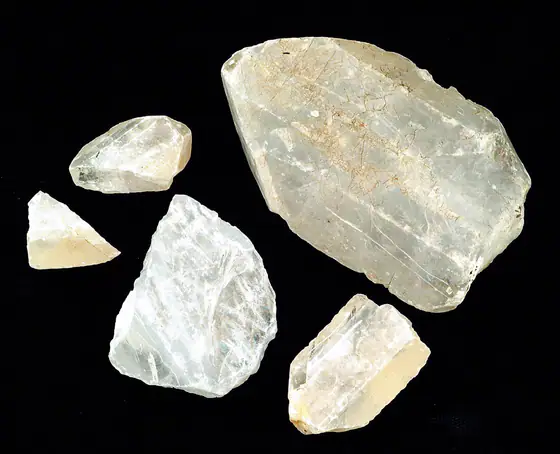
Cluster of transparent quartz crystals from PennsylvaniaSilicate mineral · SiO₂

Quartz

Quartz is a common, hard, glassy mineral with no cleavage and conchoidal fracture; its many colors make physical tests more reliable than appearance alone.

  • Mohs hardness 7; scratches glass
  • No cleavage
  • Glassy luster on fresh surfaces
Identify quartz
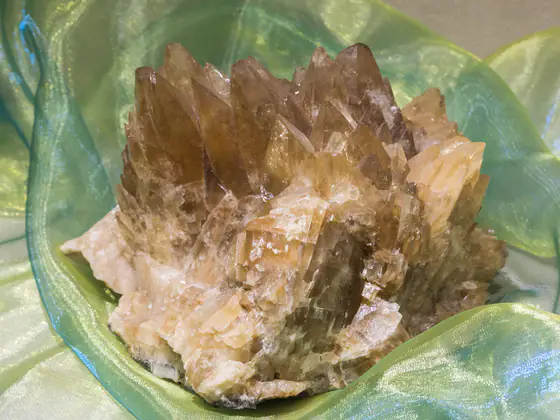
Calcite mineral specimen with pale translucent crystalsCarbonate mineral · CaCO₃

Calcite

Calcite is a relatively soft carbonate mineral recognized by Mohs hardness 3, three-direction rhombohedral cleavage, and vigorous reaction with dilute acid on a fresh surface.

  • Mohs hardness 3
  • Three perfect cleavage directions forming rhombs
  • Strong effervescence with dilute acid
Identify calcite
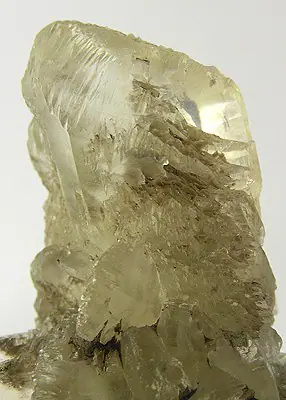
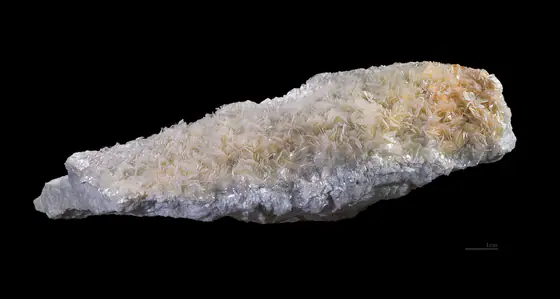
Gypsum mineral specimen with clear bladed crystalsSulfate mineral · CaSO₄·2H₂O

Gypsum

Gypsum is a very soft hydrous sulfate mineral that can be scratched by a fingernail and occurs as clear crystals, white fibrous masses, rosettes, or massive alabaster.

  • Mohs hardness 2
  • Scratched easily by a fingernail
  • White streak and nonmetallic luster
Identify gypsum
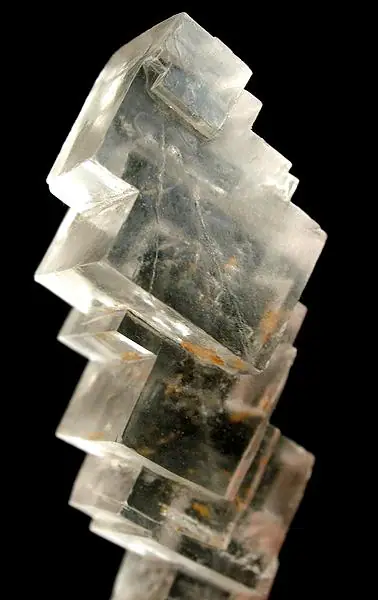
Halite mineral specimen with transparent cubic crystalsHalide mineral · NaCl

Halite

Halite is natural sodium chloride, typically recognized by cubic crystals or three perfect cleavage directions at right angles, softness, and ready solubility in water.

  • Cubic crystals or cubic cleavage fragments
  • Mohs hardness about 2.5
  • Colorless or white when pure; many impurity colors possible
Identify halite
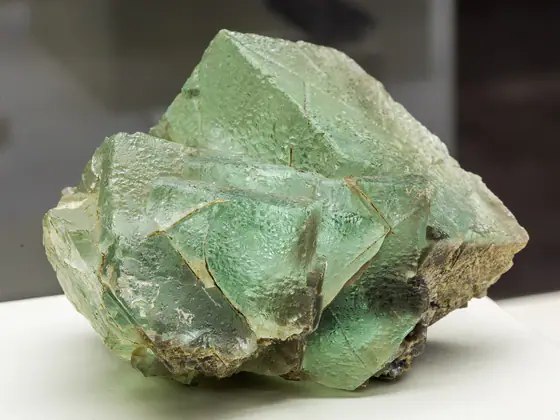
Pale green fluorite specimen with intergrown cubic and octahedral crystal facesHalide mineral · CaF₂

Fluorite

Fluorite is a colorful mineral defined by Mohs hardness 4, glassy luster, and four perfect cleavage directions that can produce octahedral fragments.

  • Mohs hardness 4
  • Four perfect cleavage directions
  • Commonly cubic crystals but octahedral cleavage fragments
Identify fluorite
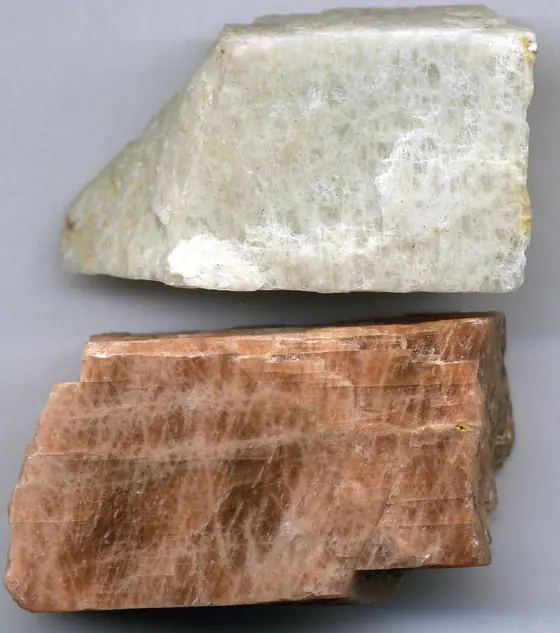
Pink potassium feldspar hand specimen showing blocky cleavageSilicate mineral group

Feldspar

Feldspar is a family of abundant rock-forming silicates generally identified by hardness near 6, two cleavage directions, and blocky crystals; precise species identification may require optical or chemical work.

  • Mohs hardness about 6
  • Two good cleavage directions meeting near right angles
  • Blocky habit
Identify feldspar
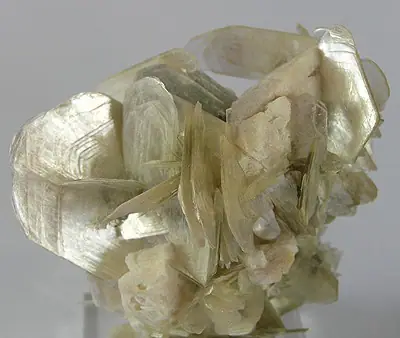
Muscovite mineral specimen with silvery sheet-like mica crystals on albiteLight-colored mica mineral

Muscovite

Muscovite is a pale mica that splits into thin, flexible, elastic sheets with a pearly to glassy luster and is commonly colorless, silvery, tan, or pale green.

  • One perfect basal cleavage
  • Splits into very thin elastic sheets
  • Light colored and transparent in thin flakes
Identify muscovite
Dark biotite mineral specimen showing stacked mica sheetsDark mica mineral group

Biotite

Biotite is the common field name for dark iron- and magnesium-rich mica, recognized by perfect sheet cleavage, flexible elastic flakes, and brown to black color.

  • Dark brown, black, or greenish black
  • One perfect cleavage
  • Thin flexible elastic sheets
Identify biotite
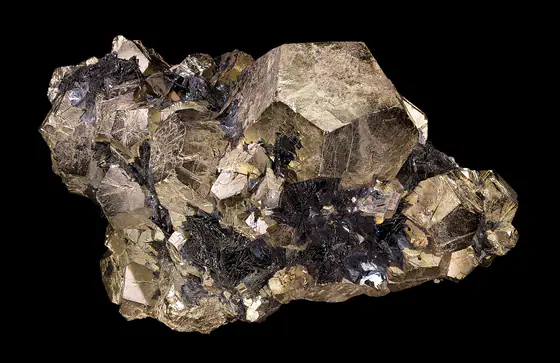
Brassy metallic pyrite crystal specimenSulfide mineral · FeS₂

Pyrite

Pyrite is a brassy iron sulfide commonly called fool’s gold; it is harder and more brittle than gold, produces a dark streak, and often forms striated cubes.

  • Pale brass-yellow metallic luster
  • Mohs hardness 6 to 6.5
  • Greenish-black to brownish-black streak
Identify pyrite
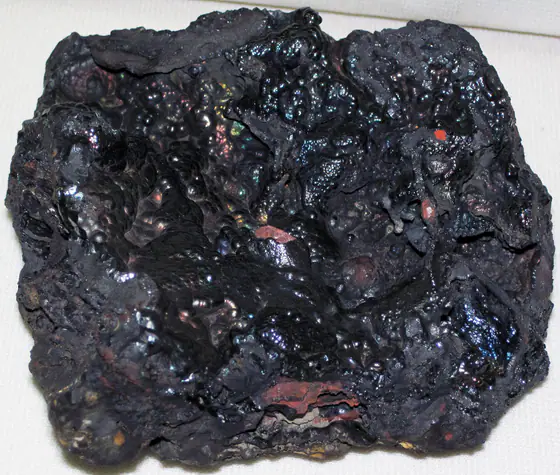
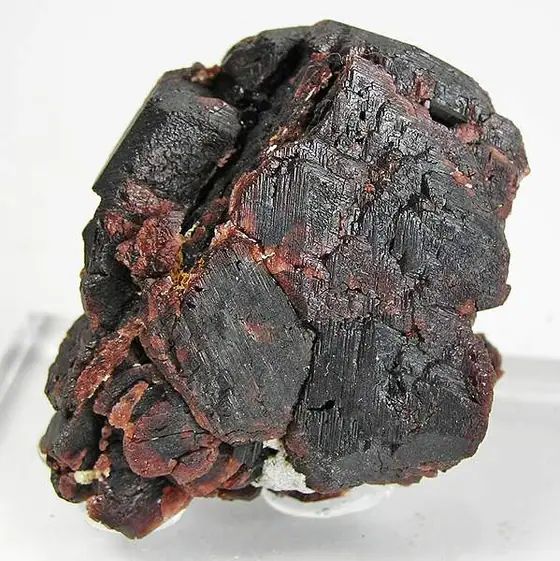
Dark metallic and reddish-brown hematite-turgite mineral specimenIron oxide mineral · Fe₂O₃

Hematite

Hematite is an iron oxide whose most reliable field clue is a red to reddish-brown streak, even when the specimen itself looks steel gray, black, earthy, or red.

  • Red to reddish-brown streak
  • Metallic, submetallic, or earthy luster
  • Commonly red, brown, gray, or black
Identify hematite
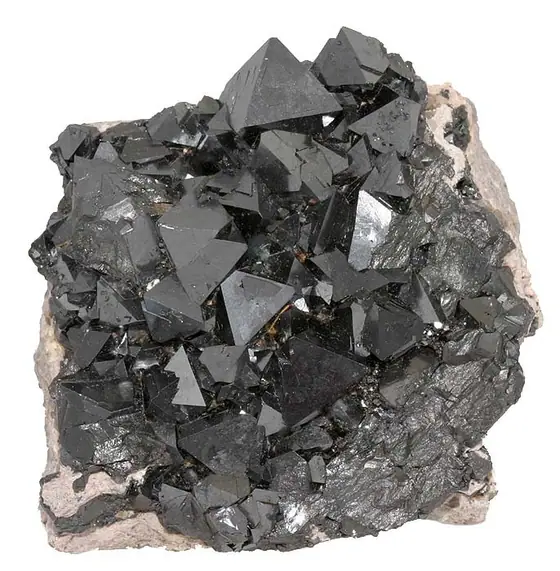
Black metallic magnetite crystal specimenIron oxide mineral · Fe₃O₄

Magnetite

Magnetite is a black iron oxide readily recognized by strong attraction to a magnet, black streak, relatively high density, and commonly octahedral or granular form.

  • Strongly magnetic
  • Black streak
  • Black metallic to submetallic luster
Identify magnetite
Yellow-green olivine crystal specimen in dark matrixSilicate mineral group

Olivine

Olivine is an olive-green to yellow-green rock-forming silicate, usually granular, hard, glassy, and lacking good cleavage; gem-quality material is called peridot.

  • Olive, yellow-green, or brownish green
  • Glassy luster
  • Mohs hardness about 6.5 to 7
Identify olivine
Deep red garnet crystals on a pale mineral matrixSilicate mineral group

Garnet

Garnet is a group of hard silicate minerals that commonly forms equant, many-faced crystals with no cleavage; red is common, but garnet also occurs in orange, green, brown, black, and other colors.

  • Mohs hardness about 6.5 to 7.5
  • No cleavage
  • Equant dodecahedral or trapezohedral crystals
Identify garnet
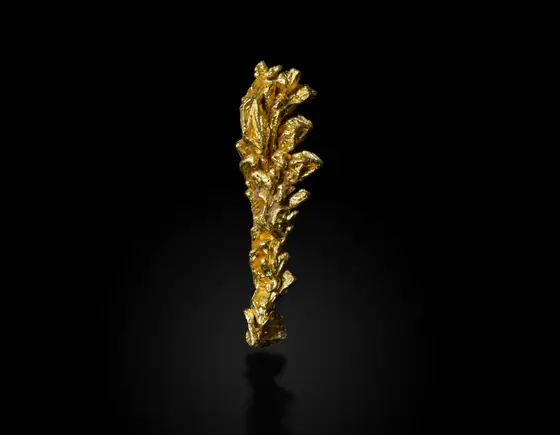
Native gold specimen from Pontes e Lacerda, Brazil, displayed against a black backgroundNative element · Au

Gold

Native gold is a dense, soft, malleable yellow metal that bends or flattens instead of shattering and leaves a yellow streak; those properties separate it from pyrite and most glittering minerals.

  • Rich metallic yellow color that remains yellow in shade
  • Mohs hardness about 2.5 to 3
  • Exceptionally dense for its size
Identify gold
Brass-yellow chalcopyrite specimen from Bingham Canyon, UtahCopper iron sulfide · CuFeS₂

Chalcopyrite

Chalcopyrite is a brass-yellow copper iron sulfide that is softer and usually deeper yellow than pyrite, commonly tarnishes purple or blue, and leaves a greenish-black streak.

  • Brass-yellow metallic luster
  • Mohs hardness about 3.5 to 4
  • Greenish-black streak
Identify chalcopyrite
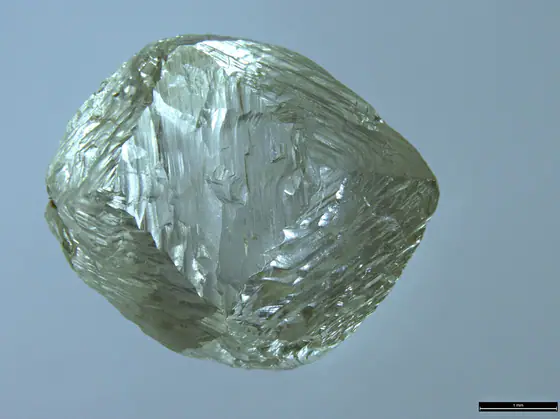
Rough 0.7-carat diamond crystal showing natural crystal facesNative element · C

Diamond

Diamond is crystalline carbon defined by Mohs hardness 10, adamantine luster, high thermal conductivity, and perfect octahedral cleavage, but rough crystals and common imitations usually require professional testing.

  • Mohs hardness 10
  • Brilliant adamantine luster on clean crystal faces
  • Commonly octahedral, cubic, or rounded crystal forms
Identify diamond
Pale talc crystals from the Trimouns Talc Mine near Luzenac, FranceSheet silicate · Mg₃Si₄O₁₀(OH)₂

Talc

Talc is the softest standard mineral at Mohs hardness 1, recognized by its very easy scratch, greasy or soapy feel, pale color, and platy to massive habit.

  • Mohs hardness 1
  • Scratched effortlessly by a fingernail
  • Greasy or soapy feel on many massive surfaces
Identify talc
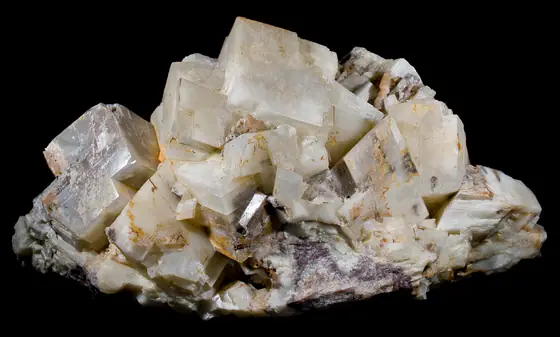
Pale dolomite crystals from Azcárate Quarry in Eugui, Navarre, SpainCarbonate mineral · CaMg(CO₃)₂

Dolomite

Dolomite is a calcium-magnesium carbonate with rhombohedral cleavage and hardness about 3.5 to 4; unlike calcite, an unpowdered fresh surface usually reacts weakly with cold dilute acid.

  • Mohs hardness about 3.5 to 4
  • Three rhombohedral cleavage directions
  • White, gray, tan, pink, or brown
Identify dolomite
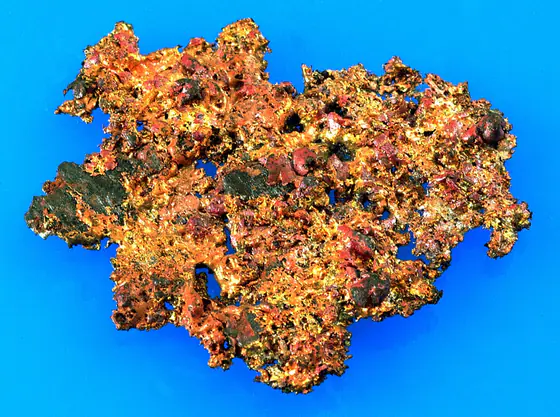
Ten-centimeter native copper specimen from near Bisbee, ArizonaNative element · Cu

Copper

Native copper is a soft, malleable metallic mineral with a fresh copper-red color, high density, and no cleavage; exposed surfaces commonly tarnish brown, black, or green.

  • Copper-red metallic color on a fresh surface
  • Mohs hardness about 2.5 to 3
  • Malleable, ductile, and sectile rather than brittle
Identify copper
Tarnished gray native silver in a quartz matrix from near Cobalt, OntarioNative element · Ag

Silver

Native silver is a dense, soft, malleable metal with a bright silver-white fresh surface that commonly tarnishes gray, brown, or black; it occurs in wires, plates, grains, and irregular masses.

  • Bright silver-white metal on a fresh surface
  • Mohs hardness about 2.5 to 3
  • Malleable and sectile, not brittle
Identify silver
Silvery-gray galena specimen showing prominent cubic crystal facesLead sulfide · PbS

Galena

Galena is a dense, metallic lead-gray sulfide recognized by perfect cubic cleavage, a gray to black streak, and unusual heft; it is also a lead-bearing mineral that requires careful handling.

  • Metallic lead-gray color and luster
  • Perfect cleavage in three directions at 90°
  • Very dense for a nonmetallic-looking hand specimen
Identify galena
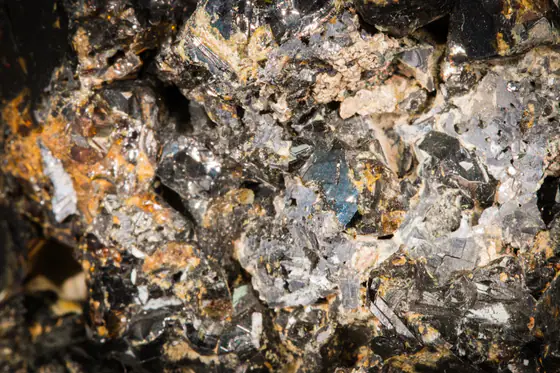
Dark resinous sphalerite specimen from Creede, ColoradoZinc sulfide · ZnS

Sphalerite

Sphalerite is the principal zinc sulfide, recognized by resinous to adamantine luster, pale yellow to dark brown or black color, perfect cleavage in six directions, and a light-colored streak that may smell sulfurous when freshly scratched.

  • Resinous, greasy, or adamantine luster
  • Mohs hardness about 3.5 to 4
  • Six directions of perfect cleavage
Identify sphalerite
Two-centimeter corundum specimen showing hexagonal symmetryAluminum oxide · Al₂O₃

Corundum

Corundum is a very hard aluminum oxide mineral with Mohs hardness 9, no cleavage, and commonly barrel-shaped or tabular crystals; transparent red material is ruby and other gem colors are sapphire.

  • Mohs hardness 9
  • No cleavage, though parting may be visible
  • Commonly barrel-shaped, prismatic, or tabular crystals
Identify corundum
Silvery-gray graphite flakes in marble with white calcite and brown phlogopiteNative element · C

Graphite

Graphite is a very soft, opaque form of carbon recognized by its dark gray color, greasy feel, perfect basal cleavage, low density, and black mark on paper or porcelain.

  • Mohs hardness about 1 to 2
  • Dark gray to black with metallic or earthy luster
  • Greasy feel and perfect cleavage in one direction
Identify graphite
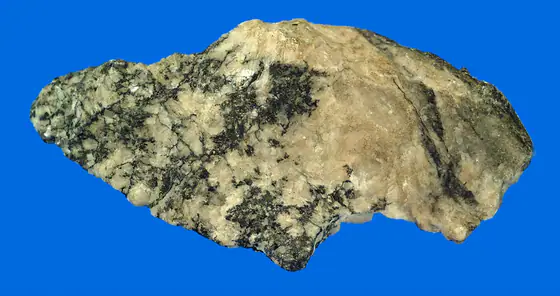
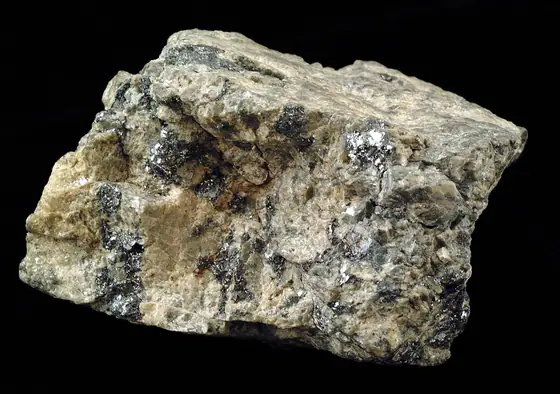
Bluish-silver molybdenite flakes along pale veins in a granite specimenMolybdenum disulfide · MoS₂

Molybdenite

Molybdenite is a soft, dense, bluish-silver sulfide with a greasy feel and perfect basal cleavage; its flexible flakes resemble graphite but are substantially heavier and usually lighter in color.

  • Bluish silver to lead-gray metallic color
  • Mohs hardness about 1 to 1.5
  • Greasy feel with flexible, nonelastic flakes
Identify molybdenite
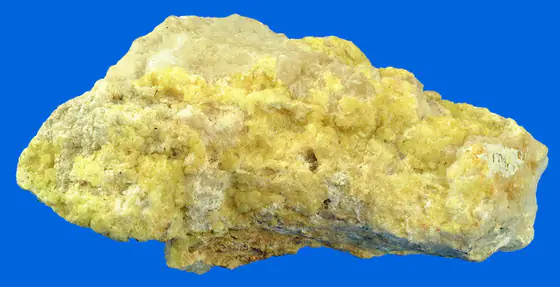
Bright yellow native sulfur coating a gray limestone specimenNative element · S

Sulfur

Native sulfur is a very soft, lightweight, bright yellow nonmetallic mineral with a resinous luster, pale streak, and brittle fracture; it is commonly associated with volcanic gases, evaporites, and sulfide oxidation.

  • Bright yellow color with resinous to greasy luster
  • Mohs hardness about 1.5 to 2.5
  • Lightweight and brittle
Identify sulfur
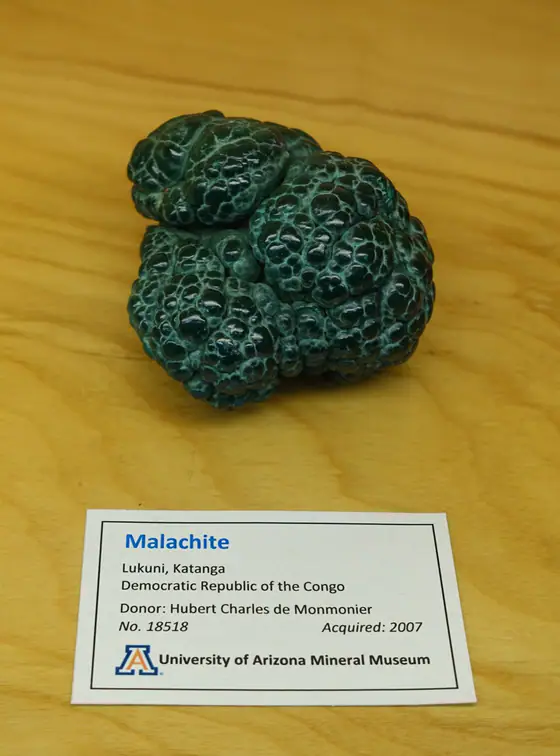
Green botryoidal malachite specimen from the Democratic Republic of the CongoCopper carbonate hydroxide · Cu₂CO₃(OH)₂

Malachite

Malachite is a vivid green copper carbonate hydroxide commonly recognized by its green streak, banded or botryoidal forms, and occurrence in oxidized copper deposits.

  • Bright to dark green color
  • Pale to vivid green streak
  • Mohs hardness about 3.5 to 4
Identify malachite
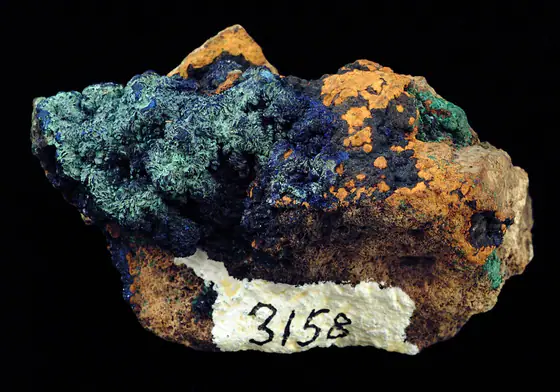
Dark blue azurite with green malachite and rusty orange limonite in an eight-centimeter specimenCopper carbonate hydroxide · Cu₃(CO₃)₂(OH)₂

Azurite

Azurite is a deep blue copper carbonate hydroxide identified by its blue streak, glassy to earthy luster, softness, and occurrence with other oxidized copper minerals such as malachite.

  • Deep azure-blue color
  • Blue to light-blue streak
  • Mohs hardness about 3.5 to 4
Identify azurite
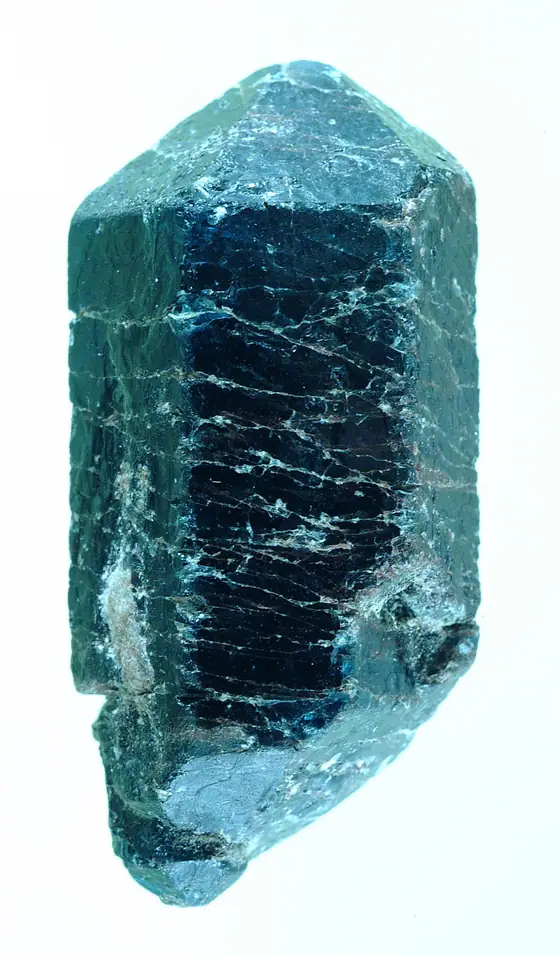
Large blue apatite crystal forming an imperfect hexagonal prism with pyramidal terminationsPhosphate mineral group · Ca₅(PO₄)₃(F,Cl,OH)

Apatite

Apatite is a calcium phosphate mineral group used as Mohs hardness 5, commonly recognized by hexagonal crystals, glassy luster, variable color, and hardness between fluorite and feldspar.

  • Mohs hardness 5
  • Hexagonal prismatic crystals are common
  • Vitreous to resinous luster
Identify apatite
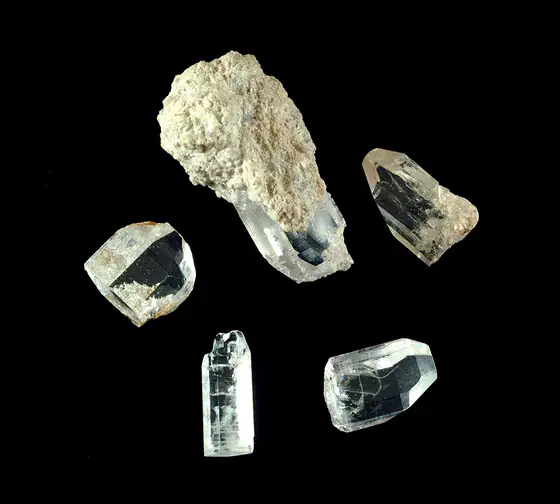
Clear topaz crystals partly attached to pale rhyolite from Topaz Mountain in UtahAluminum silicate fluoride hydroxide · Al₂SiO₄(F,OH)₂

Topaz

Topaz is a hard aluminum silicate mineral identified by Mohs hardness 8, perfect basal cleavage, glassy luster, and commonly prismatic orthorhombic crystals.

  • Mohs hardness 8
  • Perfect cleavage in one basal direction
  • Glassy luster and prismatic habit
Identify topaz
Uncut pale beryl hand specimen approximately seven centimeters acrossBeryllium aluminum silicate · Be₃Al₂Si₆O₁₈

Beryl

Beryl is a hard beryllium aluminum silicate commonly forming six-sided prisms; gem varieties include emerald and aquamarine, but most beryl is pale, cloudy, or opaque.

  • Mohs hardness 7.5 to 8
  • Hexagonal prismatic crystals
  • Poor or indistinct cleavage
Identify beryl
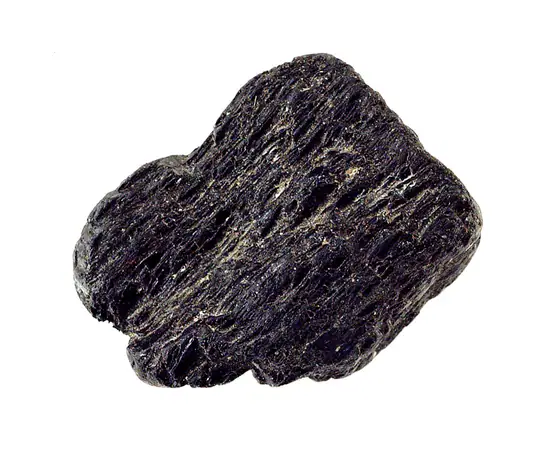
Dark prismatic tourmaline specimen about eight centimeters tall from Minas Gerais, BrazilComplex borosilicate mineral group

Tourmaline

Tourmaline is a diverse borosilicate mineral group commonly recognized by hard, strongly lengthwise-striated prismatic crystals with triangular to rounded-triangular cross sections.

  • Mohs hardness about 7 to 7.5
  • Strong lengthwise crystal striations
  • Triangular or rounded-triangular cross section
Identify tourmaline
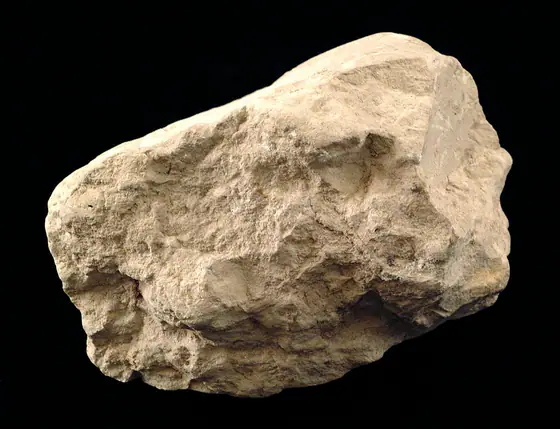
Pale earthy kaolinite clay-mineral specimen from southwestern North DakotaClay mineral · Al₂Si₂O₅(OH)₄

Kaolinite

Kaolinite is a soft white to pale clay mineral commonly occurring as earthy, powdery, or compact masses; reliable identification often requires laboratory methods because individual crystals are microscopic.

  • Very soft, usually Mohs 2 to 2.5
  • White streak and earthy luster
  • Commonly white, cream, pale gray, or stained
Identify kaolinite
Dark hornblende amphibole hand specimen about four centimeters across from near Kragerø, NorwayAmphibole-group mineral

Hornblende

Hornblende is a dark amphibole-group mineral commonly identified by elongate prismatic crystals, two good cleavage directions meeting near 56 and 124 degrees, and occurrence in igneous and metamorphic rocks.

  • Dark green, brown, or black
  • Elongate prismatic or splintery habit
  • Two cleavage directions near 60 and 120 degrees
Identify hornblende
Dark blocky augite clinopyroxene hand specimen about five centimeters acrossClinopyroxene-group mineral

Augite

Augite is a dark calcium-rich clinopyroxene commonly recognized by short blocky prisms, two cleavage directions close to 90 degrees, Mohs hardness near 5.5 to 6, and occurrence in mafic igneous rocks.

  • Dark green, brown, or black
  • Short blocky prismatic crystals
  • Two cleavages close to 90 degrees
Identify augite
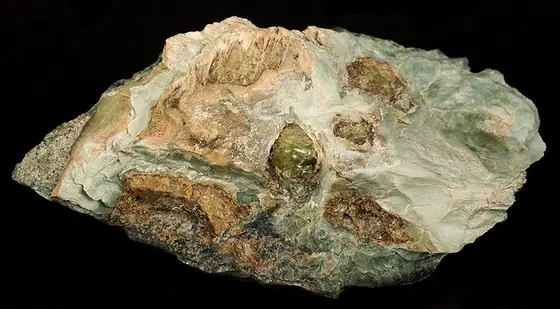
Massive pale green serpentine-group mineral specimen from Manitoba, CanadaHydrous magnesium silicate mineral group

Serpentine

Serpentine is a group of soft green to yellowish hydrous magnesium silicate minerals with greasy, waxy, silky, or fibrous appearances; some fibrous varieties are regulated asbestos minerals.

  • Green, yellow-green, white, or mottled color
  • Mohs hardness commonly about 2.5 to 4
  • Waxy, greasy, silky, or fibrous luster
Identify serpentine
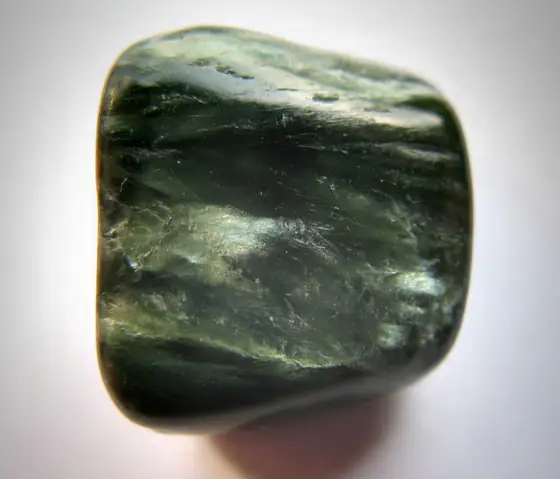
Polished green clinochlore specimen with pale feather-like seraphinite markingsHydrous sheet-silicate mineral group

Chlorite

Chlorite is a group of commonly green, soft sheet silicates recognized by perfect basal cleavage, flexible but generally nonelastic flakes, and widespread occurrence in low-grade metamorphic and altered rocks.

  • Green to gray-green color
  • Mohs hardness commonly about 2 to 2.5
  • Perfect one-direction sheet cleavage
Identify chlorite
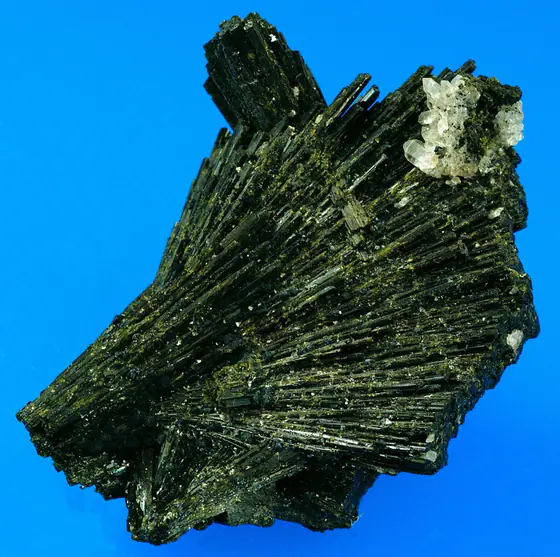
Radiating dark green-black epidote crystals with minor clear to white quartzCalcium aluminum iron sorosilicate · Ca₂(Al,Fe)₃(SiO₄)₃(OH)

Epidote

Epidote is commonly a pistachio-green to yellow-green mineral with prismatic habit, glassy luster, one perfect cleavage, and hardness near 6 to 7, widespread in metamorphic and altered rocks.

  • Pistachio, yellow-green, or dark green color
  • Mohs hardness about 6 to 7
  • Prismatic, granular, or radiating habit
Identify epidote
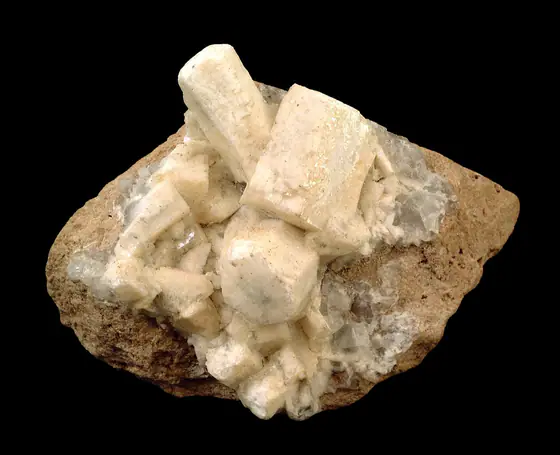
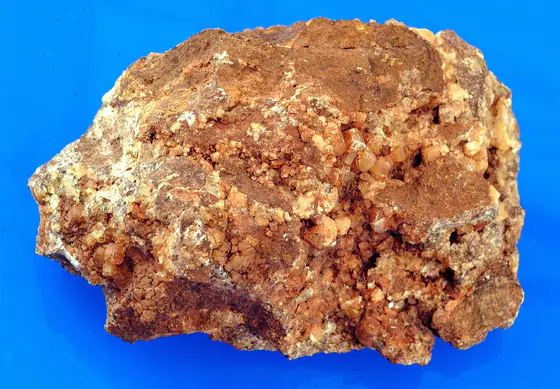
Light whitish barite crystals on iron-oxide-stained, fine-grained quartz from near Joplin, MissouriBarium sulfate · BaSO₄

Barite

Barite is a notably heavy, relatively soft barium sulfate mineral commonly recognized by high density, white streak, tabular or bladed crystals, and hardness near 3 to 3.5.

  • Unusually heavy for a nonmetallic mineral
  • Mohs hardness about 3 to 3.5
  • White streak
Identify barite
Cluster of pale, faintly blue celestite crystals from Lampasas County, TexasStrontium sulfate · SrSO₄

Celestite

Celestite is a strontium sulfate mineral commonly found as pale blue, white, or colorless tabular crystals with high density, white streak, good cleavage, and hardness near 3 to 3.5.

  • Often pale sky blue but may be white or colorless
  • Heavy for a nonmetallic mineral
  • Mohs hardness about 3 to 3.5
Identify celestite
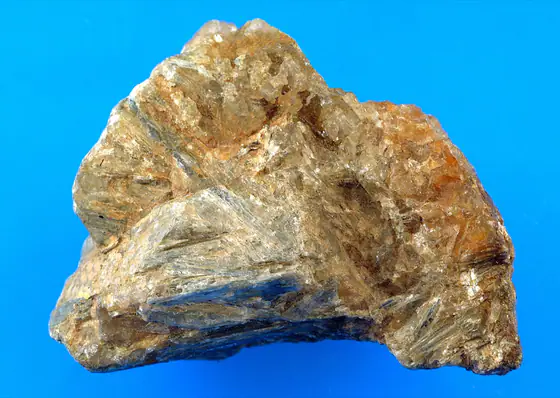
Intergrown bladed kyanite crystals about five centimeters across from Boehl’s Butte, IdahoAluminum silicate · Al₂SiO₅

Kyanite

Kyanite is a bladed aluminum silicate mineral with strongly directional hardness, commonly blue to gray, that forms in aluminum-rich metamorphic rocks at elevated pressure.

  • Long bladed or tabular crystals
  • Hardness differs strongly by direction
  • Commonly blue, gray, white, or green
Identify kyanite
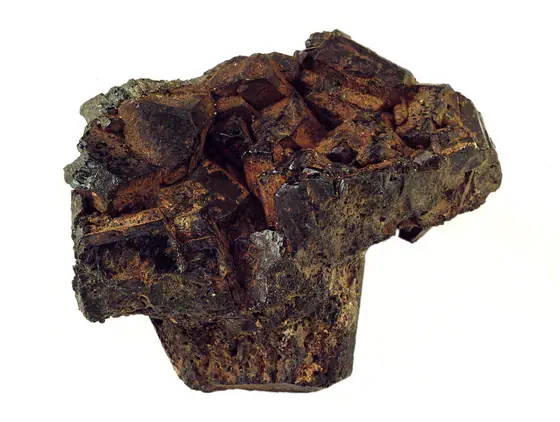
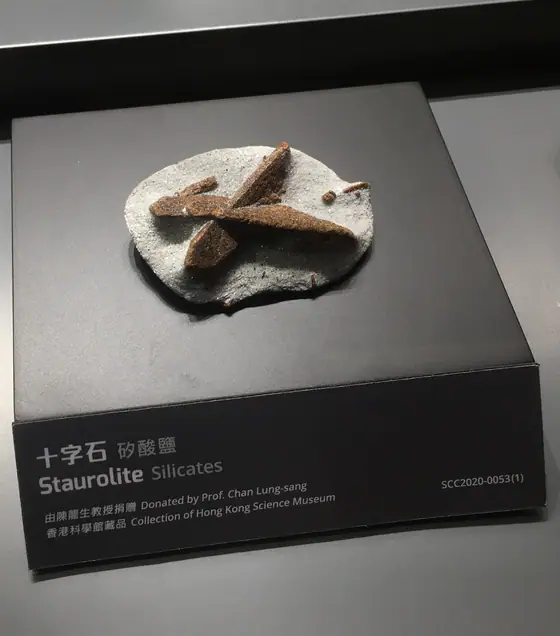
Reddish-brown cross-shaped twinned staurolite specimen displayed on a pale baseIron magnesium aluminum silicate hydroxide

Staurolite

Staurolite is a brown to reddish-brown metamorphic mineral known for prismatic crystals and distinctive cross-shaped twins, with hardness near 7 to 7.5 and a pale streak.

  • Brown, reddish-brown, or nearly black
  • Prismatic crystals with common cross-shaped twins
  • Mohs hardness about 7 to 7.5
Identify staurolite
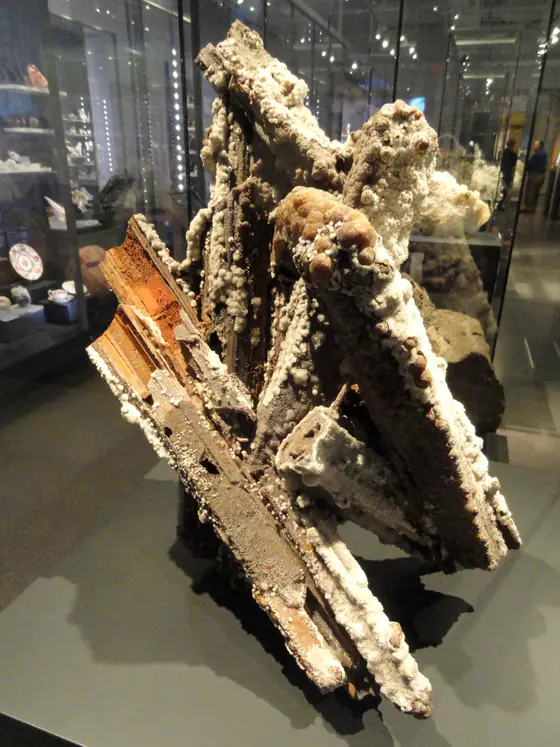
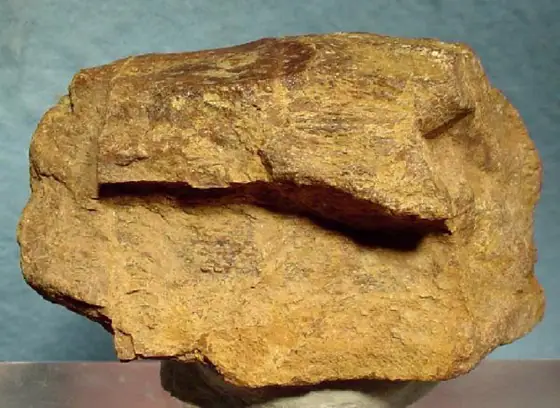
Dark brown goethite specimen from Laurium, Greece, displayed at the Royal Ontario MuseumIron oxide hydroxide · FeO(OH)

Goethite

Goethite is a brown to yellow-brown iron oxide hydroxide identified by its yellowish-brown streak, earthy to submetallic luster, and common botryoidal, fibrous, stalactitic, or earthy habits.

  • Yellow-brown to ocher streak
  • Brown, blackish, yellow, or reddish surfaces
  • Earthy, fibrous, botryoidal, or stalactitic habits
Identify goethite
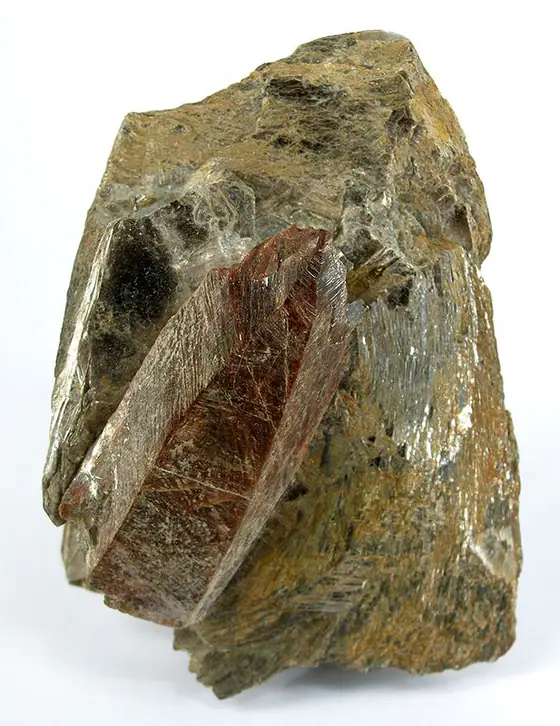
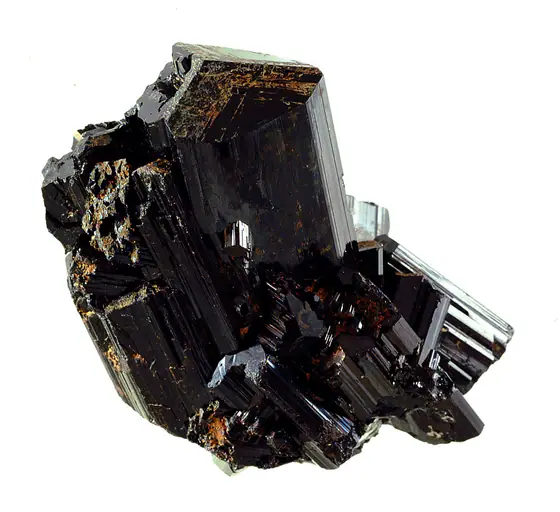
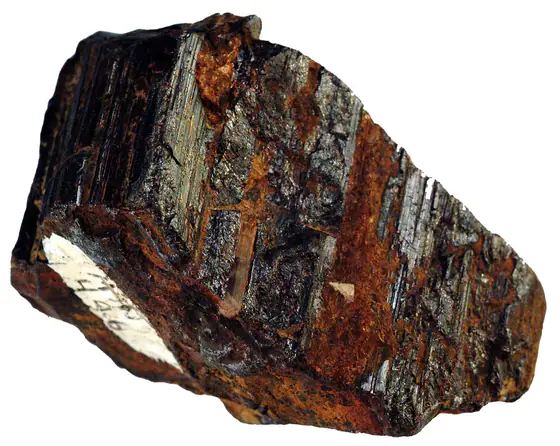
Dark reddish-brown to black striated rutile crystals in an iron-stained matrix from York, PennsylvaniaTitanium dioxide · TiO₂

Rutile

Rutile is a dense titanium dioxide mineral commonly identified by reddish-brown to black prismatic crystals, strong lengthwise striations, high luster, hardness near 6 to 6.5, and a pale brown streak.

  • Reddish-brown, red-black, golden, or nearly black
  • Slender to stout striated prisms or needle-like crystals
  • Mohs hardness about 6 to 6.5
Identify rutile
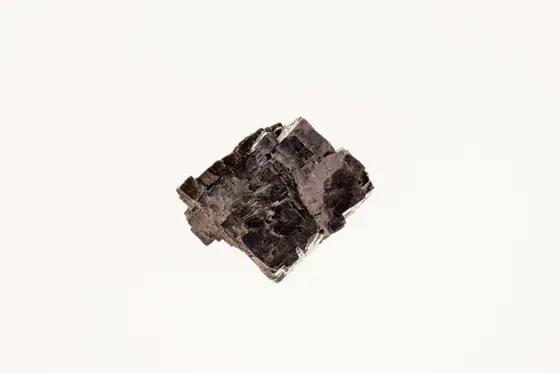
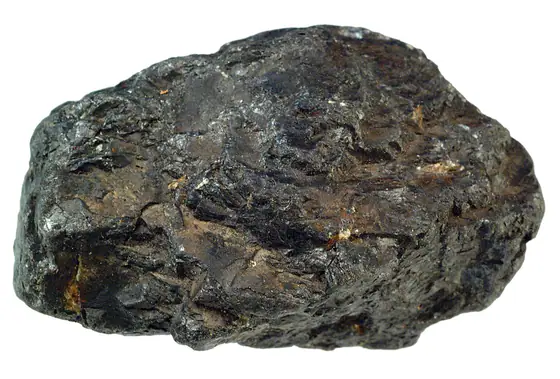
Black submetallic massive ilmenite hand specimen with uneven weathered surfacesIron titanium oxide · FeTiO₃

Ilmenite

Ilmenite is a dense black to brownish-black iron titanium oxide recognized by its submetallic luster, black to brownish-red streak, weak or variable magnetism, and common occurrence in mafic rocks and heavy-mineral sands.

  • Black to brownish-black and submetallic
  • Dense, granular, tabular, or massive
  • Black to brownish-red streak
Identify ilmenite
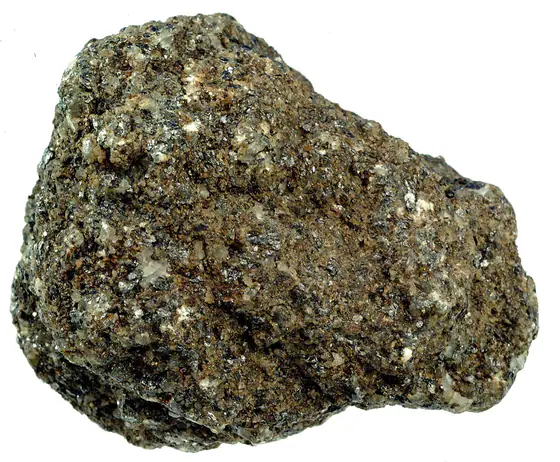
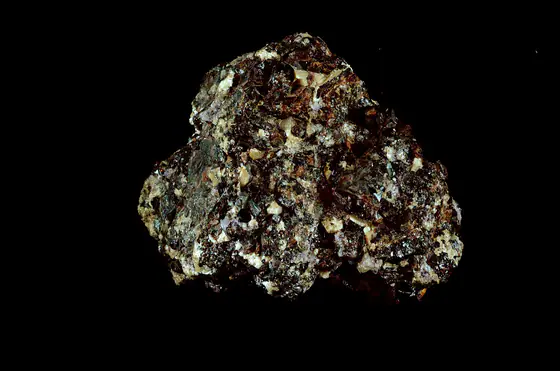
Brown zircon crystals embedded in a pale translucent mineral matrixZirconium silicate · ZrSiO₄

Zircon

Zircon is a dense, hard zirconium silicate identified by tetragonal prismatic crystals, high luster, hardness near 7.5, and colors ranging from colorless to brown, red, yellow, green, or blue.

  • Tetragonal prisms with pyramidal terminations
  • Mohs hardness about 7.5
  • High density for a transparent or translucent silicate
Identify zircon
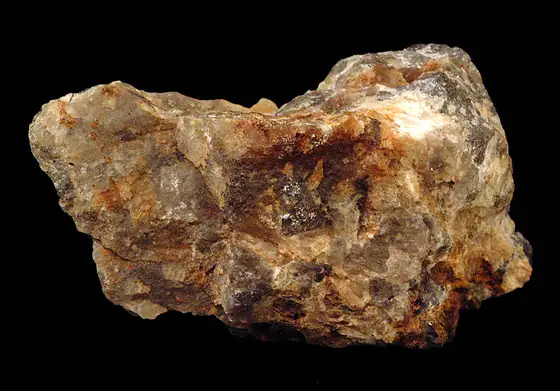
Dense cluster of dark brown lustrous cassiterite crystals in a pale mineral matrixTin oxide · SnO₂

Cassiterite

Cassiterite is a very dense tin oxide identified by hardness near 6 to 7, brown to black color, adamantine to submetallic luster, pale streak, and common short prismatic or bipyramidal crystals.

  • Unusually heavy, commonly around specific gravity 7
  • Brown, red-brown, black, yellow, or rarely colorless
  • Mohs hardness about 6 to 7
Identify cassiterite
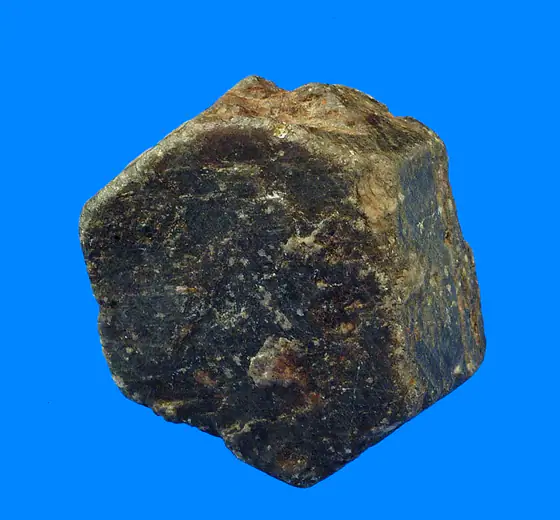
Large earthy honey-brown monazite crystal from a pegmatite in MadagascarRare-earth phosphate mineral group · (Ce,La,Nd,Th)PO₄

Monazite

Monazite is a dense yellow-brown to reddish-brown rare-earth phosphate mineral, commonly occurring as resinous accessory crystals or heavy sand grains and often containing naturally occurring thorium and uranium.

  • Yellow-brown, red-brown, honey, greenish, or dark grains
  • Resinous to adamantine luster
  • Mohs hardness about 5 to 5.5
Identify monazite

Common lookalikes

Side-by-side mineral comparisons

Compare two possible minerals using the properties that actually separate them—hardness, streak, cleavage, magnetism, acid response, and crystal form.

Quartz vs. calciteTest an inconspicuous fresh surface. Quartz scratches ordinary glass and breaks with curved or irregular fracture; calcite is scratched by a steel point, cleaves into slanted rhombs, and fizzes with dilute acid.Compare them Quartz vs. feldsparStudy how the grain ends. Quartz usually has curved or irregular broken surfaces with no repeated flat direction; feldspar commonly shows two recurring cleavage planes that meet near 90 degrees.Compare them Muscovite vs. biotiteFirst confirm mica by its elastic, peelable sheets. Then compare thin flakes rather than a thick book: pale, nearly colorless sheets favor muscovite; brown, green-brown, or black sheets favor biotite.Compare them Hematite vs. magnetiteUse both a magnet and an unglazed streak plate. Strong attraction with a black streak favors magnetite; a red-brown streak with weak or absent attraction favors hematite.Compare them Gypsum vs. calciteBegin with hardness. A fingernail scratch favors gypsum; material that resists a fingernail but scratches under a copper coin favors calcite. A clean calcite surface then fizzes readily with dilute acid.Compare them Fluorite vs. quartzDo not use color. Quartz readily scratches glass and breaks without cleavage; fluorite is scratched by steel and commonly breaks into triangular-faced octahedral fragments along four cleavage directions.Compare them Pyrite vs. goldTest behavior, not sparkle. Pyrite scratches glass and crushes or breaks; a loose gold grain is scratched by copper, flattens rather than shattering, and feels unusually heavy for its size.Compare them Pyrite vs. chalcopyriteUse hardness and form together. Pyrite commonly scratches glass and preserves sharp striated cubes; chalcopyrite is readily scratched by steel and typically occurs as softer irregular grains or masses.Compare them Quartz vs. diamondDo not use a destructive scratch test on an unknown valuable crystal. Crystal form and geologic context can rule out many quartz specimens, but suspected diamond should be screened with appropriate gemological instruments.Compare them Gypsum vs. talcBoth yield to a fingernail, so compare degree and feel. Talc scratches with almost no effort and often feels greasy; gypsum offers slightly more resistance and shows characteristic bladed, fibrous, or clear cleavage forms.Compare them Calcite vs. dolomiteUse a controlled acid test on expendable material. A clean calcite surface effervesces immediately; dolomite usually needs powdering to produce an obvious cold-acid reaction.Compare them Gold vs. copperFind a natural fresh surface without damaging the specimen. Gold remains yellow and feels exceptionally heavy; copper is distinctly redder, less dense, and commonly associated with green or blue alteration minerals.Compare them Silver vs. galenaUse breakage behavior and cleavage, not shine. Cubic steps and brittle fragments favor galena; wirelike or irregular metal that bends or cuts without crumbling favors native silver.Compare them Galena vs. sphaleriteCompare cleavage geometry and streak. Cubic right-angle fragments with a gray-black streak favor galena; many flashing cleavage faces with a pale yellow to brown streak favor sphalerite.Compare them Quartz vs. corundumUse crystal form and provenance first. Corundum scratches quartz, but do not perform destructive scratch tests on attractive or potentially valuable crystals; uncertain gem material belongs with a qualified gemologist.Compare them Pyrite vs. galenaA cube alone is not enough. Pyrite scratches glass and may show striated crystal faces; galena is scratched easily, feels unusually heavy, and breaks along smooth right-angle cleavage planes.Compare them Graphite vs. molybdeniteCompare heft before color. A compact molybdenite piece feels much heavier than equal-volume graphite, while graphite usually makes a blacker mark and is common in carbon-rich metamorphic rock.Compare them Malachite vs. azuriteUse streak on expendable material and expect mixtures. Green powder favors malachite, blue powder favors azurite, and blue-green zoning may record intergrowth or azurite altering to malachite.Compare them Malachite vs. native copperLook beneath coatings without damaging the specimen. Green, brittle, green-streaking material favors malachite; copper-red metal that deforms rather than crumbles favors native copper.Compare them Sulfur vs. pyriteCheck luster and hardness, not odor. Soft resinous yellow material favors sulfur; flashing metallic grains that scratch glass and leave a dark streak favor pyrite.Compare them Graphite vs. galenaHeft and cleavage separate them. Lightweight material that marks readily and splits into flakes favors graphite; a very heavy blocky specimen with right-angle cleavage favors galena.Compare them Apatite vs. fluoriteTest hardness and breakage. Apatite at Mohs 5 can scratch fluorite; fluorite at Mohs 4 develops repeated triangular octahedral cleavage faces.Compare them Topaz vs. quartzCleavage and crystal form are safer than scratch tests on good specimens. A flat repeated basal cleavage favors topaz; curved fracture and six-sided pyramidal crystals favor quartz.Compare them Beryl vs. quartzStudy the prism and termination. Flat-ended, longitudinally striated hexagonal prisms favor beryl; pyramidal points and conchoidal fracture favor quartz.Compare them Tourmaline vs. garnetUse crystal shape rather than color. Long grooved prisms favor tourmaline; compact many-faced equant crystals favor garnet.Compare them Kaolinite vs. talcUse feel and relative hardness cautiously. A greasy mass scratched effortlessly by a fingernail favors talc; dull earthy clay near Mohs 2 to 2.5 may be kaolinite but commonly needs X-ray diffraction for confirmation.Compare them Hornblende vs. tourmalineCheck breakage and cross section. Repeated cleavage near 60 and 120 degrees favors hornblende; deep lengthwise grooves and a rounded-triangular section favor tourmaline.Compare them Augite vs. hornblendeMeasure the intersection of repeated cleavage surfaces. Near-right angles favor augite; distinctly oblique amphibole angles favor hornblende.Compare them Serpentine vs. malachiteUse streak and texture without generating dust. Green powder and concentric or botryoidal structure favor malachite; white streak and waxy, scaly, or fibrous material favor serpentine.Compare them Chlorite vs. biotiteTest an already loose flake. Green, very soft material that bends without springing back favors chlorite; brown-black elastic sheets favor biotite.Compare them Epidote vs. olivineLook for cleavage and setting. One repeated flat cleavage in pistachio-green prismatic material favors epidote; rounded or sugary olive-green grains with poor cleavage favor olivine.Compare them Barite vs. calciteCompare heft, then acid response on expendable material. Exceptional density without fizz favors barite; ordinary heft with immediate effervescence favors calcite.Compare them Celestite vs. bariteDo not use blue color alone. Measure density carefully: barite is commonly near 4.5, celestite near 4.0, with natural solid solution and attached matrix capable of blurring the result.Compare them Kyanite vs. corundumUse habit and existing breakage. Flat cleavable blades favor kyanite; compact crystals with extreme uniform hardness and no cleavage favor corundum.Compare them Staurolite vs. garnetUse crystal geometry. Stout prisms or natural cross twins favor staurolite; compact many-faced or rounded crystals favor garnet.Compare them Goethite vs. hematiteIgnore surface color and use streak. Ocher-yellow to yellow-brown powder favors goethite; distinctly red-brown powder favors hematite.Compare them Rutile vs. hematiteStart with streak on expendable material. A pale brown or yellow-brown streak with hard striated prisms favors rutile; a distinct red-brown streak favors hematite.Compare them Ilmenite vs. magnetiteCompare magnetic strength with a known magnet, then streak. Strong attraction and black powder favor magnetite; weak response with black to brownish-red powder may favor ilmenite.Compare them Zircon vs. diamondDo not scratch a possible gem. Examine crystal form and facet doubling, then use refractive index, density, thermal response, and professional testing rather than destructive checks.Compare them Cassiterite vs. sphaleriteUse existing breakage and hardness on expendable material. Very heavy, hard material with poor cleavage favors cassiterite; softer resinous material with repeated cleavage favors sphalerite.Compare them Monazite vs. zirconDo not use color or a radiation reading alone. Intact tetragonal prisms and hardness near 7.5 favor zircon; softer resinous grains with monazite chemistry require optical or analytical confirmation.Compare them