

The most useful distinction
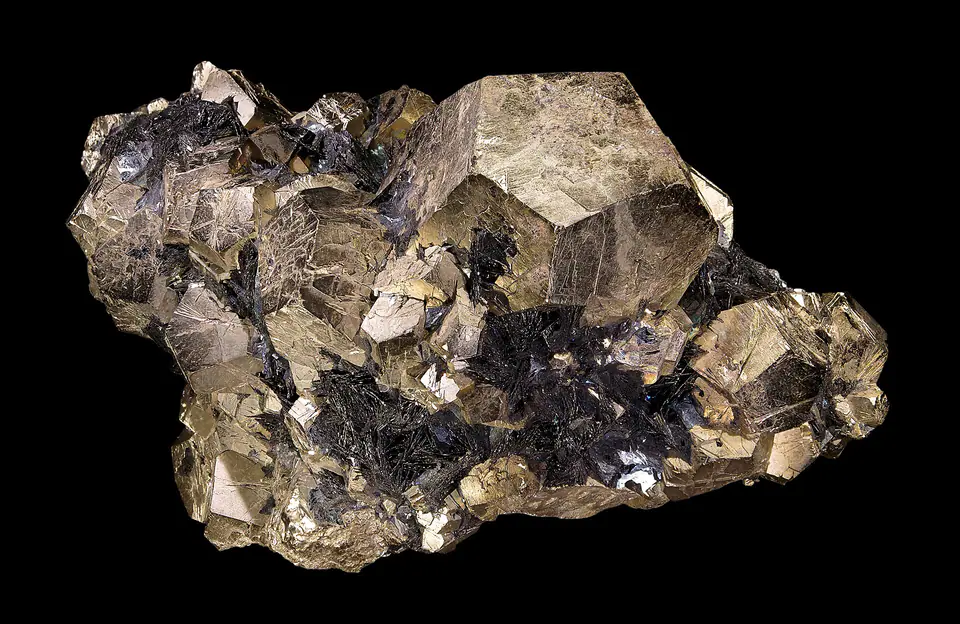
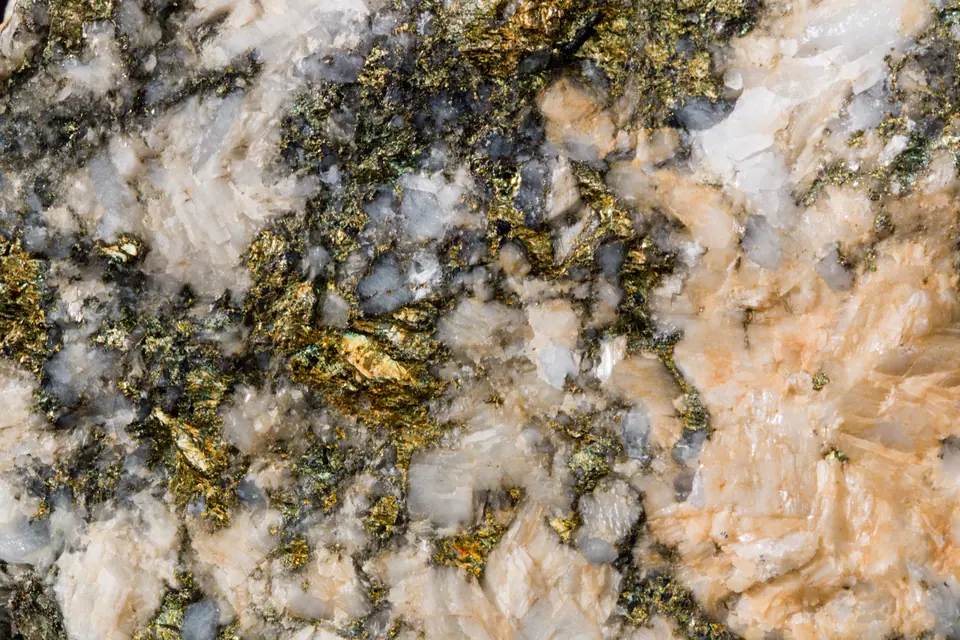
Use hardness and form together. Pyrite commonly scratches glass and preserves sharp striated cubes; chalcopyrite is readily scratched by steel and typically occurs as softer irregular grains or masses.
Pyrite and Chalcopyrite comparison table
| Property | Pyrite | Chalcopyrite | How to use it |
|---|---|---|---|
| Hardness | Mohs 6 to 6.5; scratches glass | Mohs 3.5 to 4; scratched by steel and usually does not scratch glass | Hardness is the most dependable field separation. |
| Color | Pale brass-yellow, sometimes nearly silvery in strong light | Warmer, richer brass-yellow | Color supports the identification but changes with lighting and tarnish. |
| Crystal habit | Cubes, pyritohedra, and angular grains; cube faces may be striated | Commonly massive or irregular; tetrahedral crystals are possible but less familiar | Sharp striated cubes strongly favor pyrite. |
| Tarnish and streak | May tarnish, but vivid peacock colors are less typical; dark streak | Often purple, blue, or bronze tarnish; greenish-black streak | Tarnish is helpful only with hardness because treated specimens are common. |
A practical identification sequence
- 1
Expose or locate a clean untarnished surface.
- 2
Test whether a small edge scratches glass.
- 3
Inspect crystal faces for cubic form and alternating striations.
- 4
Use streak, tarnish, and associated minerals as supporting evidence.
Where the distinction gets difficult
- Both minerals may be intergrown in one specimen.
- Commercial “peacock ore” may be chemically treated chalcopyrite or another copper sulfide.
- Avoid grinding or heating sulfides; their dust and fumes are hazardous.
Use several independent observations. This comparison supports preliminary field identification, not laboratory confirmation, appraisal, proof of origin, or collecting permission.
Pyrite vs. chalcopyrite FAQ
Is chalcopyrite a type of pyrite?
No. Pyrite is iron disulfide, while chalcopyrite is copper iron sulfide with different crystal structure, hardness, and economic significance.
Which one is copper ore?
Chalcopyrite is a major copper ore mineral. Pyrite may occur in the same deposit but is dominated by iron and sulfur.
Can pyrite turn rainbow colors?
Pyrite can tarnish, but vivid marketed peacock colors are especially associated with altered or treated copper sulfides. Color alone is insufficient.
Authoritative sources
LithoMap wrote this comparison in original language from the physical properties and geological concepts supported by these public scientific references.
- Minerals and their physical properties U.S. National Park Service
- Mohs Hardness Scale U.S. National Park Service
- Natural Gemstones: Mineral Gemstones U.S. Geological Survey
- Chalcopyrite—Bearer of a Precious, Non-Precious Metal U.S. Geological Survey
Editorial review: September 17, 2026.