


The most useful distinction
Do not use a destructive scratch test on an unknown valuable crystal. Crystal form and geologic context can rule out many quartz specimens, but suspected diamond should be screened with appropriate gemological instruments.
Quartz and Diamond comparison table
| Property | Quartz | Diamond | How to use it |
|---|---|---|---|
| Hardness | Mohs 7 | Mohs 10 | Both scratch glass; destructive mutual-scratch testing is unsafe and unnecessary. |
| Breakage | No cleavage; conchoidal to irregular fracture | Perfect cleavage in four octahedral directions despite extreme hardness | Natural breaks and crystal faces can help, but intentional impact risks severe damage. |
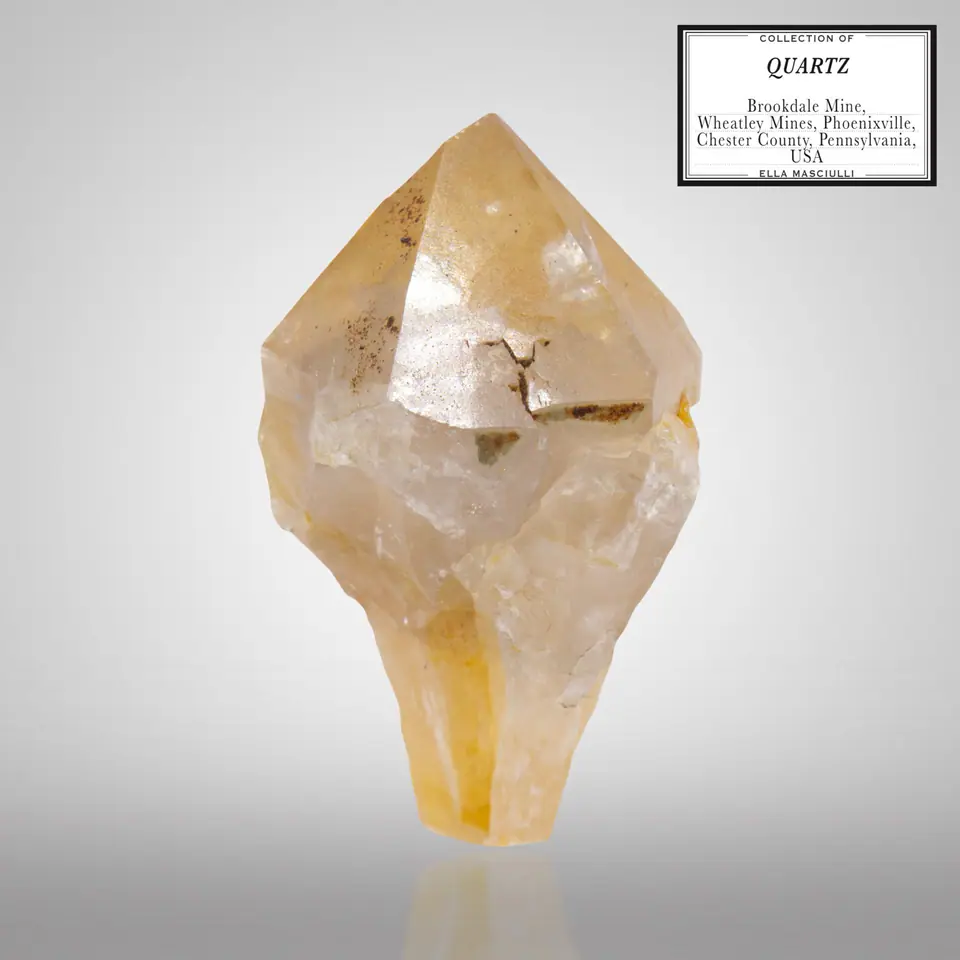
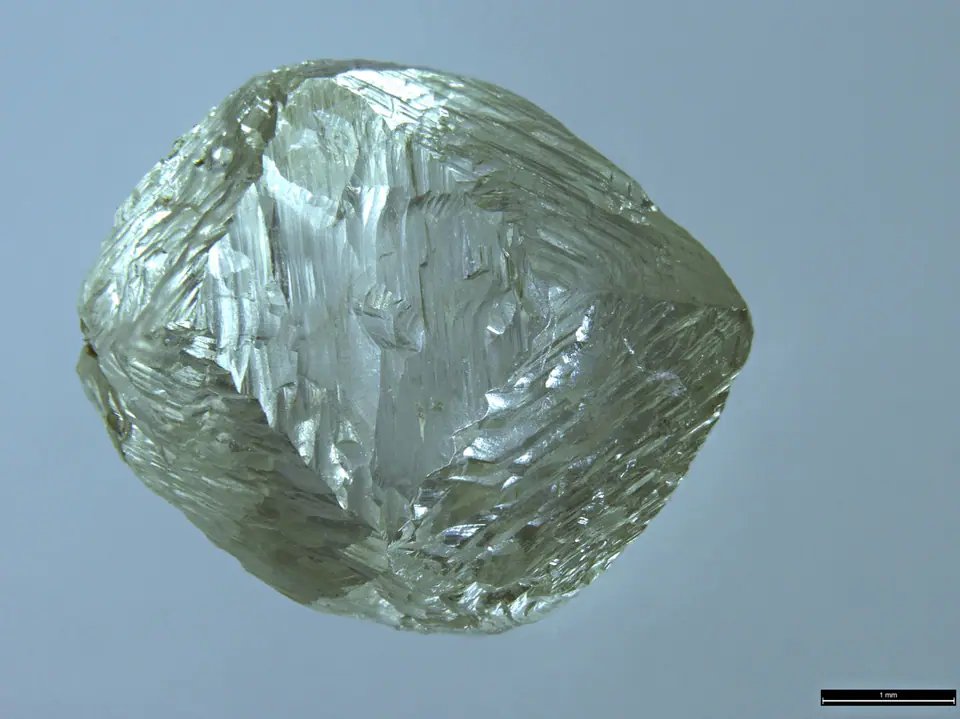
| Habit | Six-sided prisms with pyramidal terminations are common | Octahedra, cubes, twins, rounded dodecahedral forms, and irregular crystals | A classic hexagonal prism strongly favors quartz. |
| Professional tests | Ordinary mineral tests usually sufficient | Thermal, electrical, optical, and spectroscopic screening often required | Instruments distinguish diamond from moissanite, synthetics, treatments, and other imitations. |
A practical identification sequence
- 1
Document the unaltered crystal and its geological setting.
- 2
Inspect natural faces and existing breaks with a hand lens.
- 3
Do not perform impact or scratch tests on a potentially valuable crystal.
- 4
Seek qualified gemological screening if diamond remains plausible.
Where the distinction gets difficult
- Quartz can be cut or broken into deceptive shapes.
- A handheld thermal tester can give misleading results if used incorrectly and may not resolve laboratory-grown material.
- Field appearance cannot establish natural origin, treatment, gem quality, or value.
Use several independent observations. This comparison supports preliminary field identification, not laboratory confirmation, appraisal, proof of origin, or collecting permission.
Quartz vs. diamond FAQ
Can quartz scratch glass?
Yes. Quartz is Mohs 7 and readily scratches common glass, so that popular test does not indicate diamond.
Does diamond break?
Yes. Diamond resists scratching but has perfect cleavage and can chip or split under impact. Hardness is not the same as toughness.
Can a diamond look dull when found?
Yes. Rough surfaces may be frosted, etched, coated, or rounded, but many ordinary minerals share those appearances. Professional screening is still needed.
Authoritative sources
LithoMap wrote this comparison in original language from the physical properties and geological concepts supported by these public scientific references.
- Minerals and their physical properties U.S. National Park Service
- Mohs Hardness Scale U.S. National Park Service
- Natural Gemstones: Mineral Gemstones U.S. Geological Survey
- Industrial Diamond Statistics and Information U.S. Geological Survey
Editorial review: September 17, 2026.