

.jpg)
The most useful distinction
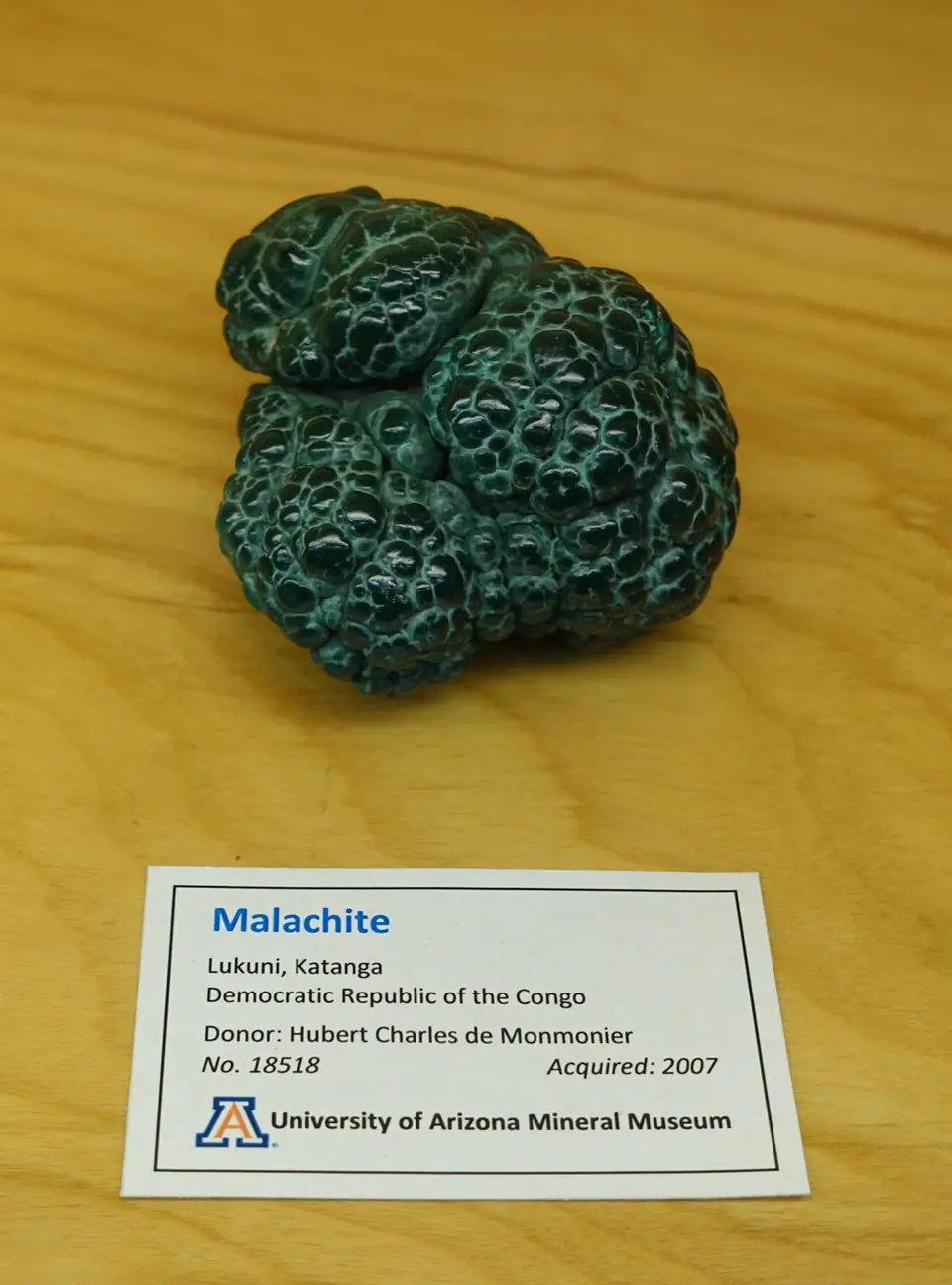
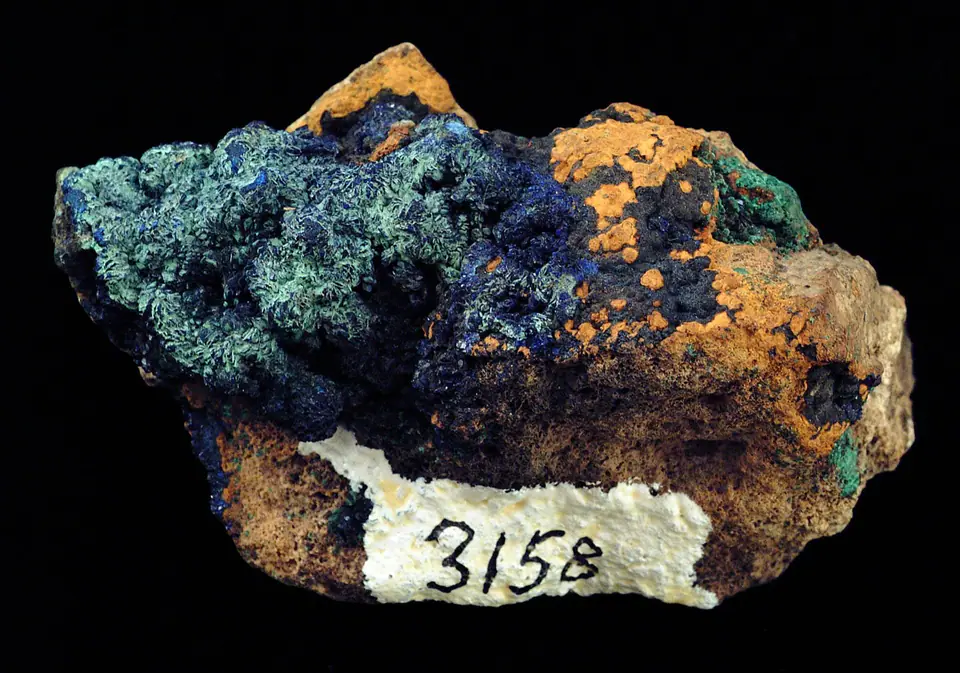
Use streak on expendable material and expect mixtures. Green powder favors malachite, blue powder favors azurite, and blue-green zoning may record intergrowth or azurite altering to malachite.
Malachite and Azurite comparison table
| Property | Malachite | Azurite | How to use it |
|---|---|---|---|
| Color | Bright to dark green | Deep azure blue, sometimes nearly black in thick crystals | Color is unusually useful for this pair but coatings and mixtures still matter. |
| Streak | Green | Blue to light blue | Streak confirms the body-color distinction on expendable material. |
| Habit | Banded, botryoidal, fibrous, stalactitic, earthy, or crystalline | Tabular or prismatic crystals, nodules, crusts, earthy masses, or radiating clusters | Typical habits support color and streak. |
| Surface stability | Common stable product in many surface conditions | May alter to malachite | Green rims or replacements around blue material are common. |
A practical identification sequence
- 1
Document blue-green patterns before cleaning the specimen.
- 2
Inspect thin crystal edges under neutral light.
- 3
Use a minimal streak test only on loose expendable material.
- 4
Look for copper-deposit context and associated chrysocolla, cuprite, iron oxides, or sulfides.
Where the distinction gets difficult
- Both contain copper; avoid dust, licking, and destructive testing.
- Paint, pigments, mine drainage coatings, and mixed secondary minerals can imitate simple color clues.
- Do not sample archaeological pigments, art, protected outcrops, or claimed mine sites.
Use several independent observations. This comparison supports preliminary field identification, not laboratory confirmation, appraisal, proof of origin, or collecting permission.
Malachite vs. azurite FAQ
Can azurite turn into malachite?
Yes. Changing surface conditions can favor malachite, producing partial or complete green replacement of earlier azurite.
Can one specimen contain both?
Yes. Intergrown blue azurite and green malachite are common and may preserve bands, rims, or replacements.
Does color alone identify them?
Color and streak are strong for this pair, but copper stains, chrysocolla, pigments, and mixtures still require texture and context.
Authoritative sources
LithoMap wrote this comparison in original language from the physical properties and geological concepts supported by these public scientific references.
- Assessment of Selected Copper Minerals in Mine Wastes U.S. Geological Survey
- Copper Statistics and Information U.S. Geological Survey
- Minerals and their physical properties U.S. National Park Service
- Mohs Hardness Scale U.S. National Park Service
- Natural Gemstones: Mineral Gemstones U.S. Geological Survey
Editorial review: September 17, 2026.