
.jpg)
.jpg)
The most useful distinction
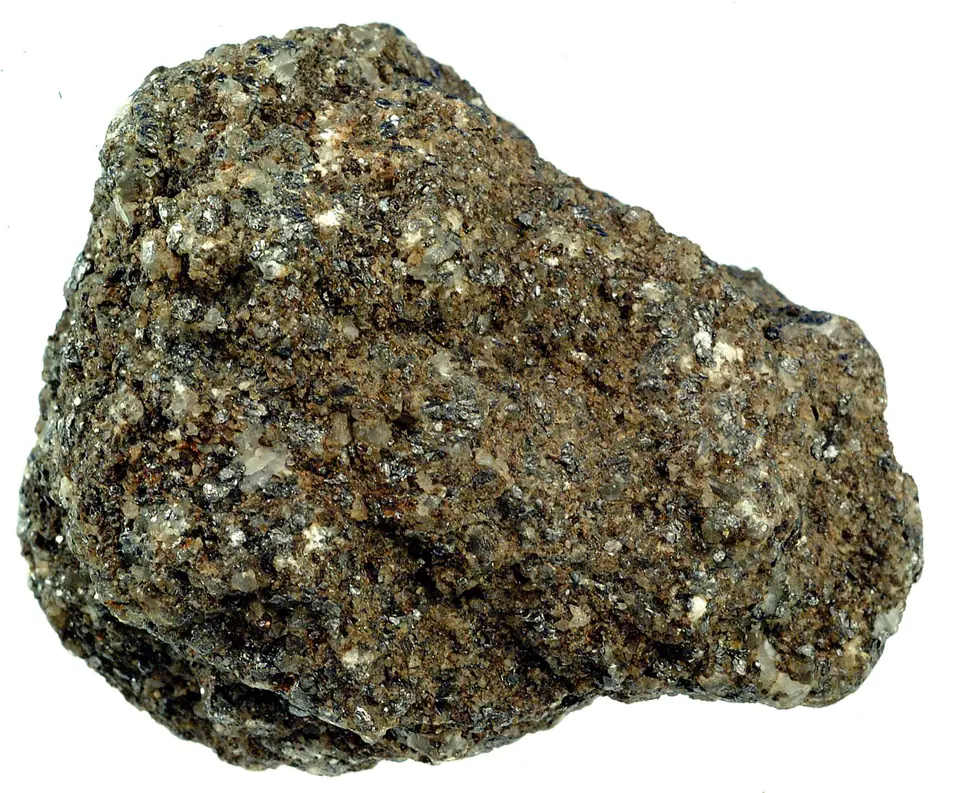
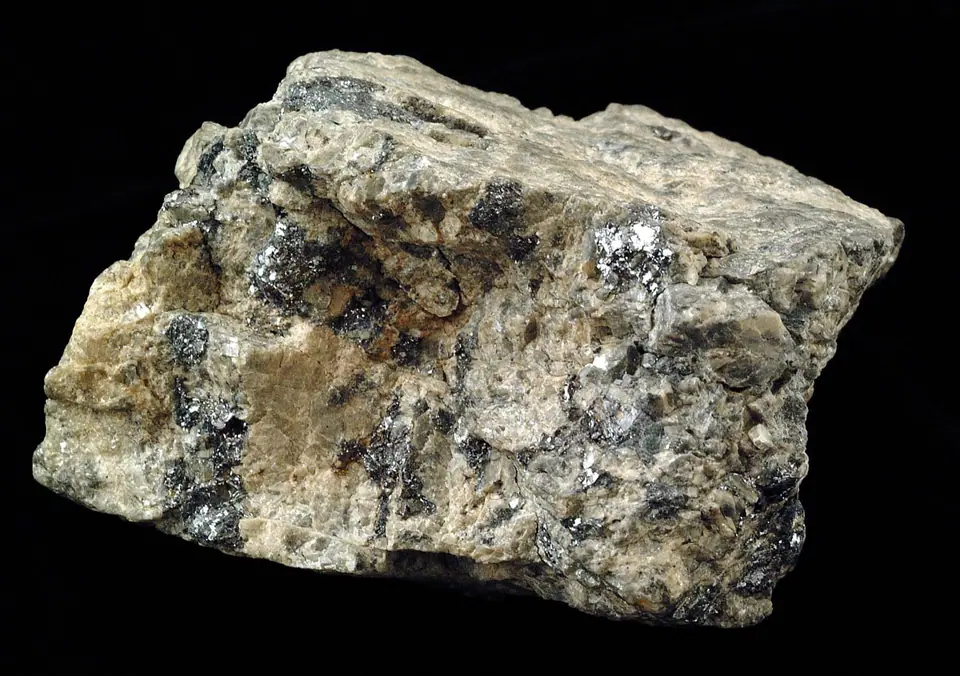
Compare heft before color. A compact molybdenite piece feels much heavier than equal-volume graphite, while graphite usually makes a blacker mark and is common in carbon-rich metamorphic rock.
Graphite and Molybdenite comparison table
| Property | Graphite | Molybdenite | How to use it |
|---|---|---|---|
| Density | Low; specific gravity about 2.2 | High; specific gravity about 4.6 to 5.1 | Heft is the most useful distinction between compact specimens. |
| Color and mark | Dark steel-gray to black; dark gray or black mark | Bluish silver to lead-gray; gray to greenish-gray mark | The contrast is subtle and should support density, not replace it. |
| Hardness | Mohs about 1 to 2 | Mohs about 1 to 1.5 | Both are too soft for hardness to separate them reliably. |
| Typical setting | Metamorphic carbon-rich rock, veins, pegmatites, and disseminated flakes | Granitic hydrothermal systems, quartz veins, porphyries, greisens, and skarns | Host rock provides strong supporting context. |
A practical identification sequence
- 1
Inspect color in diffuse light and note any bluish cast.
- 2
Compare heft only between similarly sized compact pieces.
- 3
Observe the mark on existing unglazed material without creating airborne powder.
- 4
Check host rock and associated minerals before assigning a field name.
Where the distinction gets difficult
- Both minerals are soft enough to contaminate streak surfaces and fingers.
- Do not grind sulfide-bearing material or intentionally smell a fresh mark.
- Fine disseminated flakes may require microscopy or chemical confirmation.
Use several independent observations. This comparison supports preliminary field identification, not laboratory confirmation, appraisal, proof of origin, or collecting permission.
Graphite vs. molybdenite FAQ
Does molybdenite write like graphite?
It can leave a gray mark, but graphite typically marks more blackly and is far less dense.
Are their flakes elastic?
Both have flexible, nonelastic flakes. Mica sheets are characteristically elastic and spring back.
Can they occur together?
They can occur within the same broad intrusive or metamorphic region, so every grain should be evaluated rather than naming an entire rock from one flake.
Authoritative sources
LithoMap wrote this comparison in original language from the physical properties and geological concepts supported by these public scientific references.
- Graphite Statistics and Information U.S. Geological Survey
- Minerals and their physical properties U.S. National Park Service
- Mohs Hardness Scale U.S. National Park Service
- Natural Gemstones: Mineral Gemstones U.S. Geological Survey
- Molybdenum Statistics and Information U.S. Geological Survey
Editorial review: September 17, 2026.