
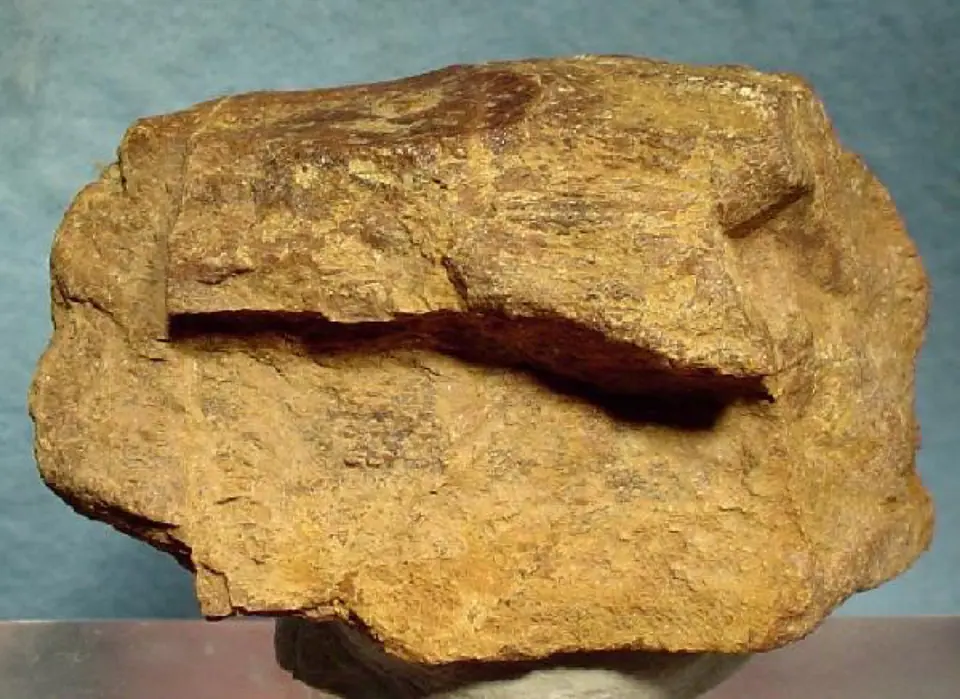

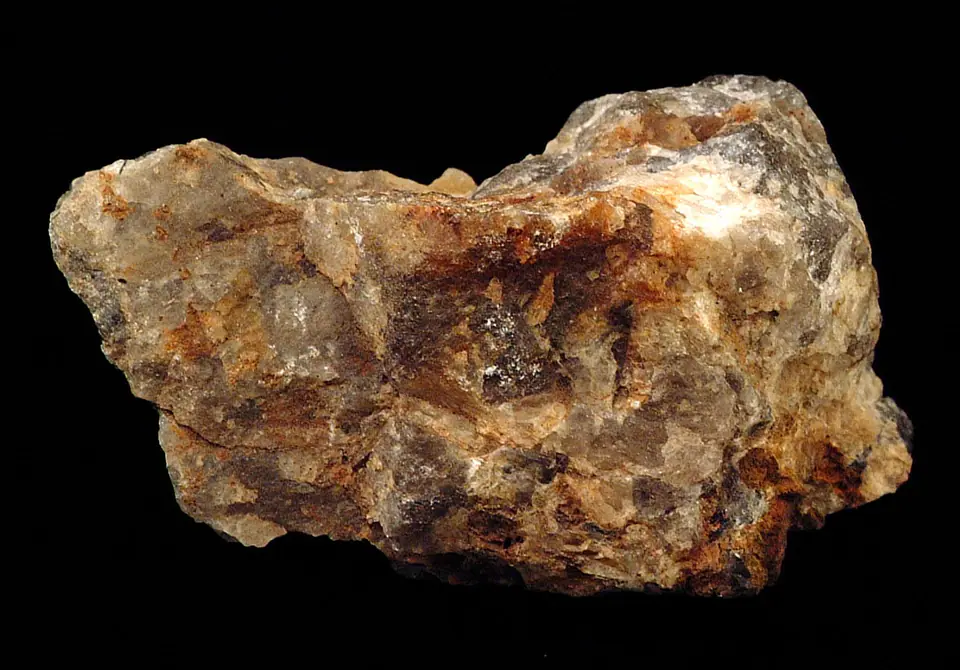

The most useful distinction
Do not use color or a radiation reading alone. Intact tetragonal prisms and hardness near 7.5 favor zircon; softer resinous grains with monazite chemistry require optical or analytical confirmation.
Monazite and Zircon comparison table
| Property | Monazite | Zircon | How to use it |
|---|---|---|---|
| Hardness | Mohs about 5 to 5.5 | Mohs about 7.5 when crystalline | Zircon is normally much harder. |
| Crystal system and habit | Monoclinic, tabular, wedge-shaped, prismatic, or equant | Tetragonal prisms with pyramidal terminations | Complete crystal geometry is highly useful. |
| Density | Commonly about 4.6 to 5.7 | Commonly about 4.6 to 4.7 | Density overlaps too much for a standalone identification. |
| Natural radioactivity | Variable and often elevated because of thorium or uranium | Variable; commonly contains smaller but measurable uranium and thorium | A detector response is not species identification or a full safety assessment. |
A practical identification sequence
- 1
Leave bulk concentrate undisturbed and avoid dust.
- 2
Inspect grain shape and crystal symmetry under magnification.
- 3
Use nondestructive hardness evidence only on expendable material.
- 4
Confirm consequential identifications with optical mineralogy, spectroscopy, or chemical analysis.
Where the distinction gets difficult
- Both minerals can be metamict and depart from typical hardness or density.
- A consumer radiation detector cannot determine mineral species or composition.
- Bulk heavy-mineral concentrates may require radiation-safety and transport controls.
Use several independent observations. This comparison supports preliminary field identification, not laboratory confirmation, appraisal, proof of origin, or collecting permission.
Monazite vs. zircon FAQ
Is all monazite radioactive?
Monazite commonly contains thorium and sometimes uranium, but activity varies substantially. Appearance does not predict dose or regulatory status.
Can zircon be radioactive?
Yes. Zircon can incorporate uranium and thorium, though amounts vary and are often lower than in monazite.
Can the two occur together?
Yes. Both are durable accessory minerals and may coexist in granite, metamorphic rock, sediment, and heavy-mineral placers.
Authoritative sources
LithoMap wrote this comparison in original language from the physical properties and geological concepts supported by these public scientific references.
- Rare Earths Statistics and Information U.S. Geological Survey
- Mineral Potential Tracts for Shoreline Titanium-Zirconium Placer Deposits U.S. Geological Survey
- Minerals and their physical properties U.S. National Park Service
- Mohs Hardness Scale U.S. National Park Service
- Natural Gemstones: Mineral Gemstones U.S. Geological Survey
- Zirconium and Hafnium Statistics and Information U.S. Geological Survey
Editorial review: September 17, 2026.