
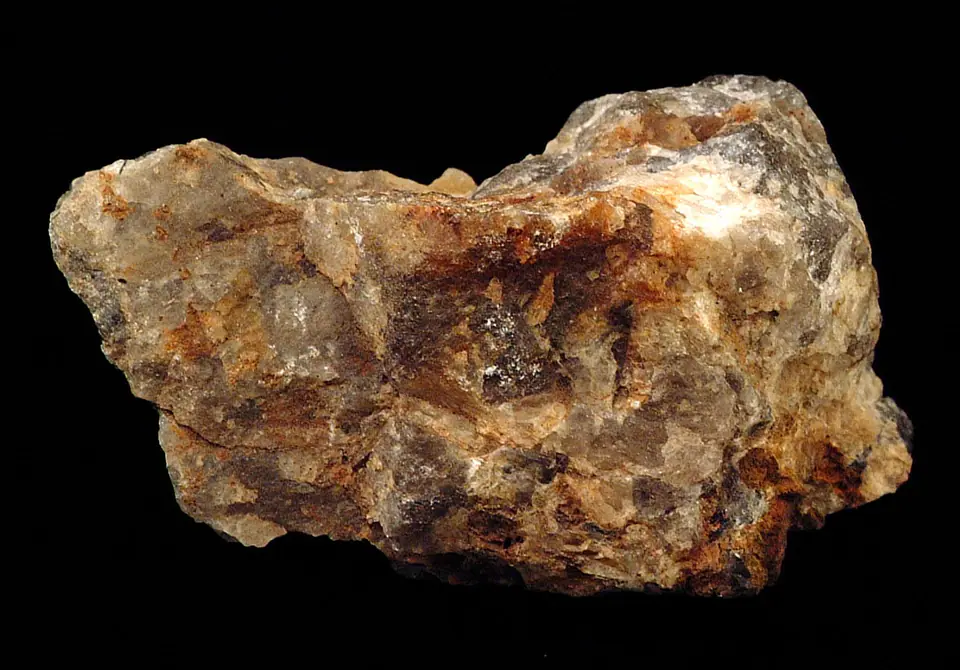

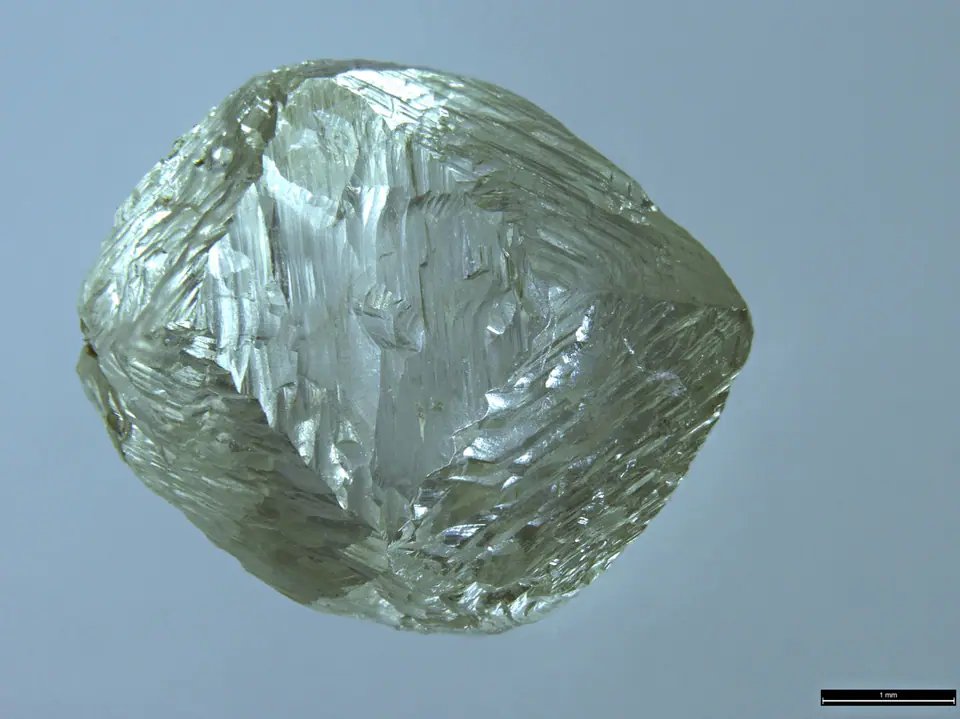

The most useful distinction
Do not scratch a possible gem. Examine crystal form and facet doubling, then use refractive index, density, thermal response, and professional testing rather than destructive checks.
Zircon and Diamond comparison table
| Property | Zircon | Diamond | How to use it |
|---|---|---|---|
| Hardness | Mohs about 7.5 when well crystallized | Mohs 10 | Diamond is much harder, but scratch testing can ruin either specimen. |
| Density | Commonly about 4.6 to 4.7 | About 3.5 | Zircon is substantially denser at equal volume. |
| Crystal system | Tetragonal prisms and pyramids | Cubic forms such as octahedra, cubes, and dodecahedra | Intact natural crystal geometry can separate rough material. |
| Optical behavior | Strong double refraction may visibly double rear facet edges | Singly refractive | Magnification can reveal doubling in many transparent zircons. |
A practical identification sequence
- 1
Stop destructive testing on transparent or faceted material.
- 2
Inspect natural crystal geometry and surface features under magnification.
- 3
Look through the stone for doubled rear edges where orientation permits.
- 4
Use calibrated gemological instruments or a qualified gemologist for a consequential identification.
Where the distinction gets difficult
- Heat treatment can alter zircon color.
- Metamict zircon can have reduced hardness and density.
- Common diamond testers are not a complete natural-versus-synthetic or simulant analysis.
Use several independent observations. This comparison supports preliminary field identification, not laboratory confirmation, appraisal, proof of origin, or collecting permission.
Zircon vs. diamond FAQ
Is zircon the same as cubic zirconia?
No. Zircon is a natural zirconium silicate mineral; cubic zirconia is manufactured zirconium oxide with a different crystal structure.
Can zircon scratch glass?
Fresh zircon usually can, but that does not distinguish it from many other gems and should not be tried on a valuable stone.
Which mineral is heavier?
Zircon is denser than diamond at equal volume despite being much softer.
Authoritative sources
LithoMap wrote this comparison in original language from the physical properties and geological concepts supported by these public scientific references.
- Zirconium and Hafnium Statistics and Information U.S. Geological Survey
- Minerals and their physical properties U.S. National Park Service
- Mohs Hardness Scale U.S. National Park Service
- Natural Gemstones: Mineral Gemstones U.S. Geological Survey
- Industrial Diamond Statistics and Information U.S. Geological Survey
Editorial review: September 17, 2026.