
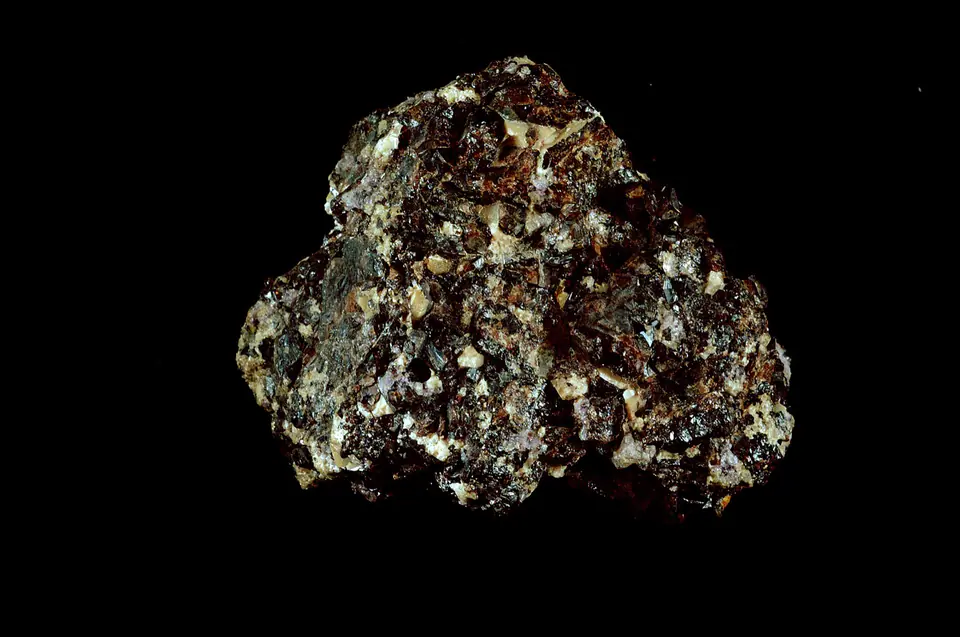

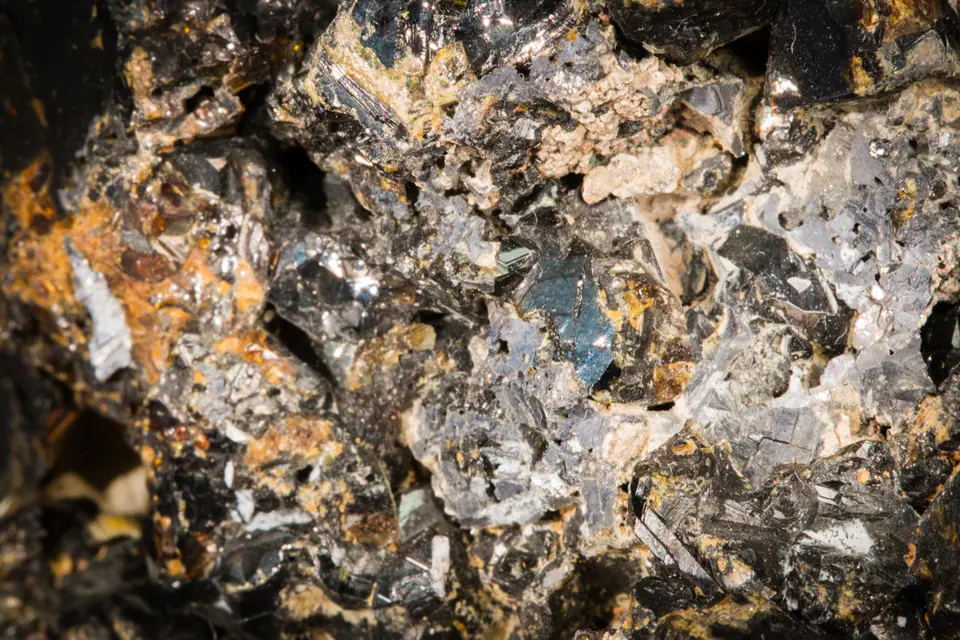
The most useful distinction
Use existing breakage and hardness on expendable material. Very heavy, hard material with poor cleavage favors cassiterite; softer resinous material with repeated cleavage favors sphalerite.
Cassiterite and Sphalerite comparison table
| Property | Cassiterite | Sphalerite | How to use it |
|---|---|---|---|
| Hardness | Mohs about 6 to 7 | Mohs about 3.5 to 4 | Cassiterite can scratch glass; sphalerite is readily scratched by steel. |
| Density | Very high, commonly about 6.8 to 7.1 | High, commonly about 3.9 to 4.1 | Cassiterite is dramatically denser at equal volume. |
| Cleavage | Poor or indistinct | Perfect in six directions | Repeated bright cleavage surfaces favor sphalerite. |
| Streak | White to pale brown | White, pale yellow, or brown | Streak can overlap and is secondary to hardness, density, and cleavage. |
A practical identification sequence
- 1
Inspect existing breaks for repeated cleavage faces.
- 2
Test hardness only on a small expendable edge.
- 3
Compare equal-volume pieces or measure specific gravity.
- 4
Use chemistry or diffraction if the sample is fine-grained or mixed with sulfides.
Where the distinction gets difficult
- Dark iron-rich sphalerite can look metallic and feel denser than expected.
- Cassiterite concentrates may contain arsenic- or sulfide-bearing minerals.
- Avoid grinding, heating, or acid-testing unknown ore.
Use several independent observations. This comparison supports preliminary field identification, not laboratory confirmation, appraisal, proof of origin, or collecting permission.
Cassiterite vs. sphalerite FAQ
Which mineral is heavier?
Cassiterite is usually far denser than sphalerite at equal volume.
Can cassiterite be transparent?
Thin edges and uncommon light-colored crystals can be translucent or transparent, although most ore specimens are dark.
Does sphalerite scratch glass?
Typical sphalerite is too soft to scratch ordinary glass reliably; fresh cassiterite commonly can.
Authoritative sources
LithoMap wrote this comparison in original language from the physical properties and geological concepts supported by these public scientific references.
- Tin Statistics and Information U.S. Geological Survey
- Minerals and their physical properties U.S. National Park Service
- Mohs Hardness Scale U.S. National Park Service
- Natural Gemstones: Mineral Gemstones U.S. Geological Survey
- Zinc Statistics and Information U.S. Geological Survey
Editorial review: September 17, 2026.