


The most useful distinction
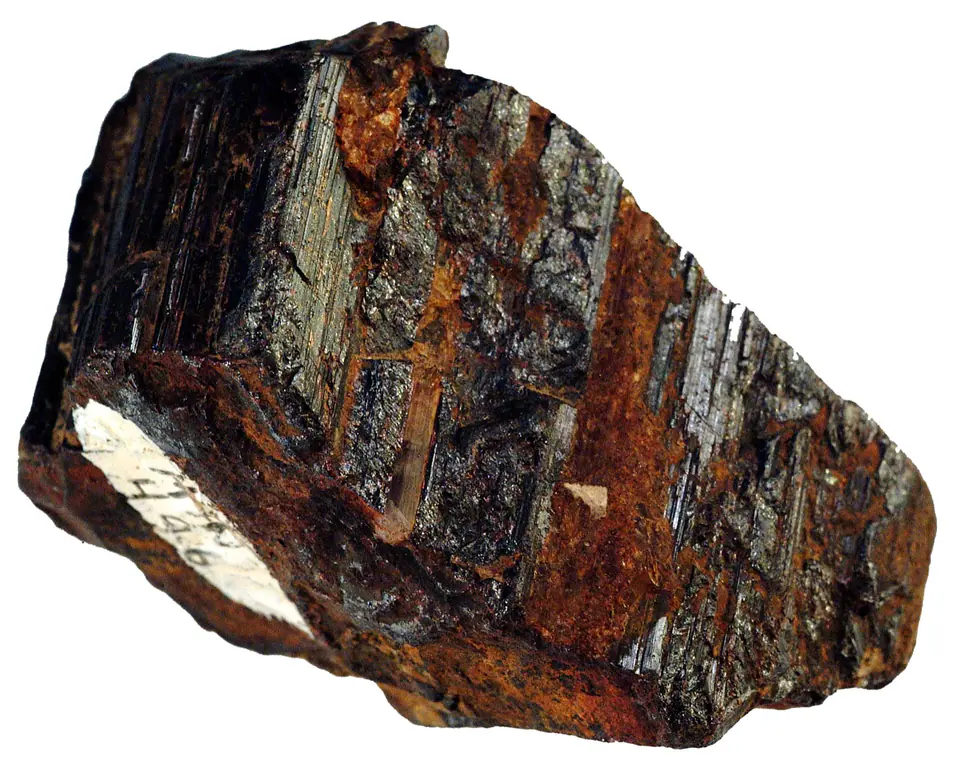
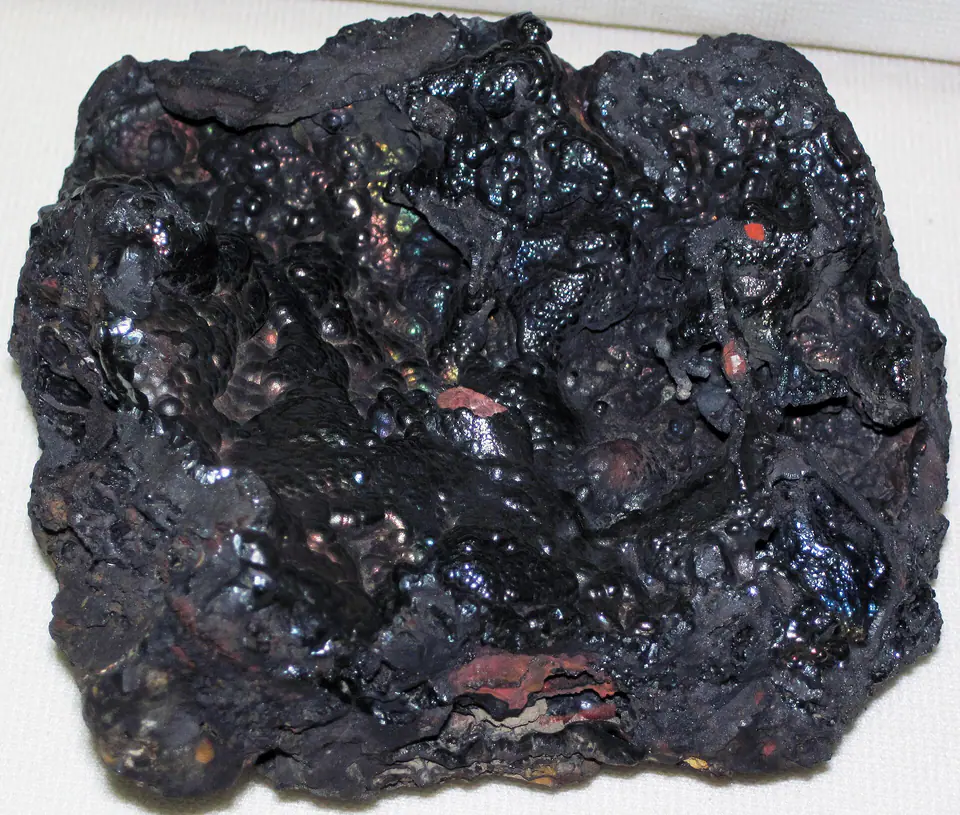
Start with streak on expendable material. A pale brown or yellow-brown streak with hard striated prisms favors rutile; a distinct red-brown streak favors hematite.
Rutile and Hematite comparison table
| Property | Rutile | Hematite | How to use it |
|---|---|---|---|
| Streak | Pale brown to yellowish brown | Red to reddish brown | Powder color is usually the strongest simple distinction. |
| Hardness | Mohs about 6 to 6.5 | Mohs about 5 to 6.5, with earthy forms softer | Fresh rutile commonly resists scratching better, but ranges overlap. |
| Habit | Striated tetragonal prisms, needles, or compact masses | Earthy, platy, botryoidal, specular, massive, or crystalline | Strongly grooved prisms favor rutile. |
| Density | High, commonly about 4.2 to 4.3 | High, commonly about 5.3 | Hematite is usually denser, but matrix and porosity can reverse hand-heft impressions. |
A practical identification sequence
- 1
Inspect crystal habit and existing fresh surfaces.
- 2
Make a small streak on an inconspicuous expendable area.
- 3
Compare pale brown powder with distinctly red-brown powder.
- 4
Use microscopy or diffraction when the specimen is fine-grained, mixed, or valuable.
Where the distinction gets difficult
- Iron staining can contaminate a rutile streak.
- Earthy hematite can be much softer than crystalline material.
- Do not grind ore or damage included quartz and gem specimens.
Use several independent observations. This comparison supports preliminary field identification, not laboratory confirmation, appraisal, proof of origin, or collecting permission.
Rutile vs. hematite FAQ
Can rutile be black?
Yes. Iron-rich or opaque rutile can be dark brown to nearly black.
Does rutile leave a red streak?
Typical rutile leaves a pale brown to yellowish-brown streak rather than hematite’s characteristic red-brown powder.
Can the two occur together?
Yes. Both can occur in metamorphic rocks, veins, and heavy-mineral concentrates, and iron-oxide coatings can obscure rutile.
Authoritative sources
LithoMap wrote this comparison in original language from the physical properties and geological concepts supported by these public scientific references.
- Titanium Statistics and Information U.S. Geological Survey
- Mineral Commodity Summaries: Titanium Mineral Concentrates U.S. Geological Survey
- Minerals and their physical properties U.S. National Park Service
- Mohs Hardness Scale U.S. National Park Service
- Natural Gemstones: Mineral Gemstones U.S. Geological Survey
Editorial review: September 17, 2026.