
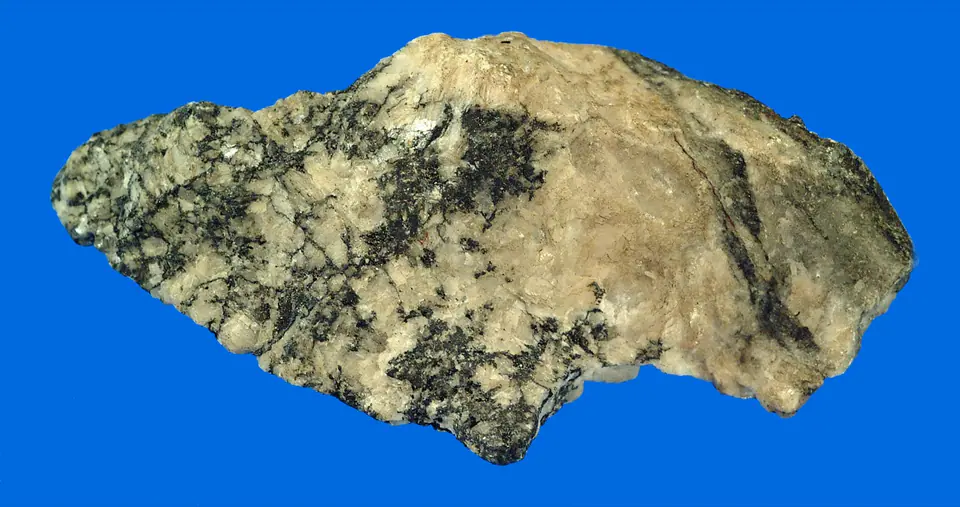
.jpg)
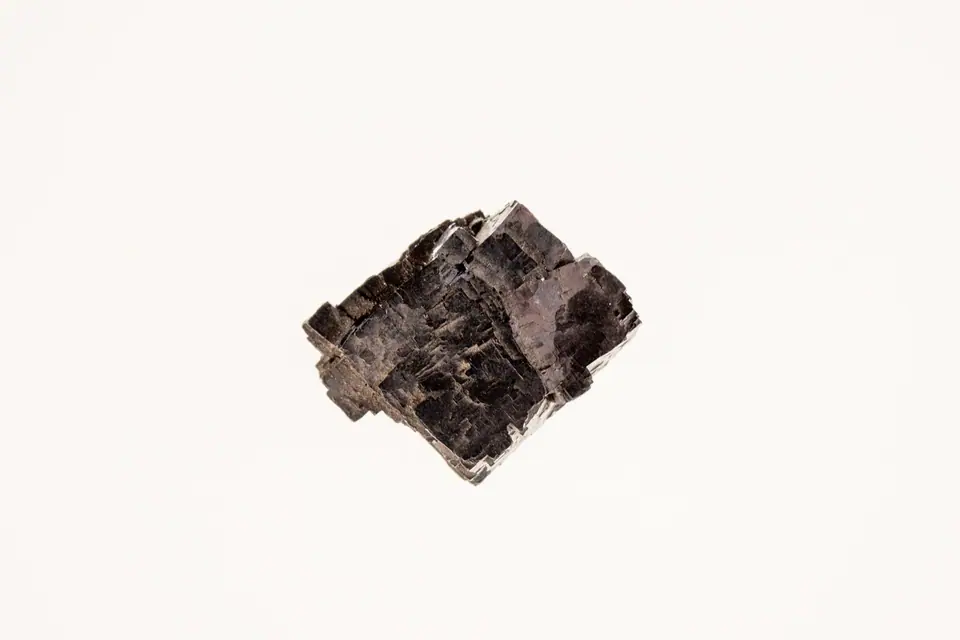
The most useful distinction
Use breakage behavior and cleavage, not shine. Cubic steps and brittle fragments favor galena; wirelike or irregular metal that bends or cuts without crumbling favors native silver.
Silver and Galena comparison table
| Property | Silver | Galena | How to use it |
|---|---|---|---|
| Tenacity | Malleable, ductile, and sectile | Brittle | Deformation versus breakage is decisive on a loose expendable fragment. |
| Cleavage | None | Perfect in three directions at 90° | Repeated cubes and right-angle steps strongly favor galena. |
| Fresh color and streak | Silver-white with a silver-white streak | Lead-gray with a gray to black streak | Tarnish can hide surface color, so use this only with existing fresh material. |
| Density | Very high; specific gravity about 10.5 | Very high; specific gravity about 7.5 | Both feel heavy; heft alone is insufficient. |
A practical identification sequence
- 1
Inspect natural shape for wires, plates, cubes, or right-angle cleavage steps.
- 2
Look for an existing fresh surface beneath tarnish.
- 3
Assess whether a loose expendable edge bends or crumbles without generating dust.
- 4
Treat uncertain material as lead-bearing and seek analytical confirmation.
Where the distinction gets difficult
- Galena contains lead; do not taste, grind, polish, or create dust.
- Silver deposits can contain lead, arsenic, and other hazardous minerals.
- Never damage an attractive or potentially valuable specimen for a field test.
Use several independent observations. This comparison supports preliminary field identification, not laboratory confirmation, appraisal, proof of origin, or collecting permission.
Silver vs. galena FAQ
Is every bright gray cube galena?
No. Crystal form, cleavage, streak, density, and context must agree; slag and manufactured materials can imitate metallic minerals.
Does silver turn black?
Yes. Native silver can develop dark tarnish that conceals its silver-white fresh metal.
Does galena contain silver?
Some galena contains economically important silver, but appearance cannot determine silver content. Laboratory analysis is required.
Authoritative sources
LithoMap wrote this comparison in original language from the physical properties and geological concepts supported by these public scientific references.
- Silver Statistics and Information U.S. Geological Survey
- Minerals and their physical properties U.S. National Park Service
- Mohs Hardness Scale U.S. National Park Service
- Natural Gemstones: Mineral Gemstones U.S. Geological Survey
- Lead—Soft and Easy to Cast U.S. Geological Survey
Editorial review: September 17, 2026.