

The most useful distinction
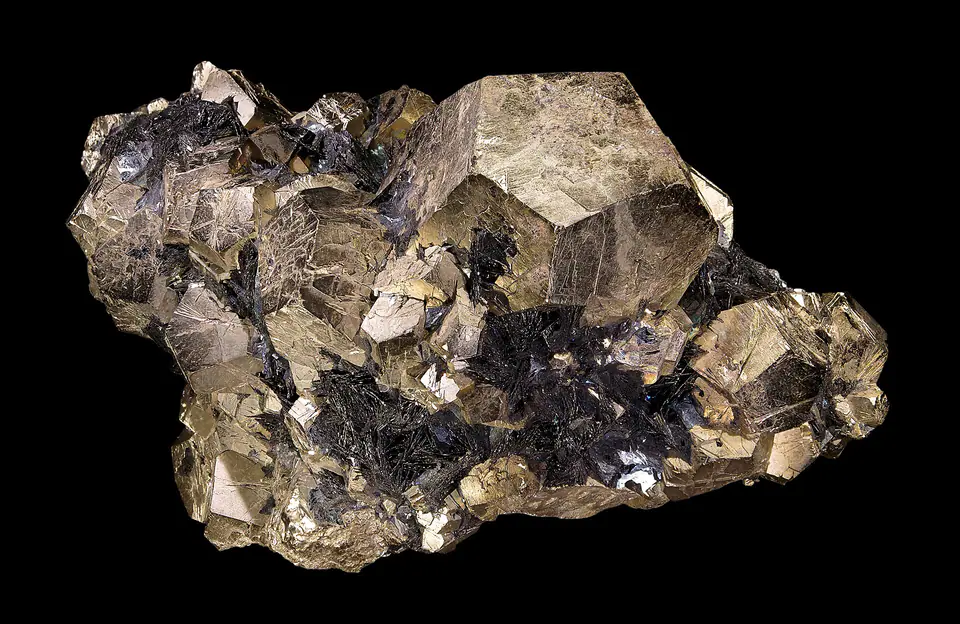
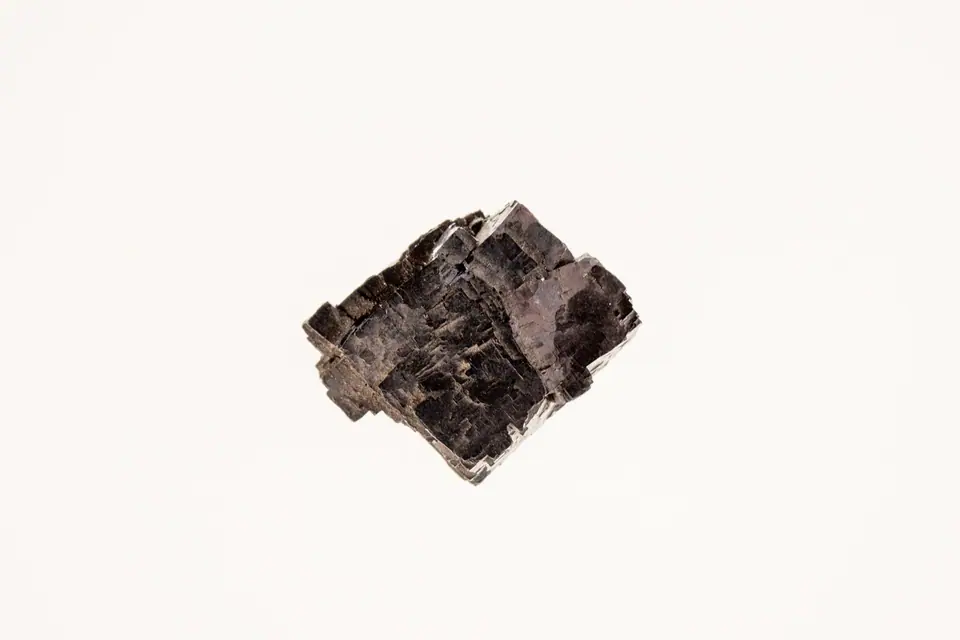
A cube alone is not enough. Pyrite scratches glass and may show striated crystal faces; galena is scratched easily, feels unusually heavy, and breaks along smooth right-angle cleavage planes.
Pyrite and Galena comparison table
| Property | Pyrite | Galena | How to use it |
|---|---|---|---|
| Color | Pale brass-yellow | Lead-gray to silvery gray | Fresh color separates typical specimens immediately. |
| Hardness | Mohs 6 to 6.5; scratches glass | Mohs about 2.5; scratched by copper or steel | The hardness gap is large and dependable on clean material. |
| Form and cleavage | Cubic crystals common, often striated; cleavage poor | Cubes and blocky fragments from perfect cubic cleavage | Pyrite cubes are growth forms; galena cubes commonly repeat as cleavage fragments. |
| Streak and density | Greenish- to brownish-black streak; moderately dense | Gray-black streak; exceptionally dense | Heft strongly supports galena, while streaks require close comparison. |
A practical identification sequence
- 1
Observe fresh color and check cube faces for striations.
- 2
Test whether an inconspicuous clean edge scratches glass.
- 3
Inspect existing breaks for repeated smooth right-angle cleavage steps.
- 4
Handle the specimen as lead-bearing if galena remains possible.
Where the distinction gets difficult
- Pyrite and galena can be intergrown with each other and other sulfides.
- Do not crush or grind either mineral; galena dust contains lead.
- Sulfide mine waste can generate acidic drainage and contain additional toxic elements.
Use several independent observations. This comparison supports preliminary field identification, not laboratory confirmation, appraisal, proof of origin, or collecting permission.
Pyrite vs. galena FAQ
Why can both minerals form cubes?
Both crystallize in the cubic crystal system, but pyrite’s cube is usually a crystal-growth form while galena also breaks repeatedly along cubic cleavage.
Which mineral is heavier?
Galena is much denser and typically feels conspicuously heavier than an equal volume of pyrite.
Can pyrite be gray?
Tarnish and lighting can dull pyrite, but a fresh surface is characteristically brass-yellow rather than lead-gray.
Authoritative sources
LithoMap wrote this comparison in original language from the physical properties and geological concepts supported by these public scientific references.
- Minerals and their physical properties U.S. National Park Service
- Mohs Hardness Scale U.S. National Park Service
- Natural Gemstones: Mineral Gemstones U.S. Geological Survey
- Lead—Soft and Easy to Cast U.S. Geological Survey
Editorial review: September 17, 2026.