


The most useful distinction
Use both a magnet and an unglazed streak plate. Strong attraction with a black streak favors magnetite; a red-brown streak with weak or absent attraction favors hematite.
Hematite and Magnetite comparison table
| Property | Hematite | Magnetite | How to use it |
|---|---|---|---|
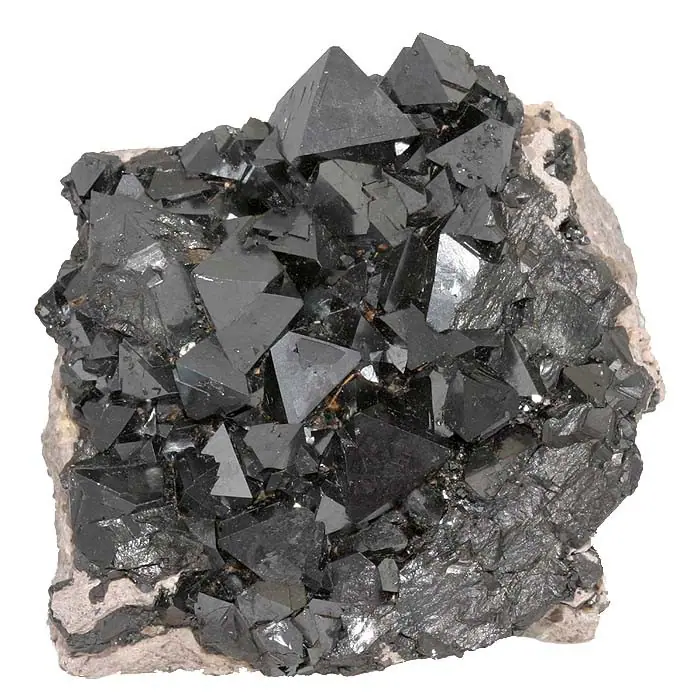
| Magnetism | Usually weakly magnetic or nonmagnetic in an ordinary hand test | Strongly attracted to a magnet; some pieces are naturally magnetized | Strong attraction is the fastest clue for magnetite, but mixtures can respond too. |
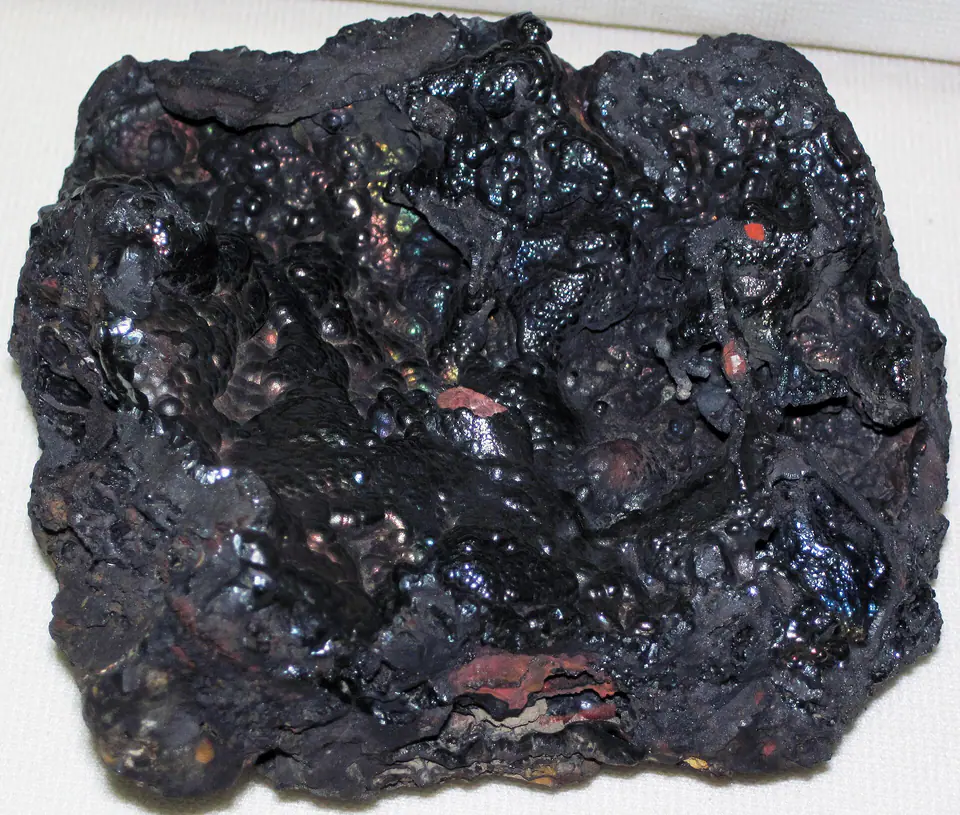
| Streak | Red, reddish brown, or brownish red | Black to dark gray | Streak often identifies hematite even when its surface is metallic gray. |
| Typical appearance | Earthy red, brown, black, steel gray, botryoidal, or platy | Black, metallic to submetallic, granular, massive, or octahedral | Surface appearance overlaps and should never replace streak and magnetism. |
| Hardness | About 5 to 6.5, but earthy material can seem softer | About 5.5 to 6.5 | Hardness overlaps too much to be the primary distinction. |
A practical identification sequence
- 1
Test the specimen with a known magnet and note the strength of attraction.
- 2
Rub a small fresh edge on an unglazed porcelain streak plate.
- 3
Compare the powder color rather than loose surface dust or weathering rind.
- 4
Check for mixtures, coatings, or enclosing rock that could combine both responses.
Where the distinction gets difficult
- A specimen containing both oxides may be magnetic and still leave a reddish streak.
- Dark silicates, slag, and other iron-bearing materials can be magnetic without being magnetite.
- Avoid inhaling fine iron-oxide dust and do not streak valuable or finished specimens.
Use several independent observations. This comparison supports preliminary field identification, not laboratory confirmation, appraisal, proof of origin, or collecting permission.
Hematite vs. magnetite FAQ
Can hematite be black?
Yes. Metallic hematite can be steel gray to black, but its powder is characteristically red-brown.
Is every magnetic black rock magnetite?
No. A rock may contain dispersed magnetite, other magnetic minerals, or industrial metal. Identify the mineral grain and its streak rather than naming the whole rock from magnetism.
Can magnetite leave a red streak?
Pure magnetite normally leaves a black streak. A reddish streak may indicate hematite alteration, an intergrowth, surface contamination, or a mixed specimen.
Authoritative sources
LithoMap wrote this comparison in original language from the physical properties and geological concepts supported by these public scientific references.
- Minerals and their physical properties U.S. National Park Service
- Mohs Hardness Scale U.S. National Park Service
- Natural Gemstones: Mineral Gemstones U.S. Geological Survey
Editorial review: September 17, 2026.