
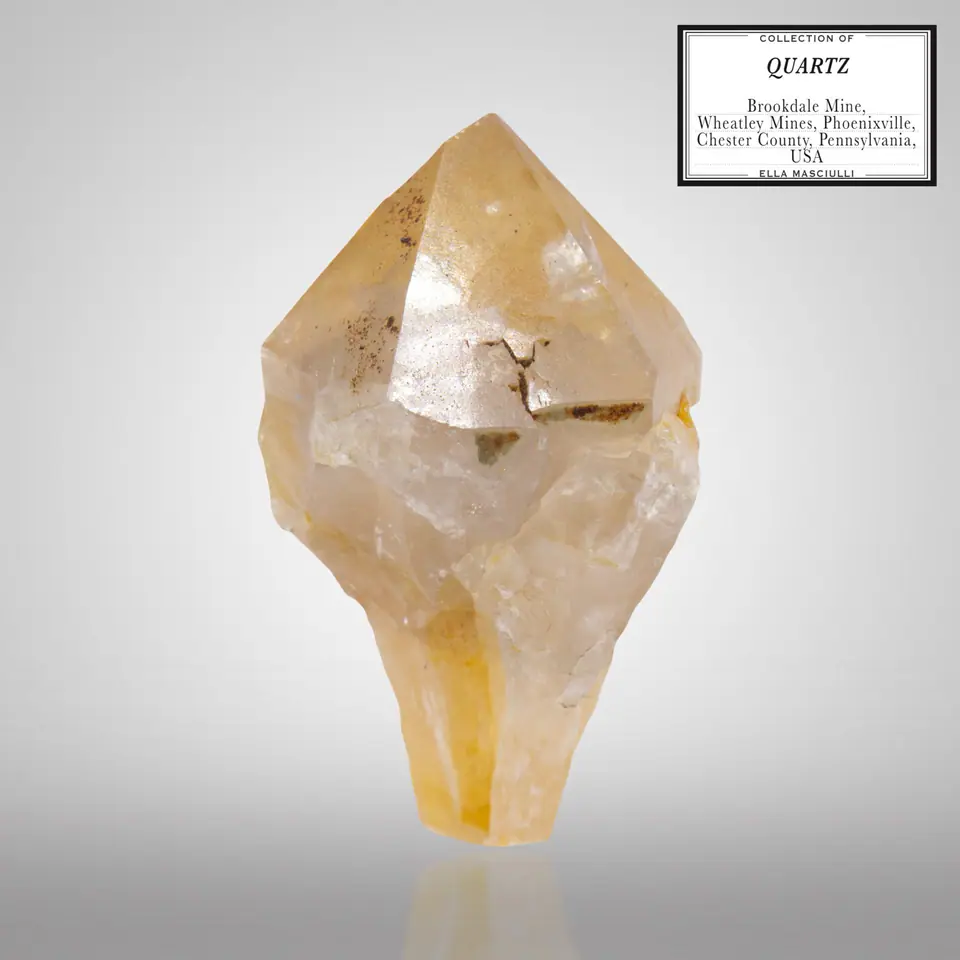

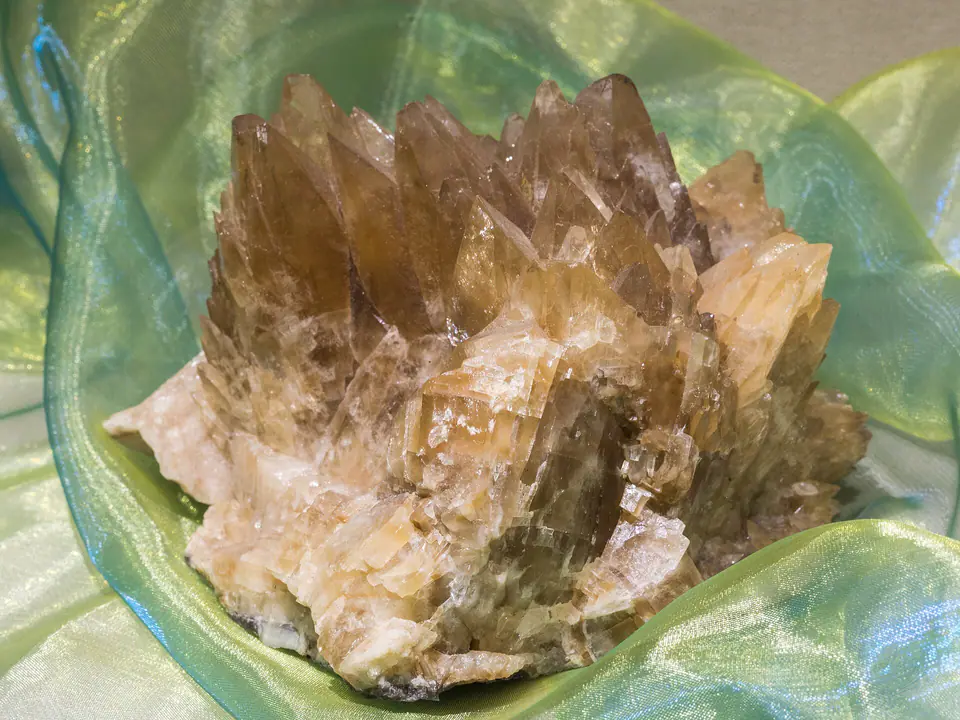

The most useful distinction
Test an inconspicuous fresh surface. Quartz scratches ordinary glass and breaks with curved or irregular fracture; calcite is scratched by a steel point, cleaves into slanted rhombs, and fizzes with dilute acid.
Quartz and Calcite comparison table
| Property | Quartz | Calcite | How to use it |
|---|---|---|---|
| Hardness | Mohs 7; readily scratches glass | Mohs 3; scratched by a copper coin or steel point | A careful hardness test separates typical fresh specimens quickly. |
| Breakage | No cleavage; conchoidal to irregular fracture | Three perfect cleavage directions not at 90°, commonly forming rhombohedra | Use repeated flat surfaces, not one accidental face, to recognize cleavage. |
| Acid response | No reaction with ordinary dilute hydrochloric acid | Strong effervescence on a clean calcite surface | Acid is highly useful when applied safely and only to an expendable specimen. |
| Crystal form | Commonly six-sided prisms with pointed terminations | Commonly rhombohedra, scalenohedra, or cleavage fragments | Crystal shape supports an identification when the specimen retains natural faces. |
A practical identification sequence
- 1
Check whether a clean edge scratches ordinary glass.
- 2
Inspect several broken surfaces for repeated rhombohedral cleavage or curved fracture.
- 3
Use a drop of dilute acid on an expendable fresh spot when appropriate.
- 4
Confirm with crystal habit and the minerals or rocks surrounding the specimen.
Where the distinction gets difficult
- Fine-grained mixtures can contain both minerals and give mixed test results.
- Coatings and weathered surfaces can hide hardness and acid response.
- Do not acid-test finished stone, valuable specimens, fossils, monuments, or protected outcrops.
Use several independent observations. This comparison supports preliminary field identification, not laboratory confirmation, appraisal, proof of origin, or collecting permission.
Quartz vs. calcite FAQ
Can calcite scratch glass?
Fresh calcite is much softer than common window glass and should not scratch it. A harder inclusion, grit, or excessive pressure can create a misleading mark.
Why do quartz and calcite look alike?
Both can grow as transparent or pale crystals with a glassy luster. Their internal structures produce very different hardness, breakage, and acid behavior.
Does every carbonate mineral fizz strongly?
No. Calcite reacts readily, while dolomite usually reacts weakly unless powdered. Surface coatings and dilute reagents also change the visible response.
Authoritative sources
LithoMap wrote this comparison in original language from the physical properties and geological concepts supported by these public scientific references.
- Minerals and their physical properties U.S. National Park Service
- Mohs Hardness Scale U.S. National Park Service
- Natural Gemstones: Mineral Gemstones U.S. Geological Survey
Editorial review: September 17, 2026.