
.jpg)

The most useful distinction
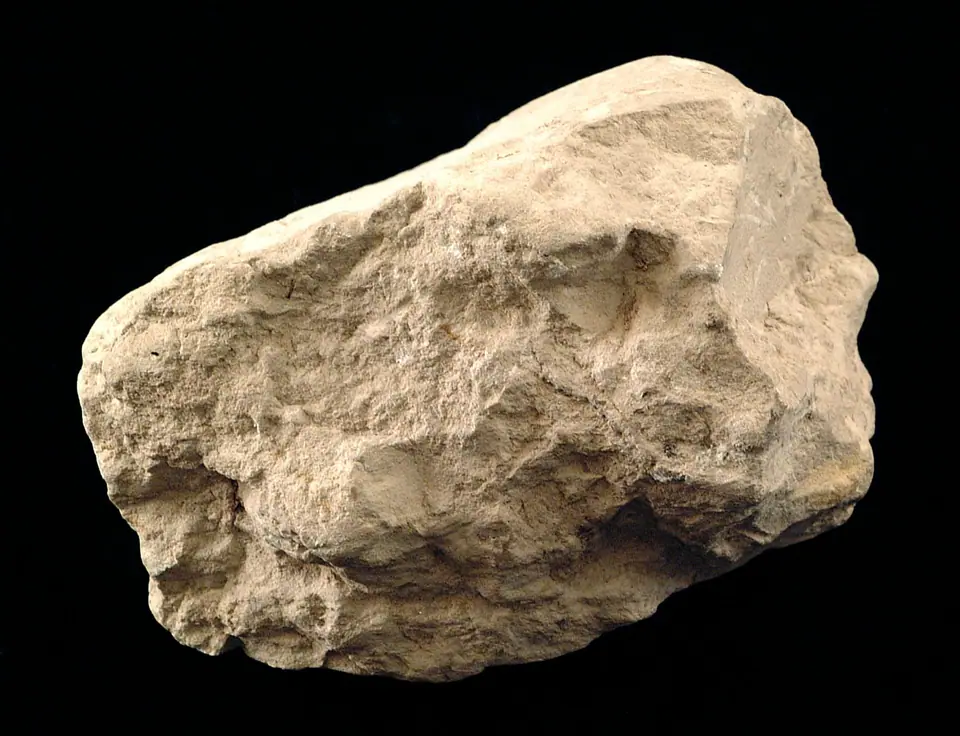
Use feel and relative hardness cautiously. A greasy mass scratched effortlessly by a fingernail favors talc; dull earthy clay near Mohs 2 to 2.5 may be kaolinite but commonly needs X-ray diffraction for confirmation.
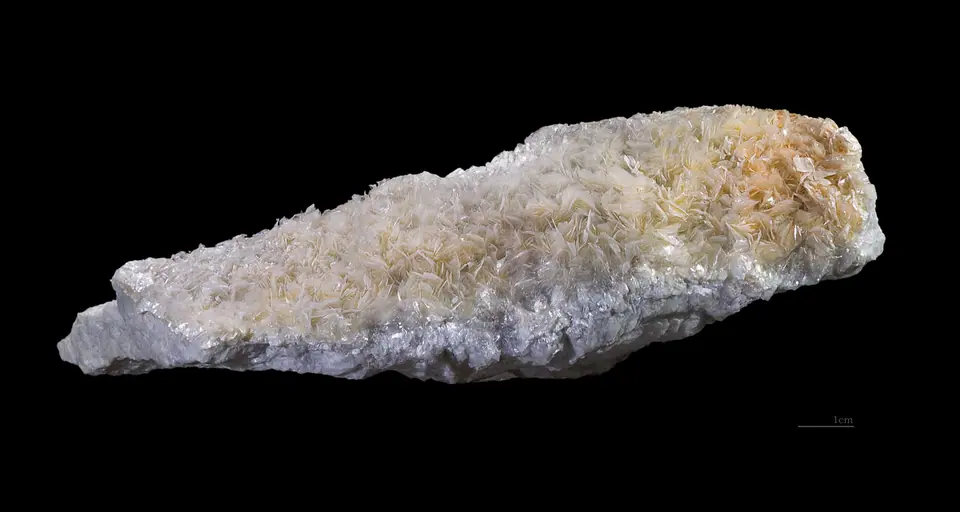
Kaolinite and Talc comparison table
| Property | Kaolinite | Talc | How to use it |
|---|---|---|---|
| Hardness | Mohs about 2 to 2.5 | Mohs 1 | Talc is the softest Mohs reference mineral. |
| Feel and luster | Earthy, dull, or smooth but not characteristically greasy | Greasy or soapy with pearly to dull luster | A useful clue when the sample is clean and dry. |
| Habit | Microscopic platy clay particles in earthy or compact masses | Platy, foliated, fibrous, or massive aggregates | Visible foliation favors talc, but fine mixtures overlap. |
| Identification certainty | Often requires X-ray diffraction or related analysis | Typical softness and feel can be distinctive, though mixtures remain possible | Field names should reflect uncertainty. |
A practical identification sequence
- 1
Observe a clean dry surface without generating dust.
- 2
Test whether a fingernail scratches it extremely easily or only moderately.
- 3
Compare earthy versus greasy feel without tasting the sample.
- 4
Label uncertain material as clay or soft phyllosilicate pending laboratory work.
Where the distinction gets difficult
- Do not taste clay minerals or inhale powder.
- Clay deposits commonly contain mixtures that blur simple tests.
- Fibrous or contaminated material should not be rubbed, ground, or handled casually.
Use several independent observations. This comparison supports preliminary field identification, not laboratory confirmation, appraisal, proof of origin, or collecting permission.
Kaolinite vs. talc FAQ
Is kaolinite as soft as talc?
No. Kaolinite is commonly around Mohs 2 to 2.5, while talc defines Mohs 1.
Can I identify kaolinite by color?
No. White and pale earthy appearances are shared by many clay minerals, gypsum, chalk, and altered rocks.
Why is laboratory testing important?
Clay particles are microscopic and mixtures are common. X-ray diffraction can distinguish crystal structures that field appearance cannot.
Authoritative sources
LithoMap wrote this comparison in original language from the physical properties and geological concepts supported by these public scientific references.
- Clay Statistics and Information U.S. Geological Survey
- Minerals and their physical properties U.S. National Park Service
- Mohs Hardness Scale U.S. National Park Service
- Natural Gemstones: Mineral Gemstones U.S. Geological Survey
- Talc and Pyrophyllite Statistics and Information U.S. Geological Survey
Editorial review: September 17, 2026.