

.jpg)
The most useful distinction
Use crystal form and provenance first. Corundum scratches quartz, but do not perform destructive scratch tests on attractive or potentially valuable crystals; uncertain gem material belongs with a qualified gemologist.
Quartz and Corundum comparison table
| Property | Quartz | Corundum | How to use it |
|---|---|---|---|
| Hardness | Mohs 7 | Mohs 9 | Corundum scratches quartz, but mutual scratching can permanently damage both. |
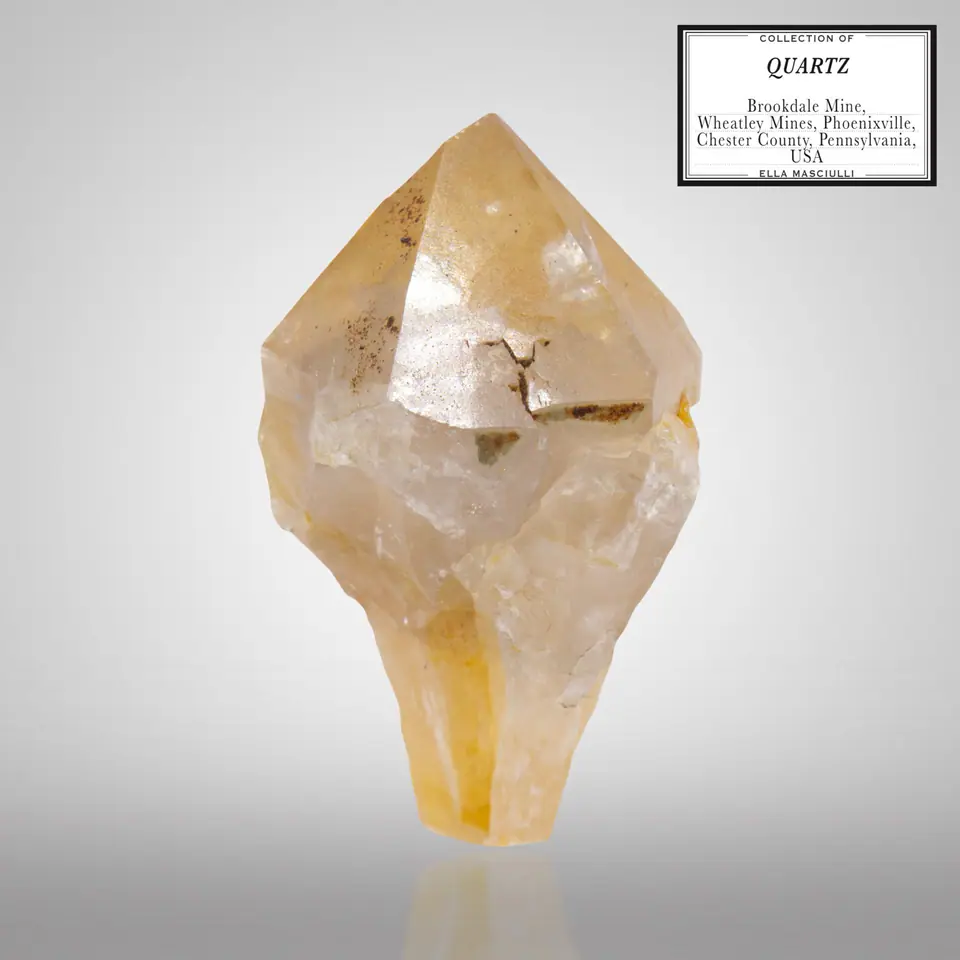
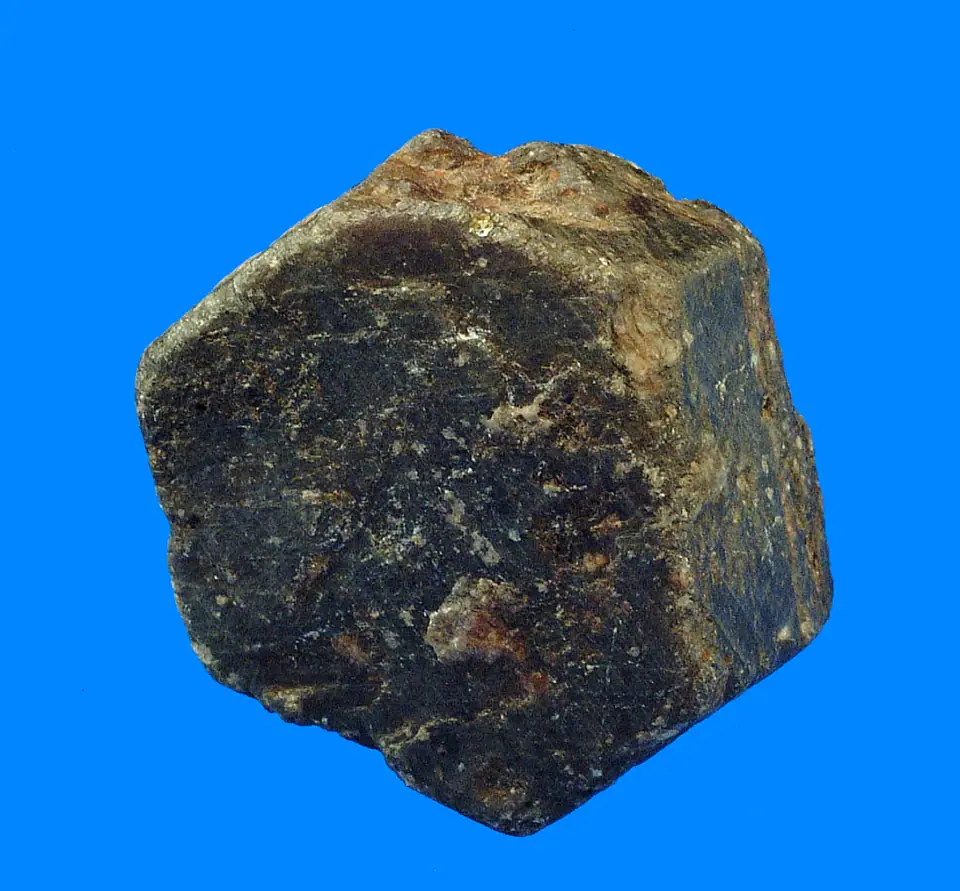
| Habit | Commonly six-sided prisms with pyramidal terminations | Commonly barrel-shaped, prismatic, tabular, or rounded | Well-preserved natural faces can separate typical crystals nondestructively. |
| Breakage | No cleavage; conchoidal fracture | No true cleavage; parting may create planar breaks | Flat parting in corundum can be mistaken for cleavage. |
| Density | Specific gravity about 2.65 | Specific gravity near 4 | Corundum feels heavier than quartz of equal compact volume. |
A practical identification sequence
- 1
Document crystal shape and host rock before removing or cleaning anything.
- 2
Inspect natural faces and existing breaks with a hand lens.
- 3
Compare heft only with similarly sized compact specimens.
- 4
Seek gemological testing instead of scratching a plausible ruby or sapphire.
Where the distinction gets difficult
- Color does not distinguish amethyst, ruby, sapphire, or treated material reliably.
- Synthetic corundum and manufactured glass may occur in jewelry or industrial debris.
- Field tests cannot establish natural origin, treatment, gem quality, or value.
Use several independent observations. This comparison supports preliminary field identification, not laboratory confirmation, appraisal, proof of origin, or collecting permission.
Quartz vs. corundum FAQ
Can corundum scratch quartz?
Yes. Mohs 9 corundum scratches Mohs 7 quartz, but this is not an appropriate test for a potentially valuable specimen.
Is every red corundum ruby?
Ruby is the red gem variety of corundum, but color quality, natural origin, treatments, and value require professional evaluation.
Can quartz look like sapphire?
Blue quartz and manufactured materials can resemble sapphire in color. Crystal form, density, optical properties, and laboratory tests provide stronger evidence.
Authoritative sources
LithoMap wrote this comparison in original language from the physical properties and geological concepts supported by these public scientific references.
- Minerals and their physical properties U.S. National Park Service
- Mohs Hardness Scale U.S. National Park Service
- Natural Gemstones: Mineral Gemstones U.S. Geological Survey
- Corundum and Its Occurrence and Distribution in the United States U.S. Geological Survey
Editorial review: September 17, 2026.