
The most useful distinction
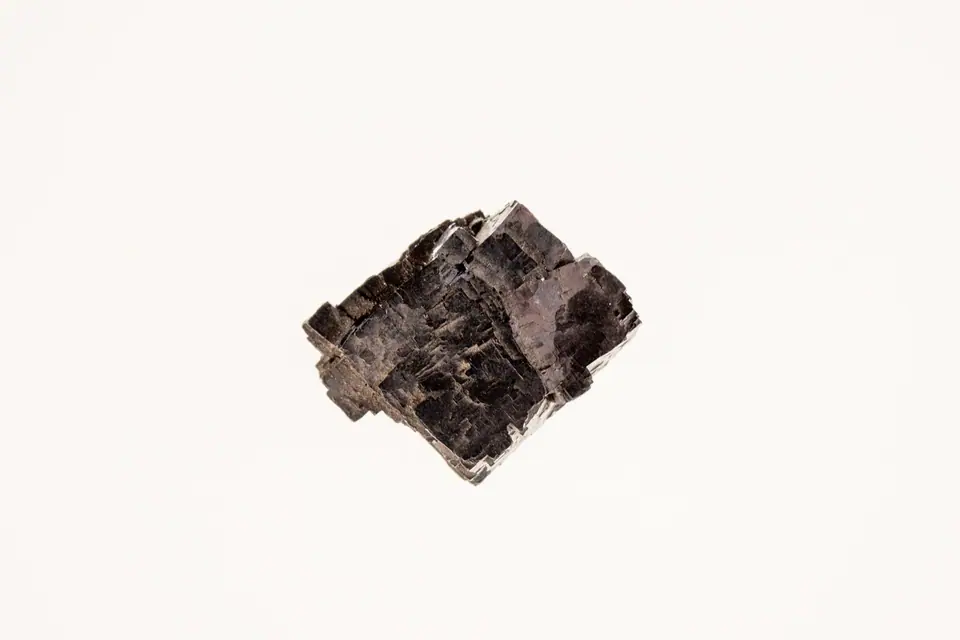
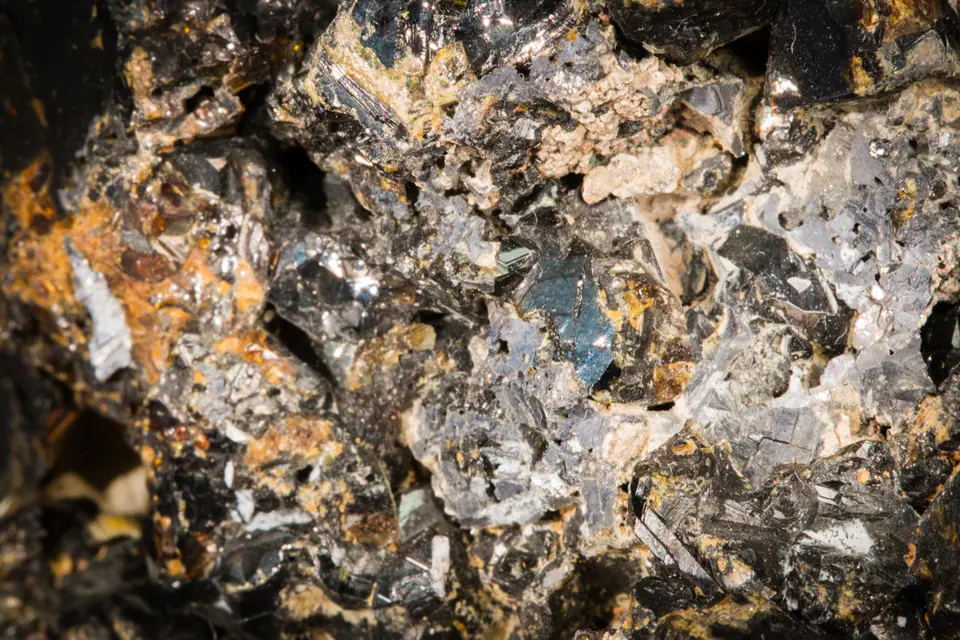
Compare cleavage geometry and streak. Cubic right-angle fragments with a gray-black streak favor galena; many flashing cleavage faces with a pale yellow to brown streak favor sphalerite.
Galena and Sphalerite comparison table
| Property | Galena | Sphalerite | How to use it |
|---|---|---|---|
| Cleavage | Three perfect directions at 90°, producing cubes | Six perfect directions, producing many-faced fragments | Cleavage geometry is the strongest visible distinction. |
| Streak | Lead-gray to black | White, pale yellow, or light brown | Powder color remains different even when both specimens look dark. |
| Luster and color | Metallic lead-gray | Resinous to adamantine; yellow, brown, red-brown, or black | Iron-rich sphalerite may look nearly metallic, so pair luster with cleavage. |
| Density and hardness | Heavier and softer, Mohs about 2.5 | Lighter and harder, Mohs 3.5 to 4 | Heft and scratch resistance support the primary clues. |
A practical identification sequence
- 1
Inspect existing broken surfaces for cubes or numerous angled cleavage faces.
- 2
Compare luster under diffuse light rather than direct glare.
- 3
Use a minimal streak test only on expendable material.
- 4
Check for intergrowths because both minerals commonly occupy the same specimen.
Where the distinction gets difficult
- Treat both minerals as potentially hazardous sulfides and avoid dust.
- Galena’s lead content requires handwashing and careful specimen storage.
- Mixed grains can combine dark streak, pale streak, and several cleavage patterns.
Use several independent observations. This comparison supports preliminary field identification, not laboratory confirmation, appraisal, proof of origin, or collecting permission.
Galena vs. sphalerite FAQ
Can sphalerite be black and metallic?
Iron-rich sphalerite can be nearly black and submetallic, but its lighter streak and six cleavage directions differ from galena.
Why do galena and sphalerite occur together?
Both can precipitate from the same ore-forming hydrothermal fluids as temperature and chemistry change.
Which mineral is heavier?
Galena is substantially denser, although attached host rock and cavities can make informal heft comparisons misleading.
Authoritative sources
LithoMap wrote this comparison in original language from the physical properties and geological concepts supported by these public scientific references.
- Lead—Soft and Easy to Cast U.S. Geological Survey
- Minerals and their physical properties U.S. National Park Service
- Mohs Hardness Scale U.S. National Park Service
- Natural Gemstones: Mineral Gemstones U.S. Geological Survey
- Zinc Statistics and Information U.S. Geological Survey
Editorial review: September 17, 2026.