
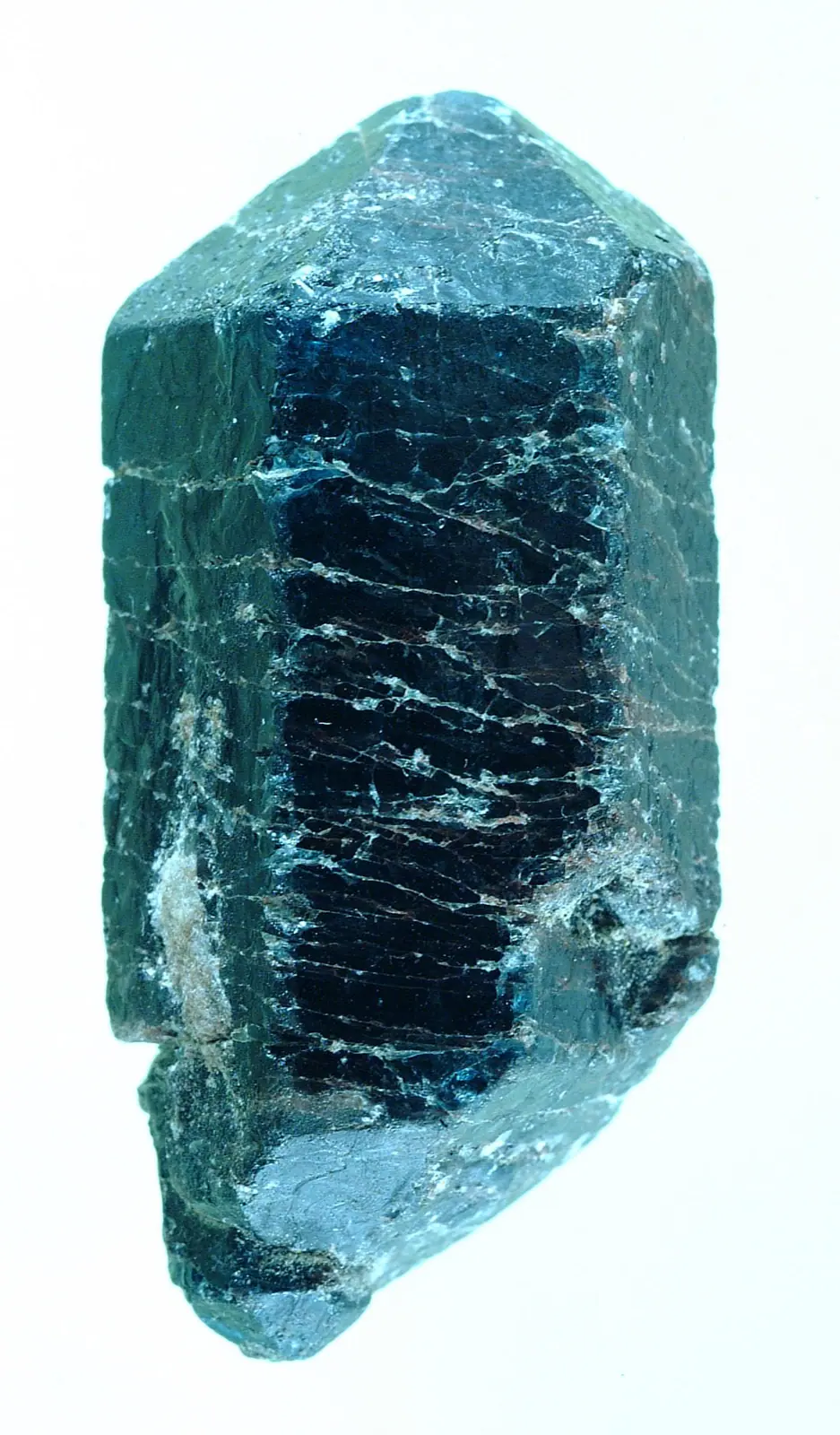
.jpg)
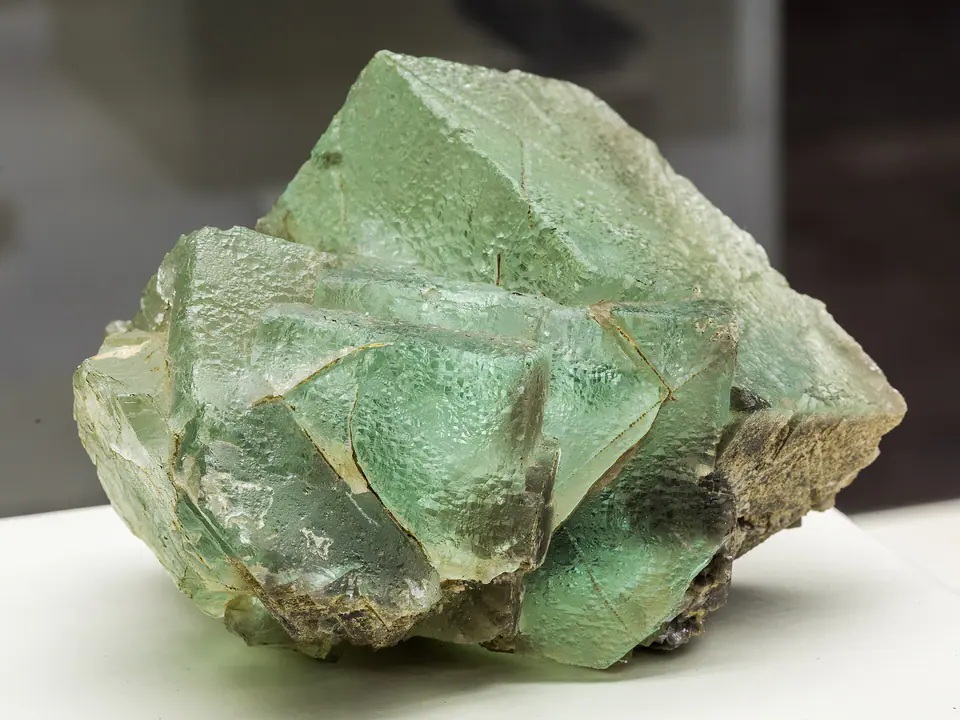

The most useful distinction
Test hardness and breakage. Apatite at Mohs 5 can scratch fluorite; fluorite at Mohs 4 develops repeated triangular octahedral cleavage faces.
Apatite and Fluorite comparison table
| Property | Apatite | Fluorite | How to use it |
|---|---|---|---|
| Hardness | Mohs 5 | Mohs 4 | Apatite can scratch fluorite, while both are softer than quartz. |
| Cleavage | Poor to indistinct | Perfect in four directions | Repeated triangular cleavage faces strongly favor fluorite. |
| Crystal habit | Hexagonal prisms or tabular crystals | Cubes and octahedra are common | Natural faces can separate intact crystals without damage. |
| Color and fluorescence | Many colors; fluorescence variable | Many colors; fluorescence common in some specimens but absent in others | Neither color nor fluorescence alone identifies the mineral. |
A practical identification sequence
- 1
Ignore color and inspect surviving crystal faces.
- 2
Check whether a clean edge can scratch fluorite or is scratched by it.
- 3
Look at existing broken surfaces for octahedral cleavage.
- 4
Use density or optical testing when a valuable crystal should remain undamaged.
Where the distinction gets difficult
- Do not scratch transparent or collectible crystals.
- Mixed specimens can give contradictory hardness results.
- Ultraviolet response varies and requires proper eye and skin protection.
Use several independent observations. This comparison supports preliminary field identification, not laboratory confirmation, appraisal, proof of origin, or collecting permission.
Apatite vs. fluorite FAQ
Can both minerals be green?
Yes. Green is common in both and is not a reliable distinction.
Does apatite fluoresce?
Some apatite fluoresces, but the response varies. Fluorescence is supporting evidence rather than a primary test.
Which one scratches glass?
Neither typical fluorite nor apatite reliably scratches ordinary glass; quartz and harder minerals do.
Authoritative sources
LithoMap wrote this comparison in original language from the physical properties and geological concepts supported by these public scientific references.
- Phosphate Rock Statistics and Information U.S. Geological Survey
- Minerals and their physical properties U.S. National Park Service
- Mohs Hardness Scale U.S. National Park Service
- Natural Gemstones: Mineral Gemstones U.S. Geological Survey
Editorial review: September 17, 2026.