
.jpg)

The most useful distinction
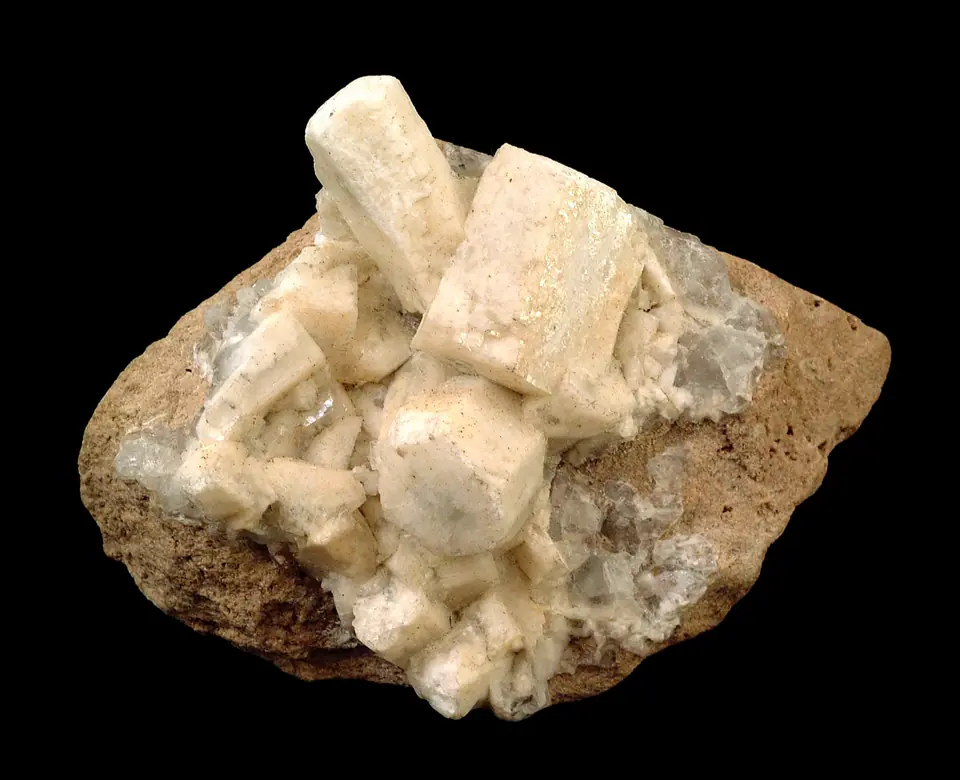
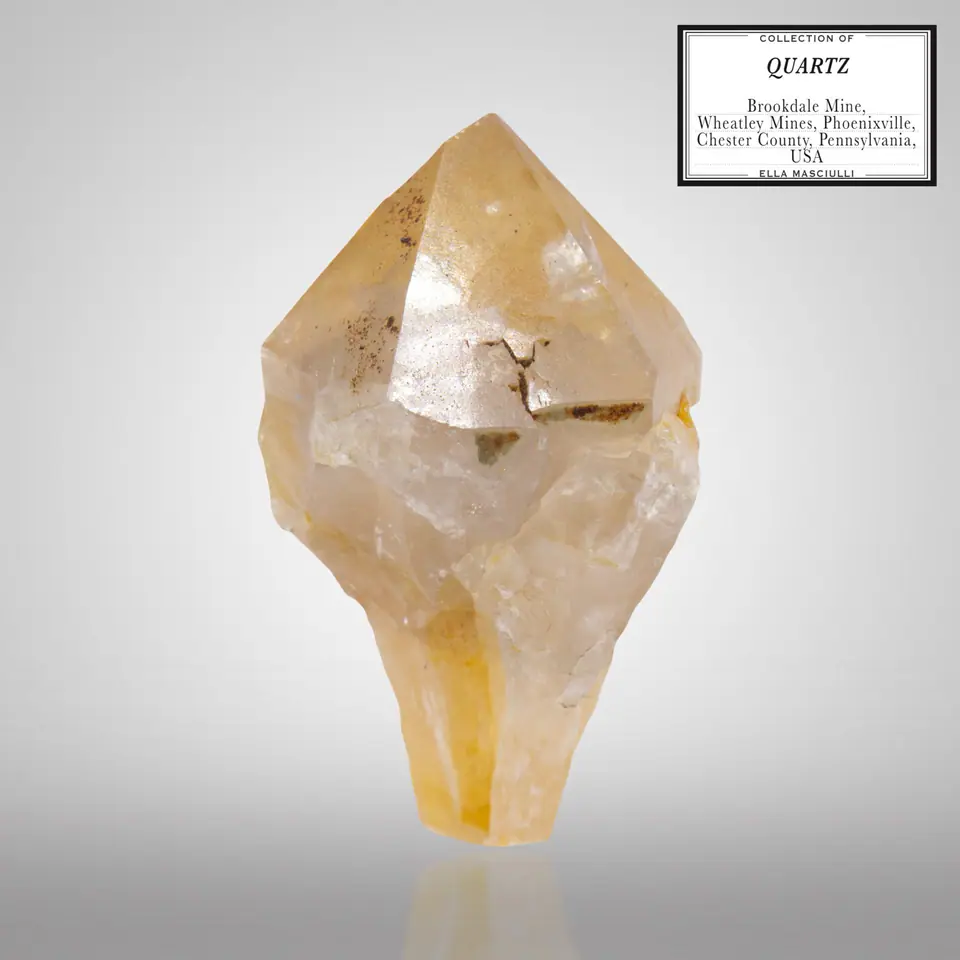
Study the prism and termination. Flat-ended, longitudinally striated hexagonal prisms favor beryl; pyramidal points and conchoidal fracture favor quartz.
Beryl and Quartz comparison table
| Property | Beryl | Quartz | How to use it |
|---|---|---|---|
| Hardness | Mohs 7.5 to 8 | Mohs 7 | Beryl is somewhat harder, though scratch testing may be destructive. |
| Termination | Often flat basal face, sometimes modified | Commonly pyramidal termination | One of the best visual clues on intact crystals. |
| Cleavage and fracture | Poor basal cleavage; uneven to conchoidal fracture | No cleavage; conchoidal fracture | Cleavage is subtle, so habit is often more useful. |
| Density | Usually about 2.6 to 2.9 depending on composition | About 2.65 | Ranges overlap, so density alone may not resolve the pair. |
A practical identification sequence
- 1
Inspect cross section and termination without damaging the crystal.
- 2
Look for longitudinal grooves and a flat basal end.
- 3
Check existing breaks for cleavage only as supporting evidence.
- 4
Use refractive index or other professional tests for transparent material.
Where the distinction gets difficult
- Color does not prove emerald, aquamarine, or another beryl variety.
- Do not grind beryl or inhale beryllium-bearing dust.
- Synthetic and treated gem materials require laboratory or gemological testing.
Use several independent observations. This comparison supports preliminary field identification, not laboratory confirmation, appraisal, proof of origin, or collecting permission.
Beryl vs. quartz FAQ
Can beryl look like quartz?
Yes. Colorless or pale beryl can closely resemble quartz, especially when broken or lacking terminations.
Is aquamarine blue quartz?
No. Aquamarine is a blue to blue-green gem variety of beryl; blue quartz is a different material.
Can hardness separate them?
Sometimes, but the difference is small and a scratch test can damage valuable material. Crystal form and optical testing are safer.
Authoritative sources
LithoMap wrote this comparison in original language from the physical properties and geological concepts supported by these public scientific references.
- Minerals and their physical properties U.S. National Park Service
- Mohs Hardness Scale U.S. National Park Service
- Natural Gemstones: Mineral Gemstones U.S. Geological Survey
Editorial review: September 17, 2026.