
.jpg)

The most useful distinction
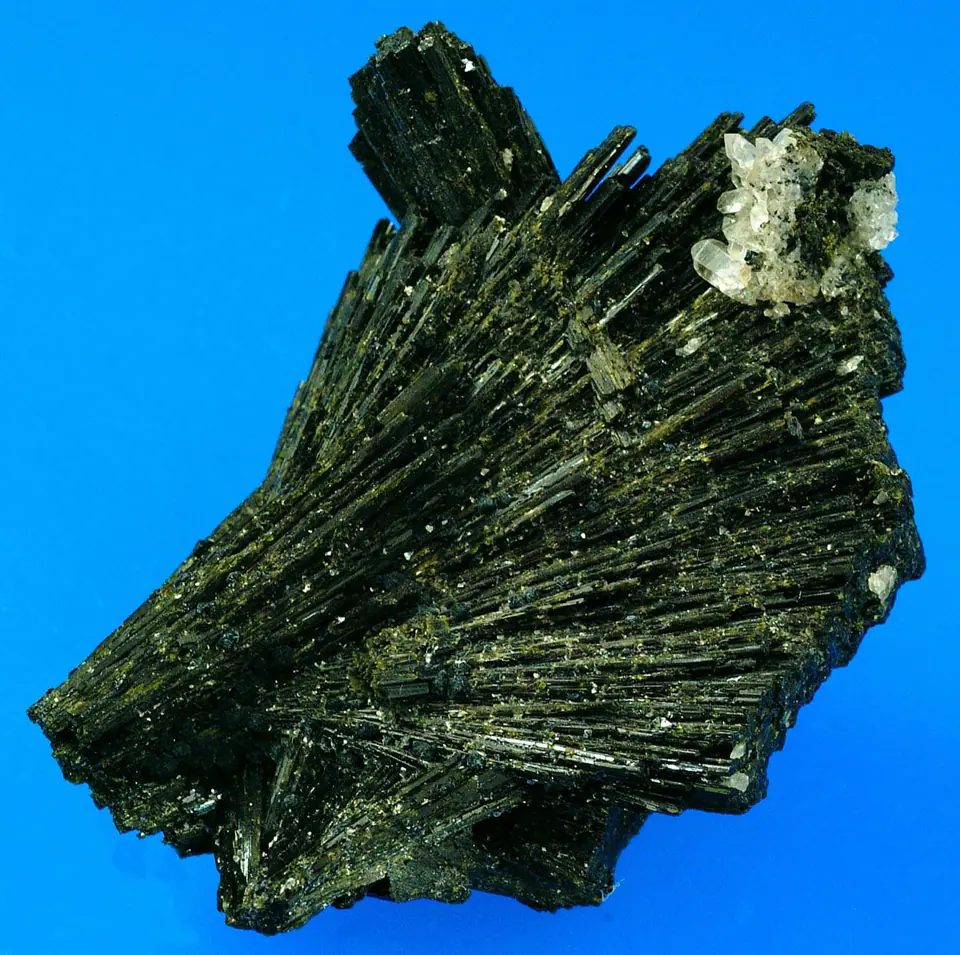
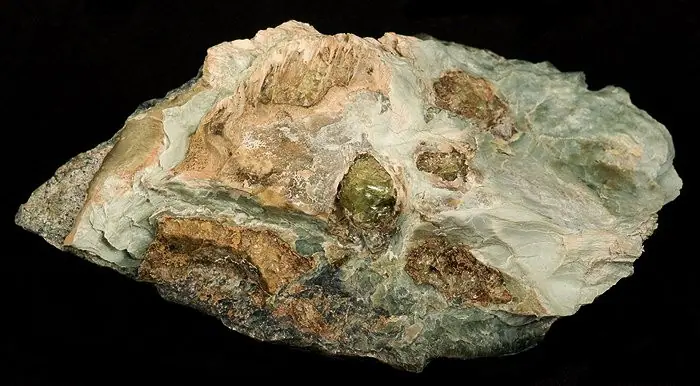
Look for cleavage and setting. One repeated flat cleavage in pistachio-green prismatic material favors epidote; rounded or sugary olive-green grains with poor cleavage favor olivine.
Epidote and Olivine comparison table
| Property | Epidote | Olivine | How to use it |
|---|---|---|---|
| Typical color | Pistachio, yellow-green, or dark green | Olive, yellow-green, or brownish green | Color tone helps only when combined with texture. |
| Cleavage | One perfect direction | Poor cleavage; commonly uneven or conchoidal fracture | Repeated flat surfaces favor epidote. |
| Habit | Prismatic, bladed, radiating, or granular | Granular, rounded, or short blocky crystals | Elongate epidote contrasts with typical olivine grains. |
| Geologic setting | Metamorphic and hydrothermally altered rocks | Mafic and ultramafic igneous rocks and mantle-derived material | Context is highly useful but not definitive alone. |
A practical identification sequence
- 1
Inspect a fresh surface because both minerals weather readily.
- 2
Look for a repeated flat cleavage direction.
- 3
Compare prismatic versus granular crystal shape.
- 4
Use the mapped rock type and associated minerals as supporting evidence.
Where the distinction gets difficult
- Alteration can replace olivine with serpentine, iddingsite, or other minerals.
- Massive epidote-chlorite mixtures may obscure cleavage.
- Do not identify either mineral solely from green color.
Use several independent observations. This comparison supports preliminary field identification, not laboratory confirmation, appraisal, proof of origin, or collecting permission.
Epidote vs. olivine FAQ
Which mineral is harder?
Their hardness ranges overlap; both can scratch glass in suitable fresh grains.
Does olivine have cleavage?
Olivine has poor cleavage that is usually not prominent in hand specimen. Epidote has one much better cleavage direction.
Can both occur in igneous rocks?
Yes, but olivine is commonly primary in mafic rock while epidote more often records metamorphism or hydrothermal alteration.
Authoritative sources
LithoMap wrote this comparison in original language from the physical properties and geological concepts supported by these public scientific references.
- Minerals and their physical properties U.S. National Park Service
- Mohs Hardness Scale U.S. National Park Service
- Natural Gemstones: Mineral Gemstones U.S. Geological Survey
Editorial review: September 17, 2026.