

What is monazite?
Monazite names a group of monoclinic rare-earth phosphates dominated by cerium, lanthanum, neodymium, or related elements. Thorium and uranium commonly substitute in variable amounts, so composition and radioactivity cannot be inferred from color or appearance.
What does monazite look like?
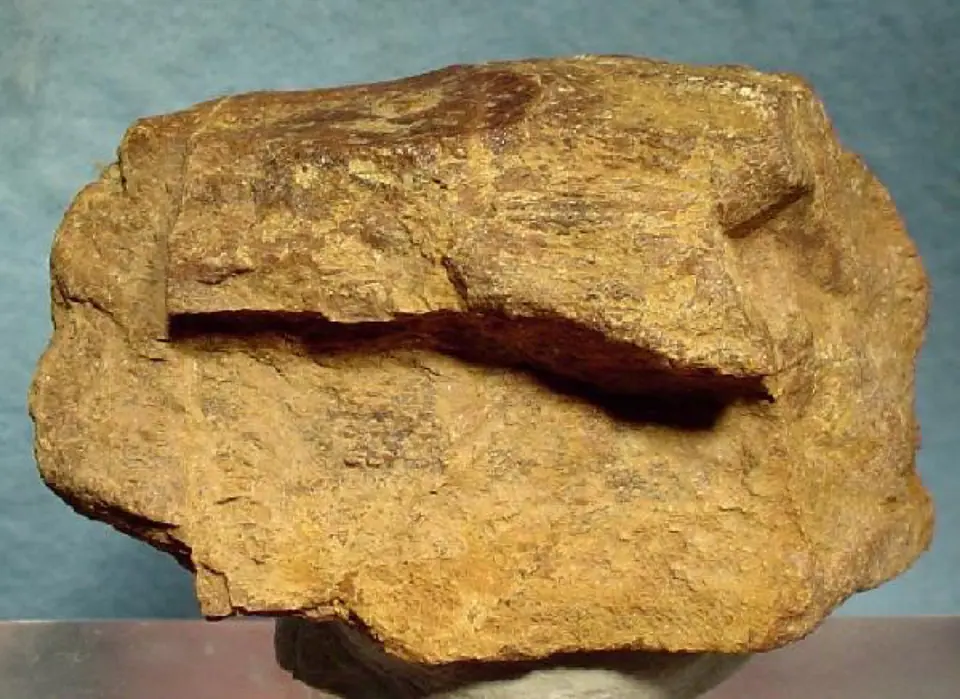
Crystals may be tabular, wedge-shaped, prismatic, or crudely equant, with yellow, brown, red-brown, greenish, or nearly black color and resinous to adamantine luster.
Most natural occurrences are tiny accessory grains dispersed through rock or concentrated in heavy-mineral sand rather than large display crystals. Weathering can make grains dull or earthy.
Identification tests
Begin with observation and use the least destructive test first. Results can change with weathering, mixtures, coatings, and grain size. Review the step-by-step field-test methods before altering an unfamiliar specimen.
Hardness
About 5 to 5.5Softer than zircon and many garnets.
Density
High; commonly about 4.6 to 5.7Supports a heavy accessory mineral but overlaps zircon and other phases.
Streak
WhiteExpected but not diagnostic.
Radioactivity
Variable; may be elevated because of thorium or uraniumOnly an appropriate calibrated instrument can characterize a specimen; radioactivity alone does not identify it.
Useful procedures: Mohs hardness test · Specific gravity and density test · Mineral streak test
Common lookalikes
Zircon
Harder at about 7.5 and commonly forms tetragonal prisms with pyramidal terminations.
Titanite
Often forms distinctive wedge-shaped crystals, has lower density, and commonly shows different cleavage and optical behavior.
Rutile
Usually harder and more commonly forms strongly striated tetragonal prisms or needles.
How does it form?
Monazite crystallizes as an accessory mineral in granitic and pegmatitic rocks and grows or recrystallizes during metamorphism. Its chemistry can record geologic age and metamorphic processes.
Its density and resistance to weathering concentrate it with zircon, rutile, ilmenite, garnet, and magnetite in river and coastal placers.
Geologic setting and occurrence
Monazite occurs in igneous and metamorphic rocks and heavy-mineral sands. U.S. placer and bedrock occurrences are known, but identification and regulatory context may require professional analysis.
A dark or golden heavy-sand grain is not proof of monazite, rare-earth value, or elevated radiation.
Uses and significance
Monazite has been processed as a source of rare-earth elements and thorium and is used in geochronology and metamorphic research. Modern recovery depends on mineral chemistry, processing technology, economics, and radioactive-material controls.
Field notes
- Do not carry, grind, sieve, or store bulk suspected monazite concentrate casually.
- Keep unknown dense concentrates away from living and sleeping areas until characterized by a qualified laboratory or radiation-safety professional.
- Follow land-access, collecting, transport, and radioactive-material rules; a consumer detector reading is not a complete identification or safety assessment.
This guide supports preliminary field identification, not a laboratory determination, appraisal, hazard assessment, or statement of ownership or collecting permission. Verify land status and local rules before handling or collecting material.
Authoritative sources
LithoMap wrote this guide in original language using the scientific concepts and physical-property standards supported by these sources.
- Rare Earths Statistics and Information U.S. Geological Survey
- Mineral Potential Tracts for Shoreline Titanium-Zirconium Placer Deposits U.S. Geological Survey
- Minerals and their physical properties U.S. National Park Service
- Mohs Hardness Scale U.S. National Park Service
- Natural Gemstones: Mineral Gemstones U.S. Geological Survey
Editorial review: September 17, 2026.