Identify common rocks by combining texture, grain size, minerals, structures, and simple field tests. Each isolated guide explains lookalikes and the limits of hand-sample identification.
Download LithoMapPut U.S. geology in your pocket.Choose Google Play or the App Store.
First decide whether grains interlock, are cemented, or align in a metamorphic fabric. Then compare grain size, composition, bedding, vesicles, cleavage, hardness, and acid reaction.
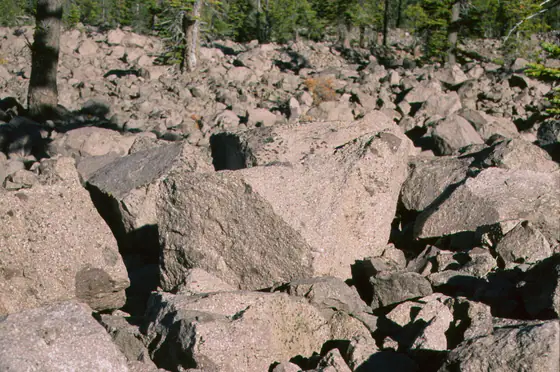
Granite is a coarse-grained intrusive igneous rock usually recognized by interlocking light-colored feldspar and quartz with scattered dark mica or amphibole.
Crystals are visible without magnification
Quartz and feldspar form an interlocking mosaic
Usually light gray, white, pink, or salmon with dark flecks
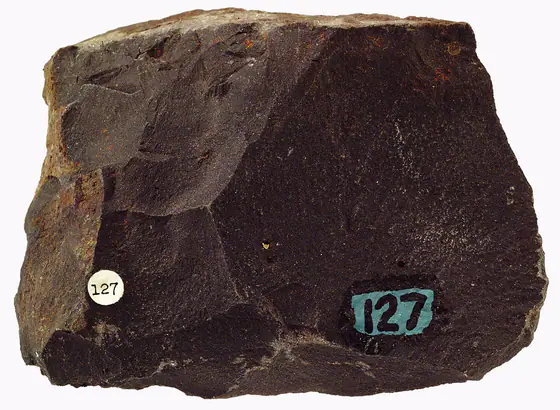
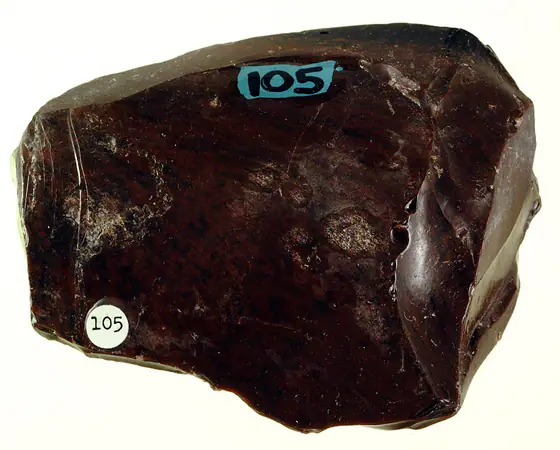
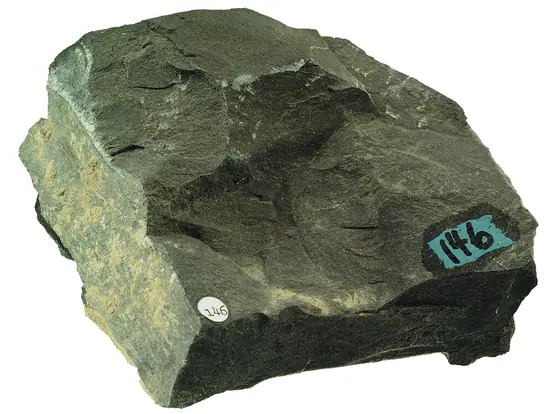
Basalt is a dark, fine-grained volcanic rock formed from relatively iron- and magnesium-rich lava; crystals are commonly too small to distinguish by eye.
Dark gray to black on a fresh surface
Very fine-grained or glassy groundmass
May contain round gas-bubble cavities called vesicles
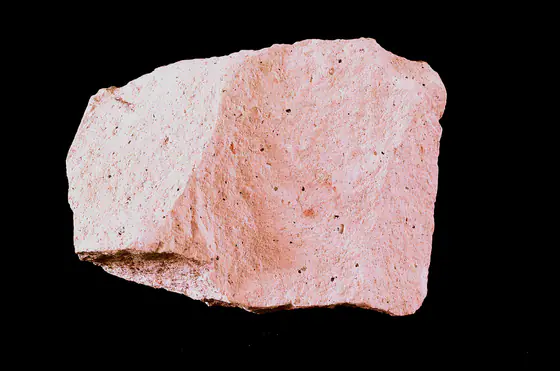
Rhyolite is a silica-rich volcanic rock, commonly light colored and fine grained, that is broadly comparable in composition to granite but cooled at or near the surface.
Fine-grained light gray, tan, pink, or reddish matrix
May contain visible quartz or feldspar phenocrysts
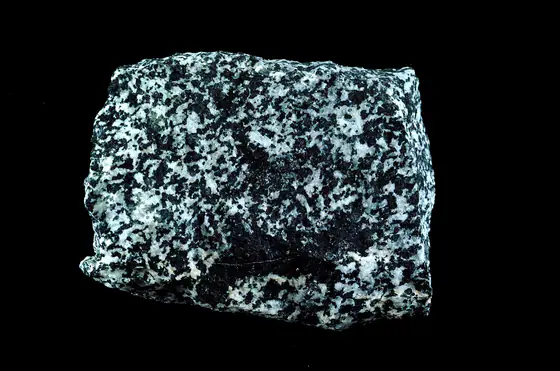
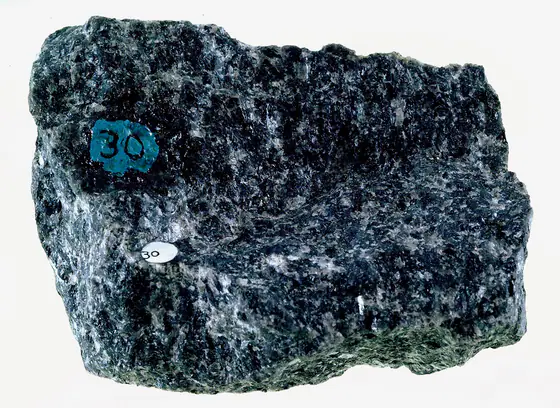
Diorite is a coarse-grained intrusive igneous rock, commonly recognized by an interlocking salt-and-pepper mixture of pale plagioclase and dark amphibole, pyroxene, or biotite.
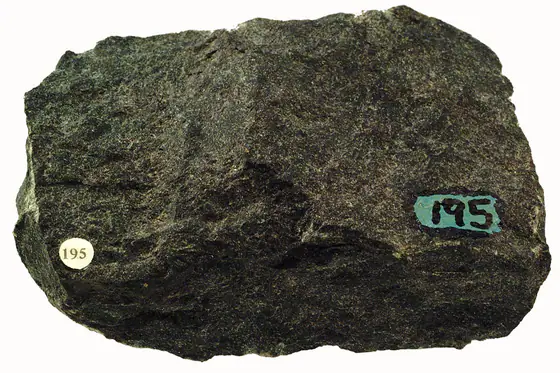
Gabbro is a dark, coarse-grained intrusive igneous rock made chiefly of calcium-rich plagioclase and pyroxene, commonly with olivine or iron-titanium oxides.
Dark rock with crystals visible to the unaided eye
Andesite is a fine-grained intermediate volcanic rock, commonly medium gray and frequently porphyritic with visible plagioclase crystals in a much finer groundmass.
Limestone is a sedimentary rock composed mostly of calcium carbonate, commonly as calcite derived from shells, lime mud, chemical precipitation, or later recrystallization.
Fresh surface commonly reacts with dilute acid
Often gray, tan, cream, or buff
May contain shells, fossils, ooids, or lime-mud texture
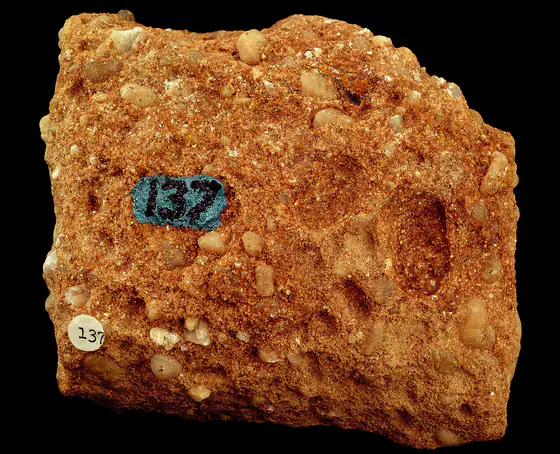
Conglomerate contains rounded gravel-size clasts held in a finer matrix or cement, recording transport energetic enough to move pebbles, cobbles, or boulders.
Rounded clasts larger than 2 millimeters
Pebbles or cobbles visibly enclosed in matrix or cement
Dolostone is a sedimentary carbonate rock composed mainly of the mineral dolomite, commonly distinguished from limestone by its weaker acid response, slightly greater hardness, and frequent crystalline or sugary texture.
Commonly tan, buff, gray, or brown
Usually reacts weakly with dilute acid unless powdered
Siltstone is a clastic sedimentary rock made mostly of silt-size particles, finer than sandstone but generally coarser and grittier than clay-rich mudstone.
Very fine grains are difficult to see unaided
A fresh surface may feel faintly gritty against teeth or fingertips
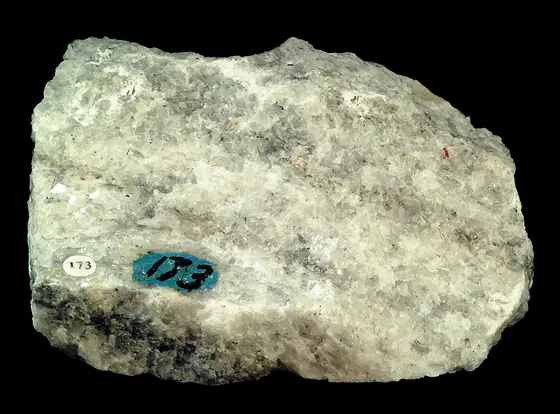
Marble is recrystallized carbonate rock, usually derived from limestone or dolostone, with interlocking calcite or dolomite crystals and little or no foliation.
Sugary mosaic of carbonate crystals
Calcitic marble reacts readily with dilute acid
Usually white, gray, pink, green, or patterned by impurities
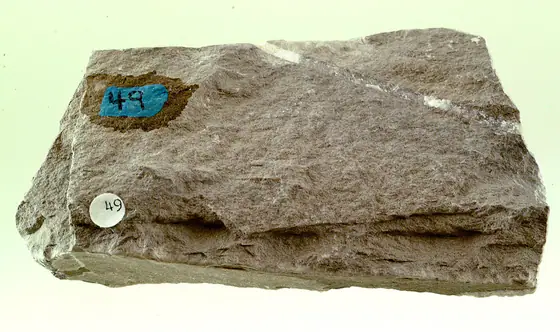
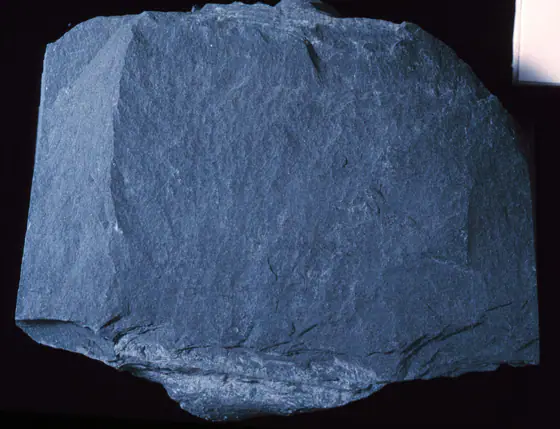
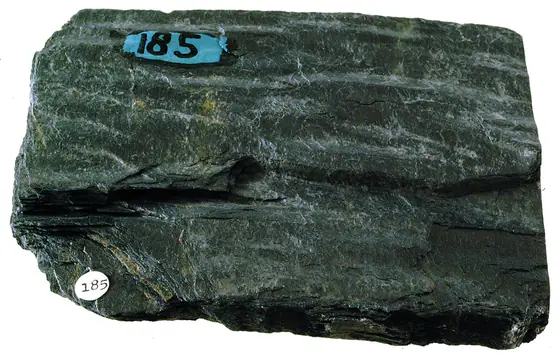
Slate is a fine-grained metamorphic rock that splits along closely spaced, planar slaty cleavage, commonly formed from shale or mudstone at relatively low metamorphic grade.
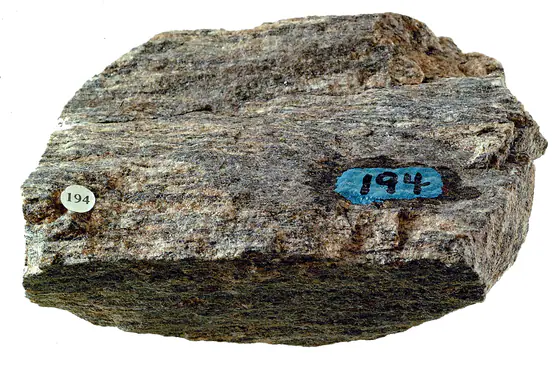
Gneiss is a high-grade metamorphic rock identified by segregation of light and dark minerals into bands or lenses rather than by one fixed mineral composition.
Alternating light and dark mineral bands
Coarse visible crystals
Foliation is typically irregular or compositional
Identify gneiss Medium- to coarse-grained foliated metamorphic rock
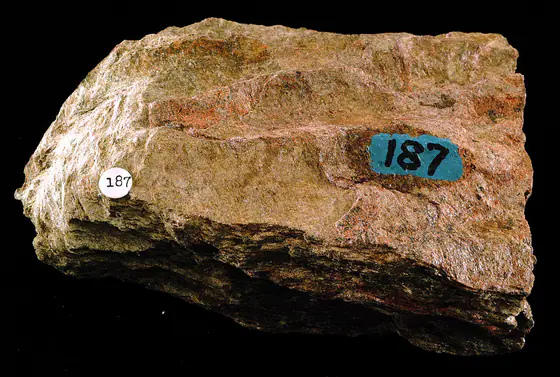
Schist is a foliated metamorphic rock with enough aligned platy or elongate minerals—commonly mica—to produce a visible sheen and a tendency to split along schistosity.
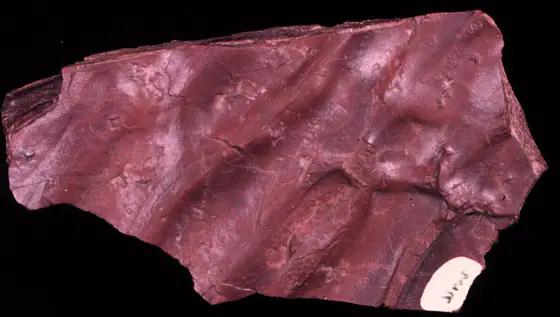
Phyllite is a fine-grained foliated metamorphic rock between slate and schist, recognized by a silky sheen and gently wavy foliation produced by microscopic mica.
Start with the question you are trying to resolve. Each isolated comparison page focuses on the observations that separate two commonly confused rocks.

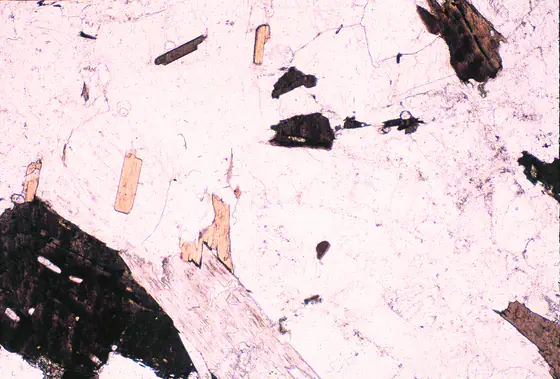 Intrusive igneous rock