
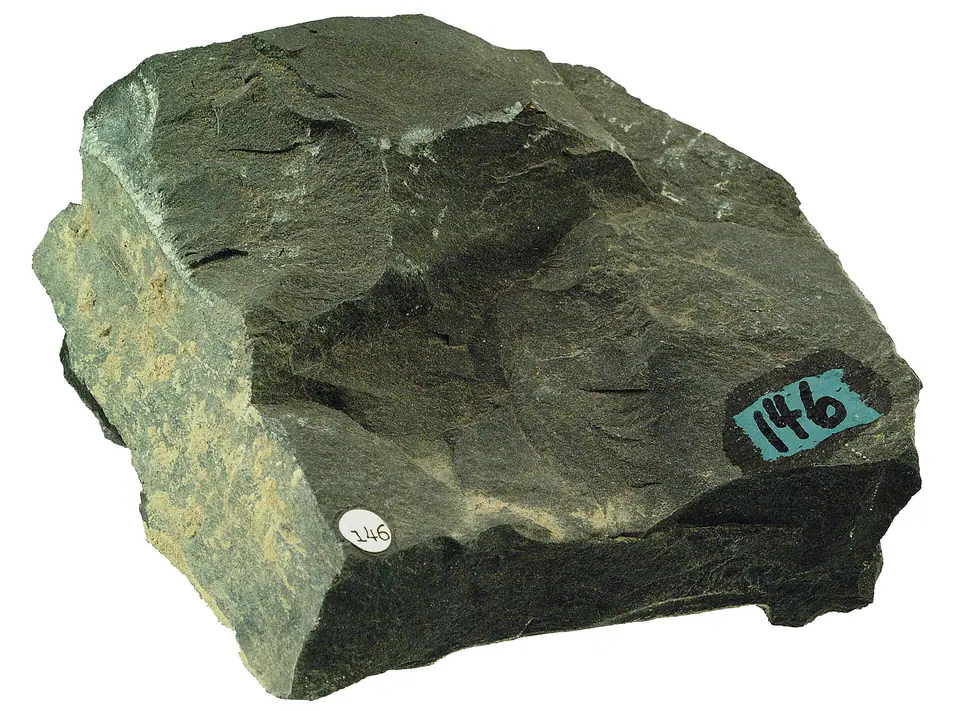
.jpg)
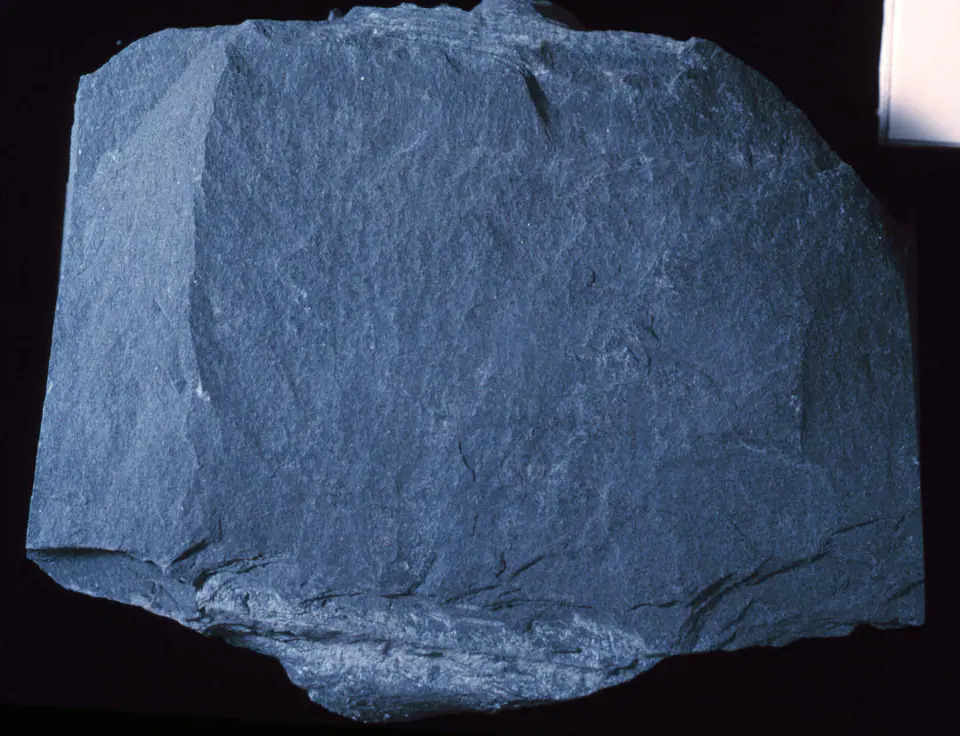
.jpg)
The most useful distinction
Determine what controls the splitting. Shale follows original sedimentary layering; slate follows metamorphic cleavage, which may cut across bedding and tends to make harder, more even sheets.
Shale and Slate comparison table
| Property | Shale | Slate | How to use it |
|---|---|---|---|
| Rock class | Sedimentary mudrock | Low-grade metamorphic rock | The distinction records whether metamorphic pressure and recrystallization altered the mudrock. |
| Splitting surface | Fissility generally parallels depositional bedding | Slaty cleavage reflects aligned microscopic minerals and may cross original bedding | Two intersecting planar features strongly support slate. |
| Hardness and sound | Commonly softer, earthy, and easily crumbled when weathered | Usually denser and harder; thin plates may ring when tapped | These are useful supporting clues but vary with alteration and moisture. |
| Visible sedimentary evidence | Laminae, organic material, fossils, or soft-sediment features may survive | Cleavage and recrystallization commonly obscure those features | Clear lamination alone is not enough; establish which plane the rock follows. |
A practical identification sequence
- 1
Inspect several broken pieces and identify every planar surface.
- 2
Look for color or grain changes that mark original bedding.
- 3
Compare the splitting plane with bedding; cleavage cutting bedding favors slate.
- 4
Assess hardness, edge sharpness, and outcrop context as supporting evidence.
Where the distinction gets difficult
- Weathered slate can become soft, and hard shale can mimic slate.
- Fine-grained rocks may require microscopy when bedding and cleavage are parallel.
- Loose plates on steep slopes and old quarry faces can be unstable.
Use several independent observations. This comparison supports preliminary field identification, not laboratory confirmation, appraisal, proof of origin, or collecting permission.
Shale vs. slate FAQ
Does shale become slate?
Shale or related mudrock can become slate during low-grade metamorphism as pressure aligns microscopic minerals and creates slaty cleavage.
Why does slate split into sheets?
Its aligned platy minerals define a pervasive cleavage. That cleavage, not simply sedimentary bedding, guides the split.
Can slate contain fossils?
Low-grade metamorphism may preserve distorted fossils or bedding traces, but cleavage commonly obscures fine details.
Authoritative sources
LithoMap wrote this comparison in original language from the physical properties and geological concepts supported by these public scientific references.
- How Rocks Are Classified U.S. National Park Service
- Rocks and Minerals U.S. National Park Service
- What is the difference between a rock and a mineral? U.S. Geological Survey
Editorial review: September 17, 2026.