
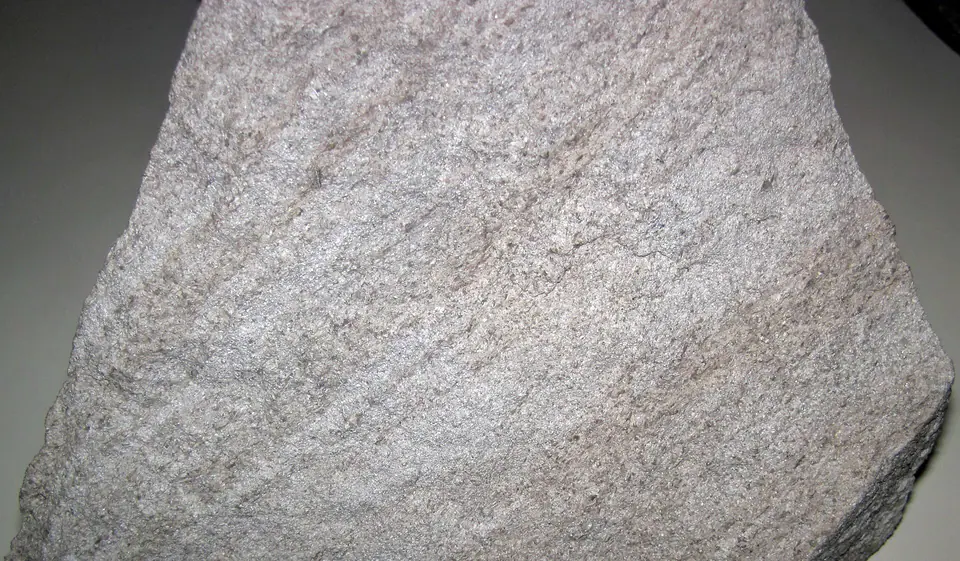
.jpg)
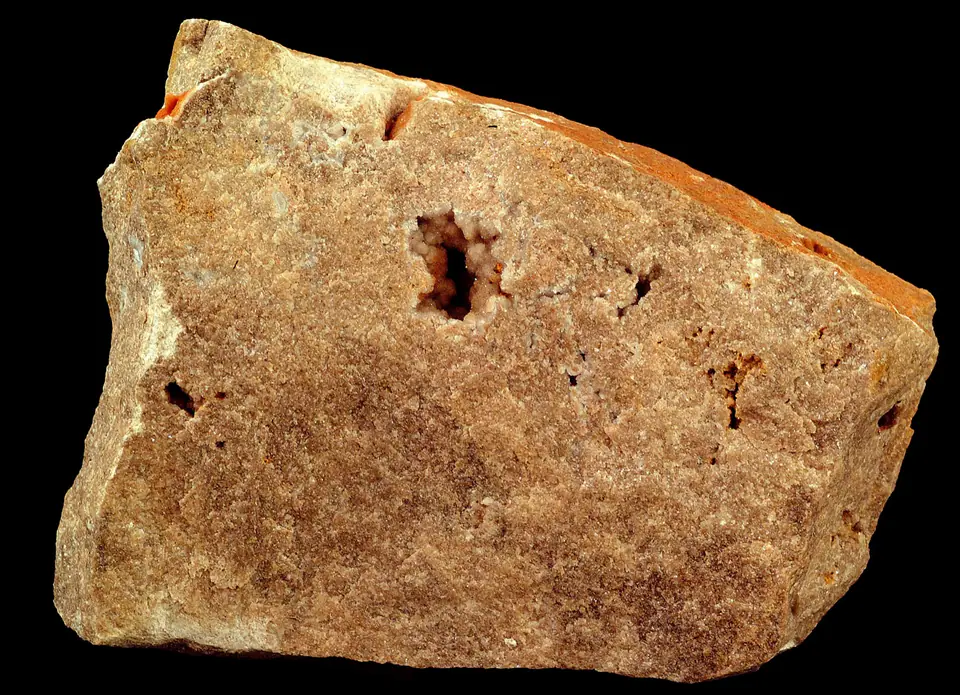
.jpg)
The most useful distinction
Use a controlled acid response with texture and hardness. Immediate strong fizz favors limestone; weak surface reaction that strengthens on powder favors dolostone.
Limestone and Dolostone comparison table
| Property | Limestone | Dolostone | How to use it |
|---|---|---|---|
| Dominant mineral | Usually calcite | Usually dolomite | Mineralogy produces the main field-test differences. |
| Dilute acid response | Immediate vigorous effervescence on a clean surface | Weak or delayed on a surface; stronger when powdered | The most useful field distinction when performed safely. |
| Hardness | Near Mohs 3 and scratched readily by steel | Near Mohs 3.5 to 4 and slightly more resistant | Supporting evidence when acid behavior is ambiguous. |
| Texture and fossils | May preserve fossils, ooids, lime mud, or shells | Often crystalline or sugary, though fossils and sedimentary textures may survive | Replacement can erase or preserve original limestone features unevenly. |
A practical identification sequence
- 1
Expose a small fresh surface on expendable material.
- 2
Observe texture, fossils, and crystal size before testing.
- 3
Apply one small drop of dilute acid with eye protection.
- 4
If reaction is weak, test a tiny powder only where lawful and appropriate.
Where the distinction gets difficult
- Mixed calcite and dolomite can produce intermediate reactions.
- Weathered rinds and coatings suppress effervescence.
- Never acid-test monuments, finished stone, fossils, or protected outcrops.
Use several independent observations. This comparison supports preliminary field identification, not laboratory confirmation, appraisal, proof of origin, or collecting permission.
Limestone vs. dolostone FAQ
Is dolostone the same as dolomite?
Dolomite is the mineral. Dolostone is a rock composed predominantly of that mineral, although older sources often call the rock dolomite.
Can dolostone contain fossils?
Yes. Dolomitization may preserve, blur, or destroy fossils depending on how replacement proceeded.
Does dolostone never fizz?
It can react weakly on a fresh surface and more clearly when powdered. Calcite impurities can cause localized strong fizz.
Authoritative sources
LithoMap wrote this comparison in original language from the physical properties and geological concepts supported by these public scientific references.
- How Rocks Are Classified U.S. National Park Service
- Rocks and Minerals U.S. National Park Service
- What is the difference between a rock and a mineral? U.S. Geological Survey
- Sedimentary Rocks U.S. National Park Service
Editorial review: September 17, 2026.