
.jpg)
.jpg)
The most useful distinction
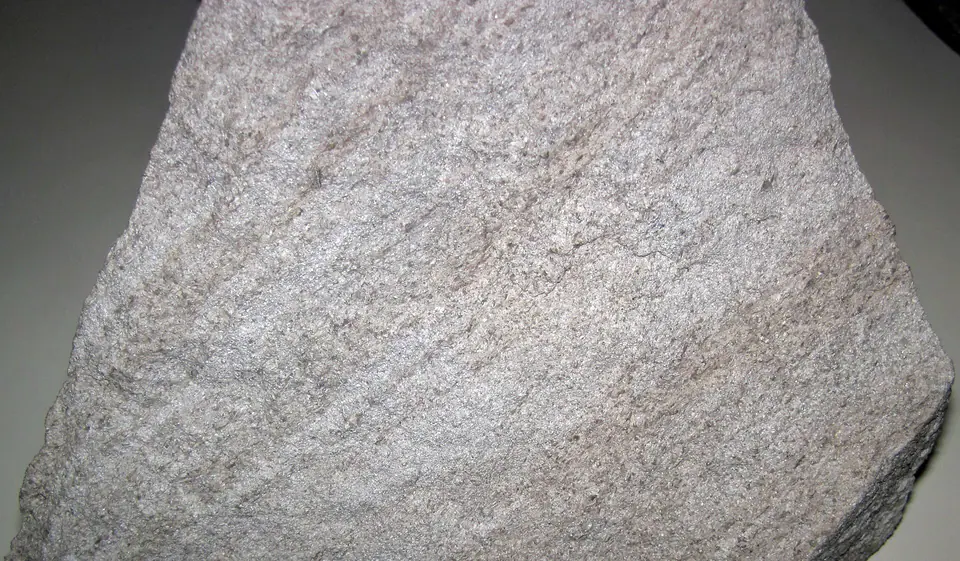
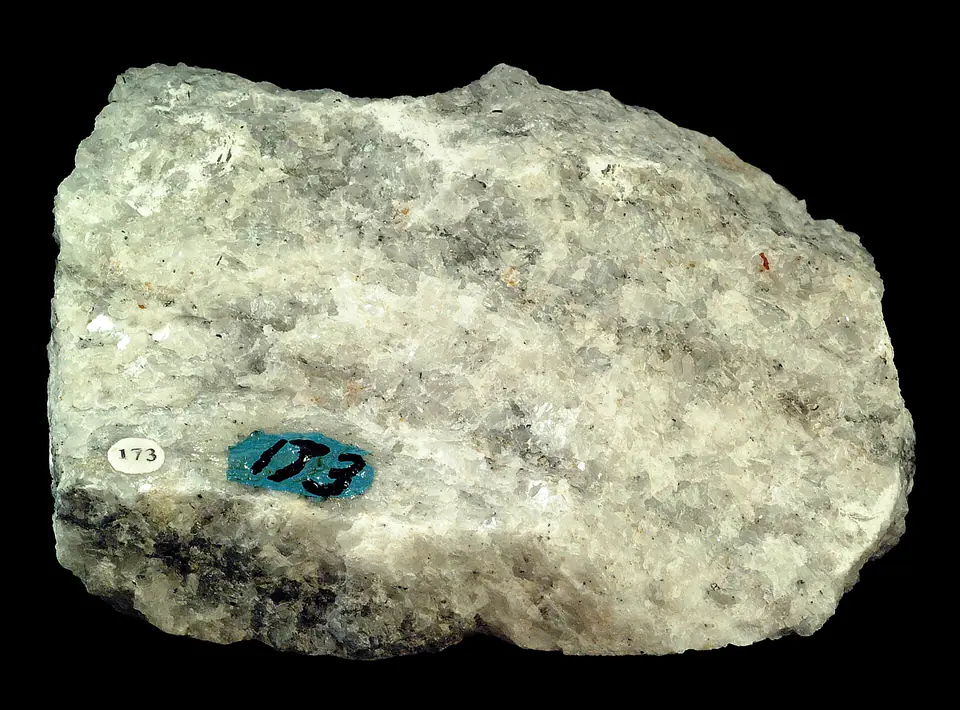
Both may react with acid. Use texture to separate them: recognizable sedimentary particles and bedding favor limestone; a sugary, interlocking crystalline mosaic favors marble.
Limestone and Marble comparison table
| Property | Limestone | Marble | How to use it |
|---|---|---|---|
| Texture | Micrite, fossils, ooids, shell fragments, or other sedimentary grains may be visible | Interlocking calcite or dolomite crystals produce a crystalline, sometimes sparkling surface | Texture distinguishes the rock histories more reliably than color. |
| Structures | Bedding and fossils may remain intact | Recrystallization commonly weakens or erases fossils and primary sedimentary structures | Preserved fossils strongly favor limestone, although some marbles retain ghost structures. |
| Acid response | Calcitic limestone fizzes readily; dolostone reacts more weakly | Calcitic marble also fizzes readily; dolomitic marble is weaker unless powdered | Acid confirms carbonate but usually does not separate limestone from marble. |
| Breakage | May break through mud, grains, fossils, and cement | Breaks through an interlocking crystalline aggregate | A fresh surface exposes the fabric hidden by polish or weathering. |
A practical identification sequence
- 1
Inspect an unpolished fresh surface with a hand lens.
- 2
Look for fossils, ooids, mud, bedding, or discrete sedimentary grains.
- 3
Check whether the surface is instead a continuous mosaic of interlocking carbonate crystals.
- 4
Use a properly controlled acid test only after texture, and interpret it as a carbonate test.
Where the distinction gets difficult
- The building-stone trade may call polishable limestone “marble.”
- Fine-grained marble and recrystallized limestone can require thin-section study.
- Do not apply acid to monuments, finished stone, fossils, or protected outcrops.
Use several independent observations. This comparison supports preliminary field identification, not laboratory confirmation, appraisal, proof of origin, or collecting permission.
Limestone vs. marble FAQ
Does marble fizz in acid?
Calcite-rich marble usually reacts strongly with dilute acid, just as calcitic limestone does. The reaction identifies carbonate, not metamorphic grade.
Can marble contain fossils?
Metamorphism commonly destroys or distorts fossils, but weakly metamorphosed carbonate can preserve remnants or ghost outlines.
Is polished marble always metamorphic?
No. Commercial naming includes some unmetamorphosed limestones, so geological identification should use fabric rather than a retail label.
Authoritative sources
LithoMap wrote this comparison in original language from the physical properties and geological concepts supported by these public scientific references.
- How Rocks Are Classified U.S. National Park Service
- Rocks and Minerals U.S. National Park Service
- What is the difference between a rock and a mineral? U.S. Geological Survey
Editorial review: September 17, 2026.