
.jpg)
What is marble?
Calcite or dolomite dominates marble. Graphite, mica, silicate minerals, iron oxides, or other impurities create veins, colors, and patterns. Commercial “marble” includes some polishable limestones that are not metamorphic marble.
What does marble look like?
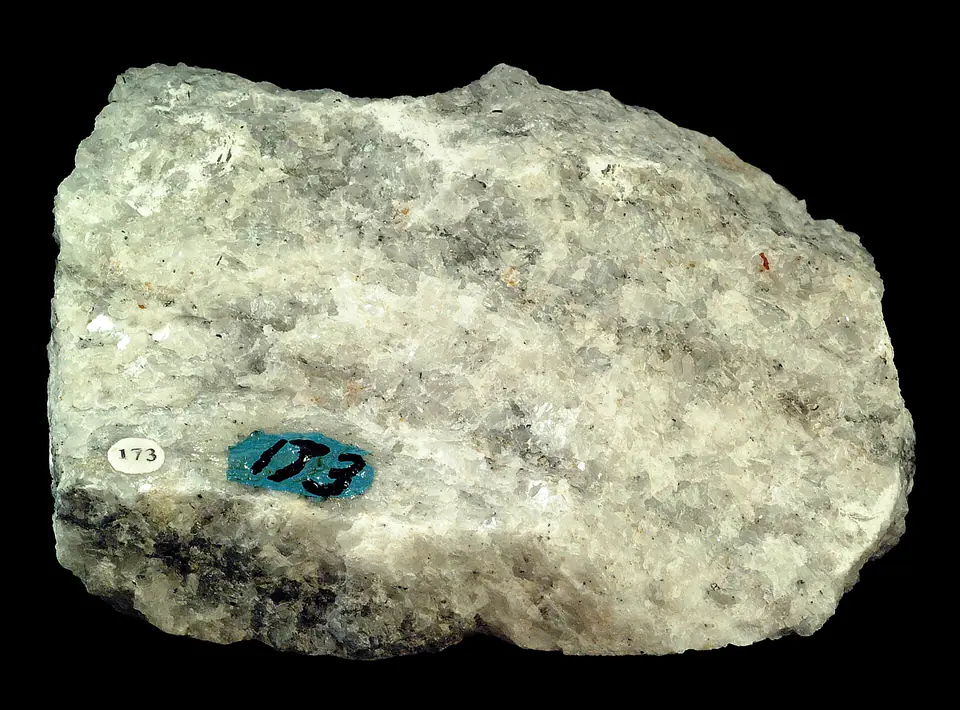
Crystals form an interlocking mosaic that sparkles on a fresh surface. Grain size ranges from fine to coarse, and original fossils or bedding may be partly or completely erased.
Impure marble can contain bands or patches of noncarbonate minerals. Weathered calcitic surfaces may become rough as crystals dissolve.
Identification tests
Begin with observation and use the least destructive test first. Results can change with weathering, mixtures, coatings, and grain size. Review the step-by-step field-test methods before altering an unfamiliar specimen.
Acid
Calcitic marble fizzes strongly; dolomitic marble is weaker unless powderedConfirms carbonate-rich composition when used safely.
Hardness
Calcite-rich grains are about Mohs 3Helps separate marble from quartzite.
Texture
Interlocking crystalline mosaic rather than sedimentary grainsSeparates marble from most unmetamorphosed limestone.
Useful procedures: Acid reaction test · Mohs hardness test
Common lookalikes
How does it form?
Marble forms when heat, pressure, and fluids recrystallize limestone or dolostone without completely melting it.
Contact metamorphism near an intrusion may make relatively unfoliated marble, while regional metamorphism can deform and mix carbonate layers with adjacent rocks.
Geologic setting and occurrence
Marble occurs in metamorphic belts and around igneous intrusions where carbonate protoliths were heated and recrystallized.
A polished architectural slab sold as marble may be geological marble, limestone, serpentinite, or another decorative stone.
Uses and significance
Marble is used for sculpture, monuments, tile, dimension stone, and crushed carbonate products. Mineral impurities strongly influence appearance and durability.
Field notes
- Acid can permanently etch polished stone; never test monuments or finished surfaces.
- Quarries and abandoned workings are dangerous and usually restricted.
- Do not assume white crystalline rock is marble without hardness and acid checks.
This guide supports preliminary field identification, not a laboratory determination, appraisal, hazard assessment, or statement of ownership or collecting permission. Verify land status and local rules before handling or collecting material.
Authoritative sources
LithoMap wrote this guide in original language using the scientific concepts and physical-property standards supported by these sources.
- How Rocks Are Classified U.S. National Park Service
- Rocks and Minerals U.S. National Park Service
- What is the difference between a rock and a mineral? U.S. Geological Survey
Editorial review: September 17, 2026.