
.jpg)
What is gabbro?
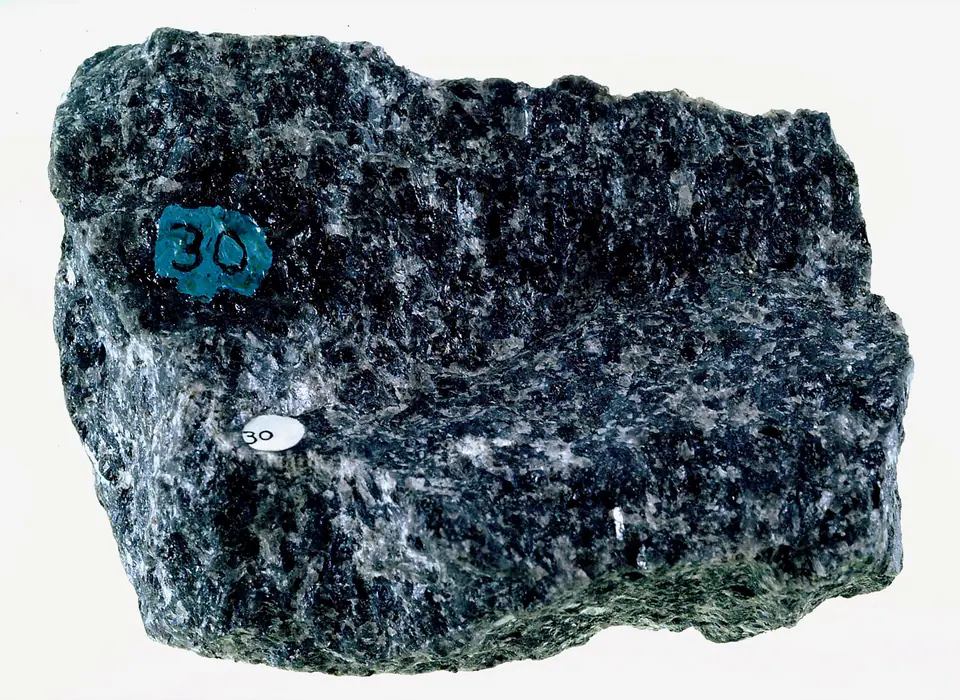
Typical gabbro contains calcium-rich plagioclase plus pyroxene, with variable olivine, amphibole, and oxide minerals. Mineral proportions define related names such as norite, troctolite, and anorthosite, so “gabbroic” may be the most honest field description.
What does gabbro look like?
Fresh gabbro is commonly black, dark green, or charcoal gray with paler plagioclase grains. Grain size ranges from a few millimeters to much larger crystals.
Alteration can replace mafic minerals with green amphibole, chlorite, or serpentine and can cloud plagioclase, making old gabbro look mottled or greenstone-like.
Identification tests
Begin with observation and use the least destructive test first. Results can change with weathering, mixtures, coatings, and grain size. Review the step-by-step field-test methods before altering an unfamiliar specimen.
Grain size
Visible, interlocking crystalsDistinguishes gabbro from fine-grained basalt.
Color index
A substantial proportion of dark mafic mineralsUsually darker than diorite, although plagioclase-rich varieties overlap.
Magnetism
May be weakly to noticeably magneticIron oxides can support the identification, but magnetism is variable and not diagnostic alone.
Useful procedures: Mineral magnetism test
Common lookalikes
Basalt
Has crystals too small to identify easily and may contain vesicles; gabbro cooled slowly and is coarse grained.
Diorite
Usually has a more even salt-and-pepper balance and a less mafic composition.
Amphibolite
Metamorphic amphibolite commonly shows mineral alignment or foliation and is dominated by amphibole plus plagioclase.
How does it form?
Gabbro crystallizes slowly from mafic magma below the surface. It forms in layered intrusions, plutons, dikes, and the lower part of oceanic crust.
Crystal settling and repeated magma input can produce igneous layering, but not every striped dark intrusive rock is gabbro.
Geologic setting and occurrence
Gabbro occurs in oceanic crust exposed on land, mafic intrusive complexes, layered intrusions, and deeply eroded volcanic systems. Glaciers and rivers can move durable blocks far from bedrock.
Dark color alone is insufficient: diabase, amphibolite, basalt, pyroxenite, and altered mafic rocks can be similar.
Uses and significance
Gabbro and commercially related dark stones are used for aggregate, dimension stone, monuments, and polished architectural surfaces.
Field notes
- Use grain size and interlocking texture before color.
- Layered intrusions can contain economically important minerals, but a hand specimen does not demonstrate an ore body.
- Do not enter abandoned mines or active quarries.
This guide supports preliminary field identification, not a laboratory determination, appraisal, hazard assessment, or statement of ownership or collecting permission. Verify land status and local rules before handling or collecting material.
Authoritative sources
LithoMap wrote this guide in original language using the scientific concepts and physical-property standards supported by these sources.
- Igneous Rocks U.S. National Park Service
- How Rocks Are Classified U.S. National Park Service
- Rocks and Minerals U.S. National Park Service
- What is the difference between a rock and a mineral? U.S. Geological Survey
Editorial review: September 17, 2026.