
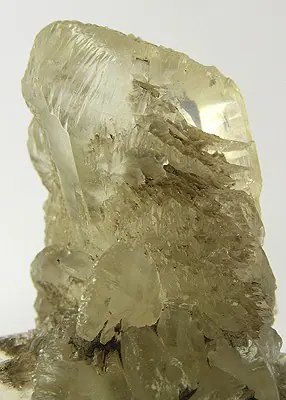

What is gypsum?
Gypsum is hydrated calcium sulfate. Its structural water distinguishes it from anhydrite, the water-free calcium sulfate mineral.
What does gypsum look like?
Transparent plates are called selenite; fibrous satin spar has a silky sheen; fine massive alabaster is compact and often white or softly colored.
Sand inclusions can produce rosette-shaped aggregates. Color may reflect clay, iron oxide, organic matter, or other impurities.
Identification tests
Begin with observation and use the least destructive test first. Results can change with weathering, mixtures, coatings, and grain size. Review the step-by-step field-test methods before altering an unfamiliar specimen.
Hardness
2A fingernail scratches it readily.
Streak
WhiteConsistent but not unique.
Cleavage
Perfect in one direction, good in two othersThin plates may flex but are not elastic like mica.
Acid
No characteristic effervescenceSeparates gypsum from calcite.
Useful procedures: Mohs hardness test · Mineral streak test · Cleavage versus fracture · Acid reaction test
Common lookalikes
How does it form?
Gypsum commonly precipitates as saline water evaporates in restricted basins, playas, and sabkhas. It also forms by hydration of anhydrite and through reactions involving sulfide oxidation or volcanic gases.
Because gypsum dissolves readily, surface exposures can develop cavities, collapse features, and deeply weathered zones.
Geologic setting and occurrence
Gypsum occurs in evaporite layers, desert soils, caves, mines, and altered sulfide deposits. It may form large crystals or extensive sedimentary beds.
Delicate desert crystals and cave deposits can be scientifically or legally protected even where loose material seems abundant.
Uses and significance
Gypsum is used in wallboard, plaster, cement, soil treatment, sculpture, and casting. Heating drives off some water to make plaster products.
Field notes
- Use a fingernail test gently; crystals scratch and cleave easily.
- Avoid breathing gypsum or mixed mine dust.
- Stay out of abandoned mines and never collect cave formations.
This guide supports preliminary field identification, not a laboratory determination, appraisal, hazard assessment, or statement of ownership or collecting permission. Verify land status and local rules before handling or collecting material.
Authoritative sources
LithoMap wrote this guide in original language using the scientific concepts and physical-property standards supported by these sources.
- Minerals and their physical properties U.S. National Park Service
- Mohs Hardness Scale U.S. National Park Service
- Natural Gemstones: Mineral Gemstones U.S. Geological Survey
Editorial review: September 17, 2026.