

What is barite?
Barite is barium sulfate. Strontium, lead, calcium, and other elements may substitute in limited amounts, and natural specimens commonly contain quartz, calcite, fluorite, sulfides, or iron-oxide coatings.
What does barite look like?
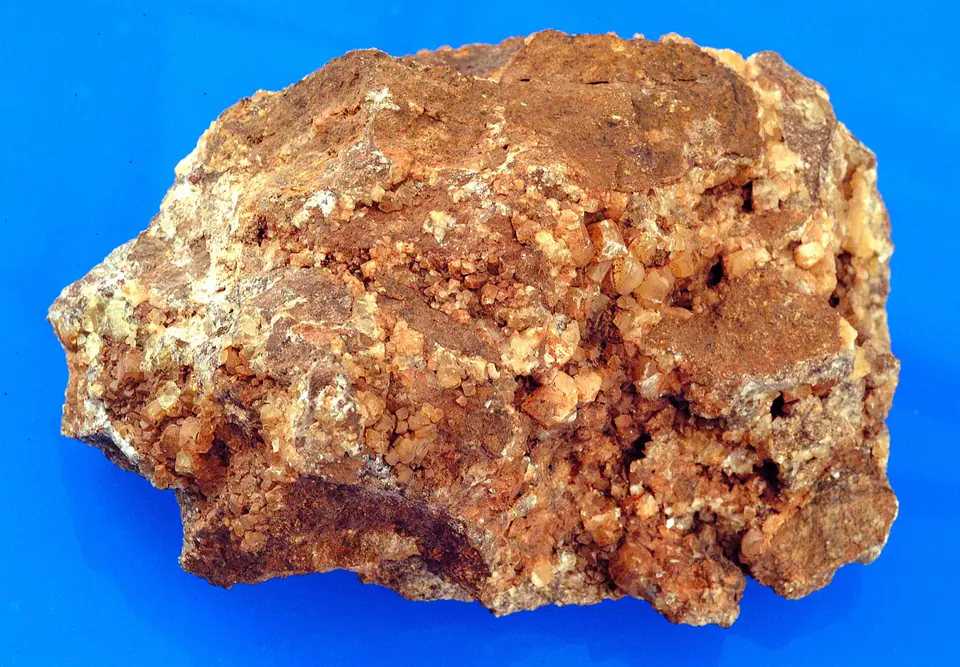
Crystals may be tabular, bladed, prismatic, cockscomb-like, or arranged in rosettes. Massive barite can be white, colorless, gray, tan, yellow, blue, reddish, or brown.
Fresh surfaces are vitreous to pearly, while weathered or iron-stained material can appear dull and earthy. Density is usually more informative than color.
Identification tests
Begin with observation and use the least destructive test first. Results can change with weathering, mixtures, coatings, and grain size. Review the step-by-step field-test methods before altering an unfamiliar specimen.
Density
High; specific gravity commonly near 4.5Feels conspicuously heavy compared with quartz, calcite, or gypsum of equal size.
Hardness
About 3 to 3.5Scratched by steel and near the hardness of calcite.
Streak
WhiteExpected for fresh barite but not distinctive alone.
Acid response
No ordinary effervescenceSeparates barite from calcite despite similar hardness.
Useful procedures: Specific gravity and density test · Mohs hardness test · Mineral streak test · Acid reaction test
Common lookalikes
How does it form?
Barite precipitates from hydrothermal fluids in veins and replacement deposits, forms in sedimentary exhalative systems, and occurs as concretions or beds in some marine sedimentary rocks.
It commonly accompanies fluorite, calcite, quartz, galena, sphalerite, and other vein minerals.
Geologic setting and occurrence
Barite occurs in veins, sediment-hosted deposits, marine beds, concretions, and some hot-spring or cave settings across the United States.
A heavy white mineral is not automatically barite; lead minerals, celestite, and manufactured material require consideration.
Uses and significance
Most barite is ground as a weighting agent in drilling fluids. It is also used in barium chemicals, radiation-shielding products, fillers, and selected medical or industrial applications.
Field notes
- Compare equal-size pieces when judging heft.
- Do not taste or ingest suspected barium minerals.
- Mine waste may contain lead, zinc, or other sulfides; avoid dust and wash hands.
This guide supports preliminary field identification, not a laboratory determination, appraisal, hazard assessment, or statement of ownership or collecting permission. Verify land status and local rules before handling or collecting material.
Authoritative sources
LithoMap wrote this guide in original language using the scientific concepts and physical-property standards supported by these sources.
- Barite Statistics and Information U.S. Geological Survey
- Minerals and their physical properties U.S. National Park Service
- Mohs Hardness Scale U.S. National Park Service
- Natural Gemstones: Mineral Gemstones U.S. Geological Survey
Editorial review: September 17, 2026.