Geologic formation field guide

United States geologic formations

Explore 36 comprehensive formation guides, balanced across six major U.S. regions. Every formation has an isolated, permanent page covering distribution, age, origin, rocks, fossils, minerals, resources, field context, and authoritative sources.

Download LithoMapPut U.S. geology in your pocket.Choose Google Play or the App Store.

Explore spatially

Navigate the rock record on a map

The overlay shows mapped geologic units from Macrostrat across the country. Select any colored area—or inspect the map center with a keyboard-accessible control—for source-map context. When LithoMap has completed an original formation profile, the selected unit links to its dedicated page.

Interactive geologic map

Zoom anywhere in the United States and select a colored unit. Units with a completed LithoMap profile link directly to their isolated guide page.

The interactive map loads as it approaches the screen.

The directory below remains available while the map loads.

The overlay is a blended visualization assembled from maps of different scales. Boundaries and names are approximate and should not be used to establish ownership, access, hazards, or collecting permission.

Formation profiles

The foundation collection contains exactly six important units from each major region. Future additions will arrive in balanced 12-page batches—two per region—rather than as thin, automatically generated pages.

Region 1 of 6

Pacific Coast

6 formation guides
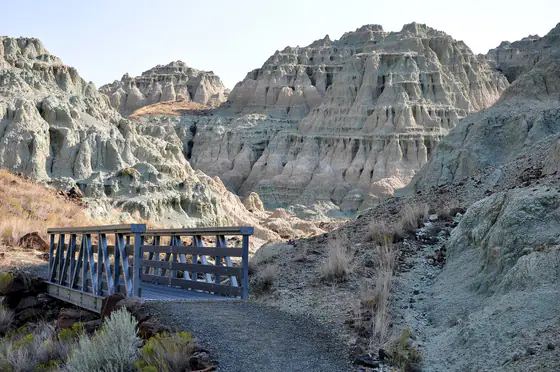
Blue-green John Day Formation badlands along the Lower Blue Basin Trail in Oregon

Late Eocene to early Miocene

John Day Formation

The John Day Formation is a long, ash-rich record of changing Oregon landscapes, preserving plants and mammals through a transition from warm forests to cooler, drier open environments.

Region
John Day Basin and central Oregon
Age
Approximately 39–18 million years ago
Primary rocks
Tuff, Claystone, Siltstone
Read the formation guide
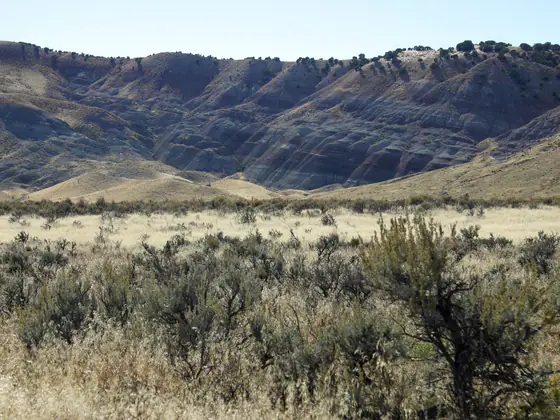
Eroded Clarno-area rock formations above the John Day River in Oregon

Eocene

Clarno Formation

The Clarno Formation records Eocene volcanoes and subtropical forests in Oregon, where lava, ash, and lahars buried plants and animals and created unusually rich fossil sites.

Region
Central and north-central Oregon
Age
Approximately 54–39 million years ago
Primary rocks
Lava, Tuff, Lahar deposits
Read the formation guide
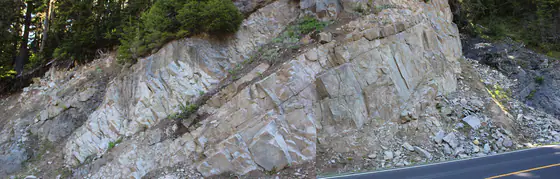
Roadcut exposing volcanic rocks of the Ohanapecosh Formation in Washington

Late Eocene to Oligocene

Ohanapecosh Formation

The Ohanapecosh Formation is a thick, altered volcanic succession beneath parts of the Washington Cascades, built by ancient eruptions, underwater debris flows, ash, and lava long before modern Mount Rainier formed.

Region
Southern and central Cascade Range
Age
Age assignments vary; much of the mapped unit is late Eocene to Oligocene
Primary rocks
Volcanic breccia, Tuff, Volcanic sandstone
Read the formation guide
Thinly layered Monterey Formation exposed at Gaviota State Park, California

Miocene

Monterey Formation

The Monterey Formation is a varied marine succession of siliceous, organic-rich, and carbonate rocks that records exceptionally productive Miocene seas along coastal California.

Region
Coastal California basins and ranges
Age
Principally middle to late Miocene; local sections extend beyond that interval
Primary rocks
Siliceous shale, Chert, Porcelanite
Read the formation guide
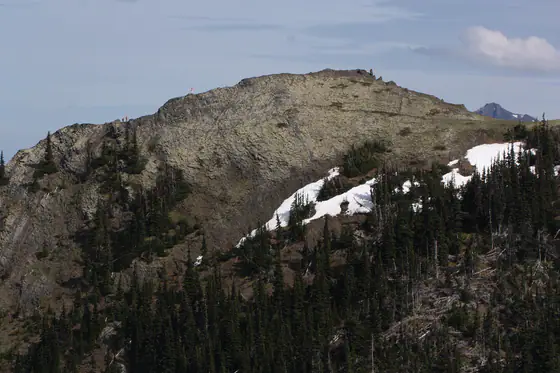
Basalt flows and flow breccias of the Crescent Formation on Blue Mountain in Olympic National Park

Early to middle Eocene

Crescent Formation

The Crescent Formation is an immense Eocene basaltic foundation of the Olympic Peninsula, assembled largely by submarine eruptions before the volcanic crust was attached to western North America.

Region
Olympic Peninsula and southern Vancouver Island region
Age
Mostly early to middle Eocene, with age varying by mapped subdivision
Primary rocks
Basalt, Pillow lava, Volcanic breccia
Read the formation guide
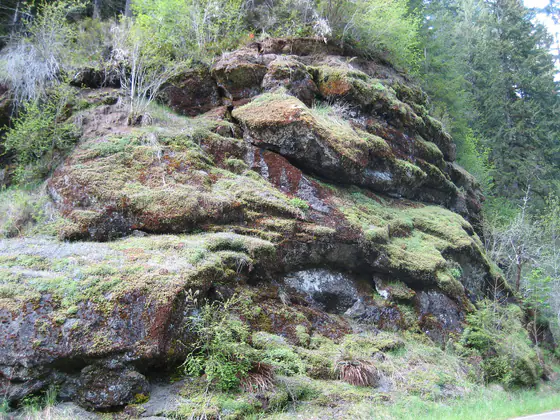
Dark volcanic rocks exposed in the Oregon Coast Range

Paleocene to early Eocene

Siletz River Volcanics

The Siletz River Volcanics are a thick stack of oceanic basalt, pillow lava, and fragmental volcanic rock that forms much of the basement beneath the Oregon Coast Range.

Region
Central and northern Oregon Coast Range
Age
Largely about 56–49 million years ago within the broader Siletzia volcanic province
Primary rocks
Basalt, Pillow basalt, Tuff breccia
Read the formation guide

Region 2 of 6

Colorado Plateau / Rockies

6 formation guides
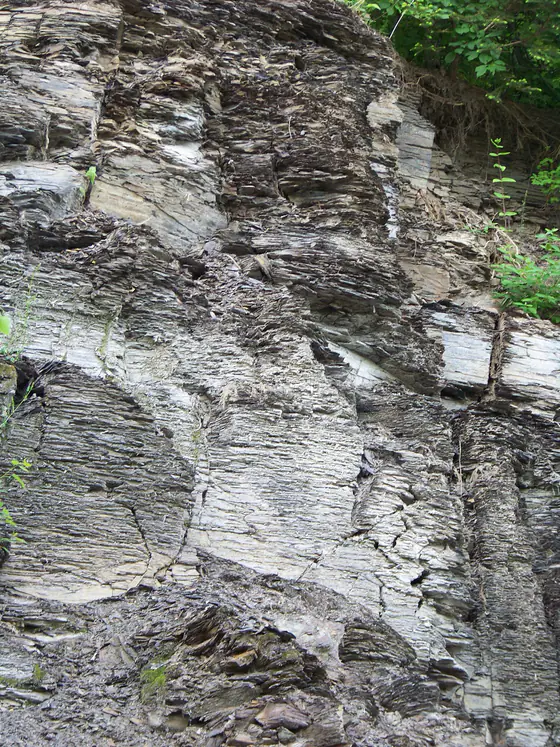
Distinctively banded Morrison Formation outcrop in Dinosaur National Monument, Utah

Late Jurassic

Morrison Formation

A broad sheet of continental sediment famous for Late Jurassic dinosaurs, the Morrison records shifting rivers and floodplains across much of the western interior before the modern Rocky Mountains existed.

Region
Western Interior and Colorado Plateau
Age
About 157–150 million years ago
Primary rocks
Mudstone, Sandstone, Siltstone
Read the formation guide
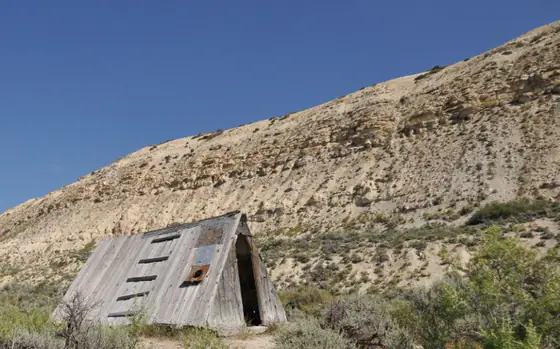
Layered Green River Formation rising behind the historic Haddenham Cabin at Fossil Butte National Monument

Eocene

Green River Formation

The Green River Formation is the layered archive of large Eocene lake systems in Wyoming, Utah, and Colorado, preserving exceptional fossils, organic-rich mudrocks, and an unusual suite of minerals formed in changing lake water.

Region
Green River, Uinta, and Piceance basins
Age
Principally about 54–43 million years ago, varying by basin and member
Primary rocks
Limestone, Dolostone, Mudstone
Read the formation guide
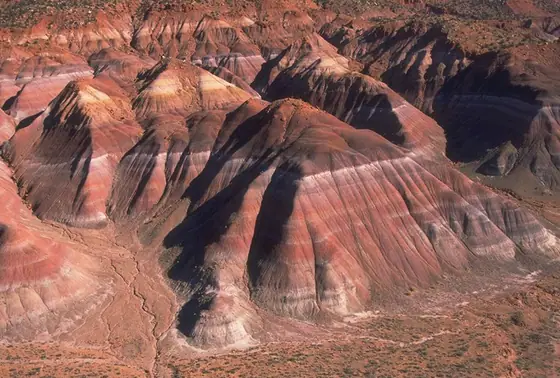
Multicolored badlands carved into the Chinle Formation

Late Triassic

Chinle Formation

The Chinle is a colorful Late Triassic river-and-floodplain record of the American Southwest, celebrated for petrified wood and for fossils that document ecosystems long before the rise of familiar Jurassic dinosaurs.

Region
Colorado Plateau and adjoining Southwest
Age
Broadly about 230–201 million years ago; exact ranges vary by member and region
Primary rocks
Mudstone, Siltstone, Sandstone
Read the formation guide
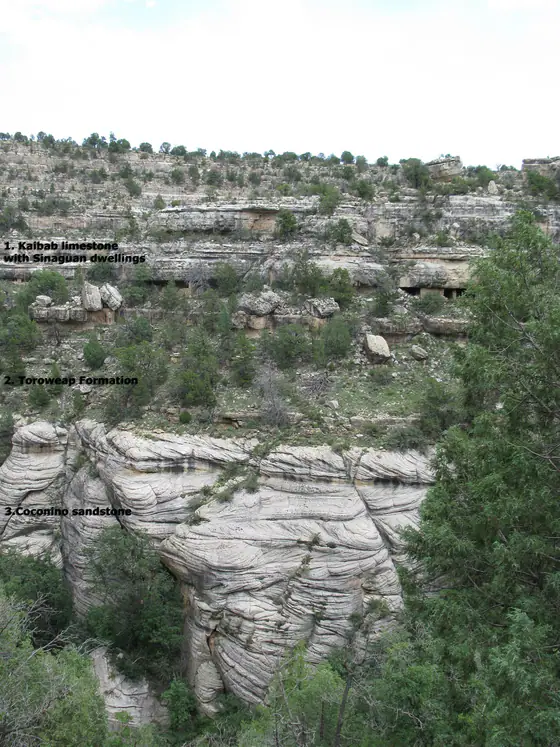
Layered Kaibab Limestone and associated strata at Walnut Canyon National Monument, Arizona

Early Permian

Kaibab Formation

The Kaibab forms much of the resistant rim of the Grand Canyon and records a shallow Permian sea whose limestones, dolostones, sandstones, chert, and gypsum capture repeated marine advances and retreats.

Region
Colorado Plateau and eastern Basin and Range
Age
Leonardian regional stage; approximately 270 million years old
Primary rocks
Limestone, Dolostone, Sandstone
Read the formation guide
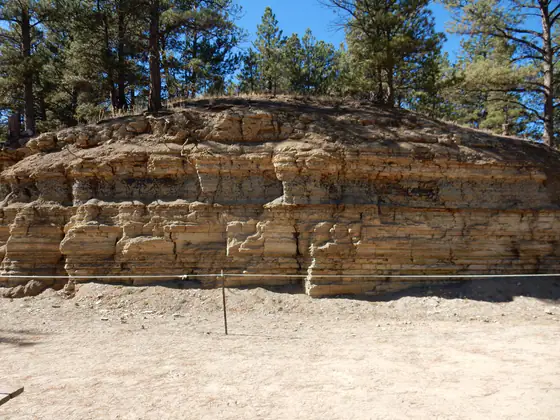
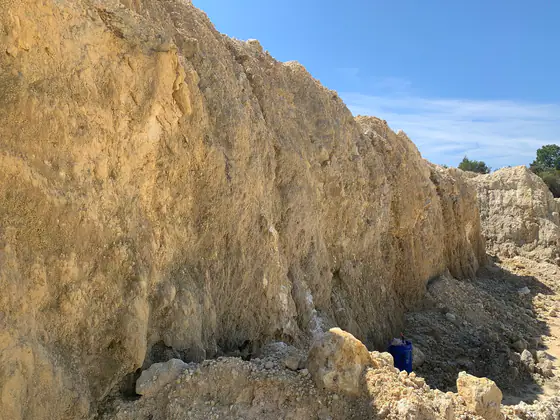
Paper shale exposure of the Florissant Formation at a fossil quarry in Colorado

Late Eocene

Florissant Formation

The Florissant Formation records a high-elevation Eocene lake periodically disturbed by volcanic eruptions, with fine lake beds preserving insects and leaves while volcanic mudflows buried enormous redwood relatives.

Region
Central Colorado volcanic highlands
Age
About 34 million years ago
Primary rocks
Shale, Mudstone, Tuff
Read the formation guide
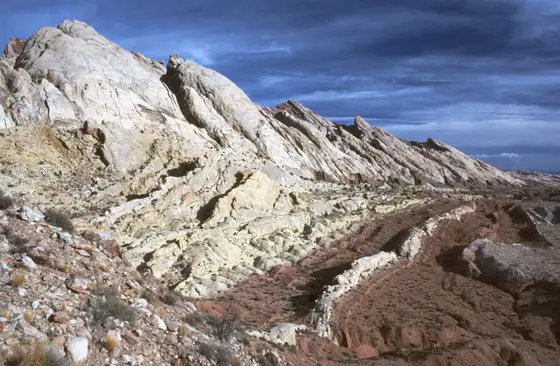
Pale Navajo Sandstone forming a prominent ridge in the San Rafael Reef, Utah

Early Jurassic

Navajo Sandstone

The Navajo Sandstone is the rock record of an immense Jurassic sand sea, recognizable by sweeping cross-beds, pale cliffs, rounded domes, and a quartz-rich fabric that stores and transmits groundwater.

Region
Colorado Plateau and adjoining Southwest
Age
Principally about 190–174 million years ago; local age assignments vary
Primary rocks
Quartz sandstone, Silty sandstone, Minor limestone
Read the formation guide

Region 3 of 6

Great Plains

6 formation guides
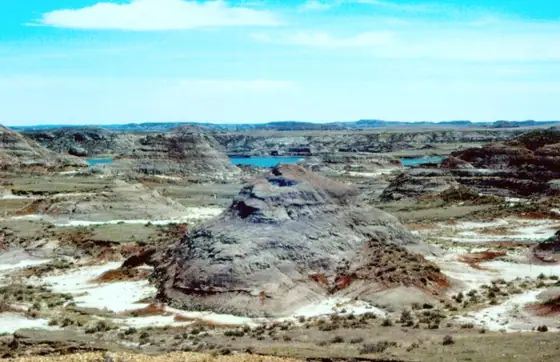
Eroded Hell Creek Formation badlands near Fort Peck Reservoir, Montana

Latest Cretaceous

Hell Creek Formation

Hell Creek records the last slice of dinosaur-dominated time in the northern Great Plains, when rivers crossed a low coastal plain east of the rising western mountains and near the retreating Western Interior Seaway.

Region
Northern Great Plains
Age
Late Maastrichtian, immediately before the end-Cretaceous extinction
Primary rocks
Sandstone, Siltstone, Claystone
Read the formation guide
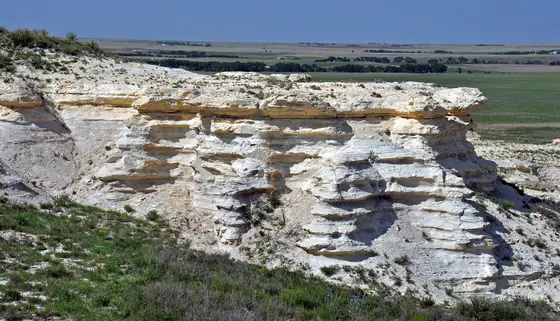
Rhythmically layered chalk badlands of the Niobrara Formation near Castle Rock, Kansas

Late Cretaceous

Niobrara Formation

The Niobrara is a chalky marine unit deposited in the Western Interior Seaway, preserving abundant evidence of Cretaceous ocean life and forming pale cliffs, benches, and subsurface petroleum reservoirs across the central United States.

Region
Great Plains and Rocky Mountain basins
Age
Broadly Turonian through Campanian; local member ages vary
Primary rocks
Chalk, Calcareous shale, Limestone
Read the formation guide
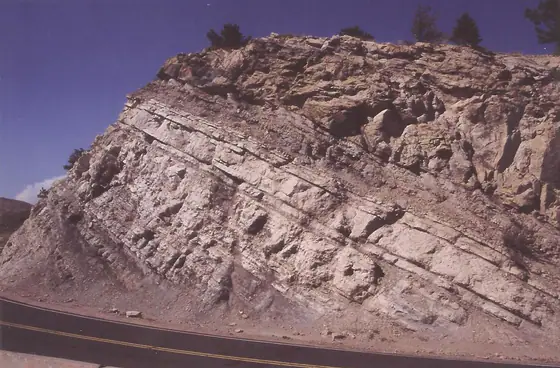
Tilted beds of the Dakota interval at Dinosaur Ridge near Golden, Colorado

Early to early Late Cretaceous

Dakota Sandstone

Dakota is a long-used and regionally complicated Cretaceous rock name for sandstone-rich strata deposited as rivers and coastal environments shifted ahead of the Western Interior Seaway.

Region
Great Plains, Rocky Mountain foothills, and Colorado Plateau margins
Age
Age and included strata vary by region; commonly Albian to Cenomanian
Primary rocks
Sandstone, Shale, Claystone
Read the formation guide
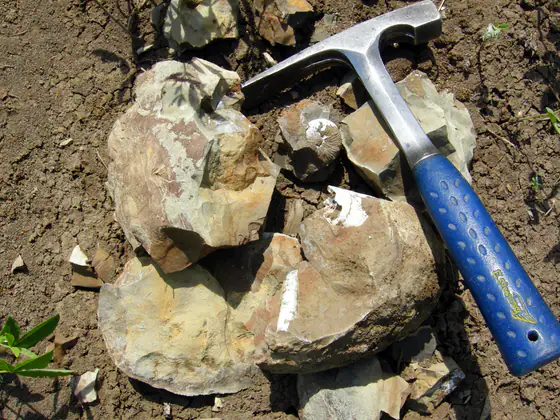
Broken fossil-bearing concretion weathered from the Pierre Shale near Ekalaka, Montana

Late Cretaceous

Pierre Shale

The Pierre Shale is a vast Late Cretaceous marine succession of the Great Plains, known for gray shale, bentonite, fossil-bearing concretions, and pronounced engineering problems on clay-rich slopes.

Region
Northern and central Great Plains
Age
Mostly Campanian to Maastrichtian; member ages vary across the Great Plains
Primary rocks
Shale, Marl, Siltstone
Read the formation guide
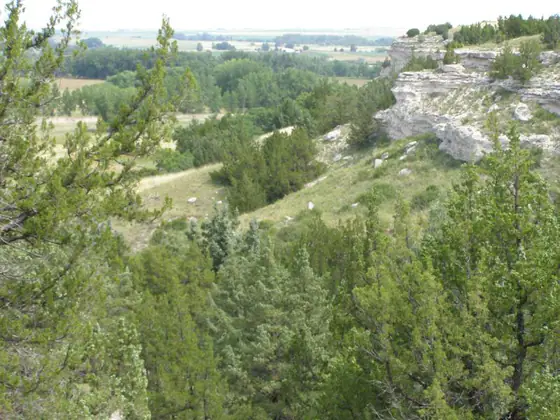
Ogallala Group rocks exposed at Ash Hollow State Historical Park, Nebraska

Miocene to Pliocene

Ogallala Formation

The Ogallala Formation is a widespread apron of river-borne sediment shed from the Rocky Mountains, forming much of the High Plains and containing the principal geologic material of the High Plains aquifer.

Region
High Plains east of the Rocky Mountains
Age
Principally late Miocene to early Pliocene, varying across the High Plains
Primary rocks
Sand, Gravel, Silt
Read the formation guide
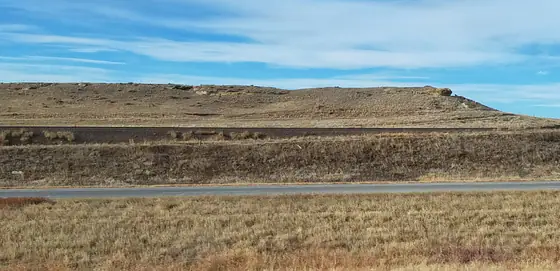
Sandstone-capped ridge of the Fox Hills Formation in eastern Colorado

Latest Cretaceous

Fox Hills Sandstone

The Fox Hills Sandstone records the final retreat of the Western Interior Seaway across the northern Great Plains in shoreface, barrier-island, and tidal deposits rich in marine traces and shells.

Region
Northern and central Great Plains and adjacent basins
Age
Late Campanian to Maastrichtian, depending on basin and mapped interval
Primary rocks
Sandstone, Siltstone, Shale
Read the formation guide

Region 4 of 6

Midwest / Great Lakes

6 formation guides
Ordovician brachiopod fossils preserved in limestone of the Trenton Group

Middle to Late Ordovician

Trenton Limestone

Trenton Limestone is a historically important Ordovician carbonate name applied to fossil-rich marine rock across parts of the eastern and interior United States, with modern rank and subdivisions that vary by basin.

Region
Appalachian, Michigan, and adjacent interior basins
Age
Ordovician; exact interval and whether Trenton is a formation or group vary by region
Primary rocks
Limestone, Shaly limestone, Calcareous shale
Read the formation guide
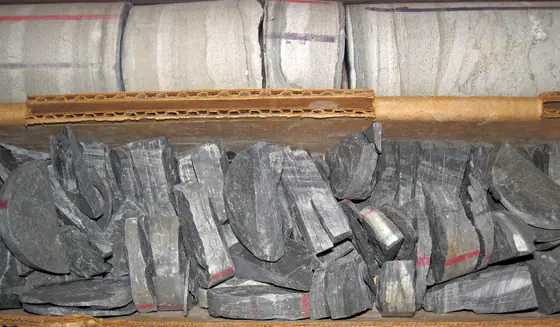
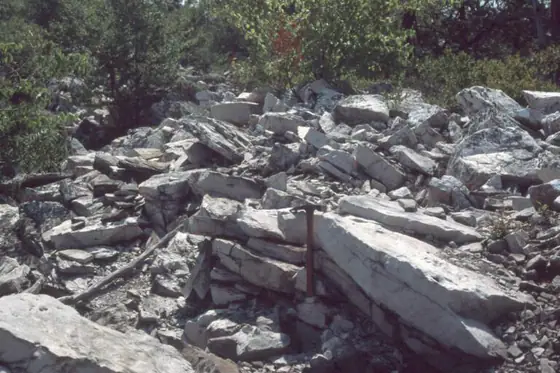
Dark, chippy-weathering New Albany Shale exposed at MacDonald Knob in Kentucky

Late Devonian to earliest Mississippian

New Albany Shale

The New Albany Shale is an organic-rich marine unit of the Illinois Basin whose dark beds record restricted seafloor conditions and whose lighter layers capture changes in oxygen and sediment supply.

Region
Illinois Basin and adjacent Cincinnati Arch
Age
Mostly Late Devonian, with locally older basal or younger upper beds
Primary rocks
Black shale, Gray-green shale, Siltstone
Read the formation guide
Layered Maquoketa Group exposure at Kankakee River State Park, Illinois

Late Ordovician

Maquoketa Shale

The Maquoketa Shale is a widespread Upper Midwest marine succession of shale and carbonate beds, known for diverse fossils and for major changes in facies and stratigraphic rank across state lines.

Region
Upper Mississippi Valley and Great Lakes basins
Age
Late Ordovician; subdivisions and rank vary across the Upper Midwest
Primary rocks
Shale, Mudstone, Limestone
Read the formation guide
Pale St. Peter Sandstone bluff beneath Joachim Dolomite in Pacific, Missouri

Middle Ordovician

St. Peter Sandstone

The St. Peter Sandstone is a notably quartz-rich Ordovician unit spread across the central United States, important as an aquifer, industrial-sand resource, and record of repeated marine reworking.

Region
Upper Mississippi Valley and interior basins
Age
Middle Ordovician, with regional variation in its precise stratigraphic limits
Primary rocks
Quartz sandstone, Sandy dolostone, Shale
Read the formation guide
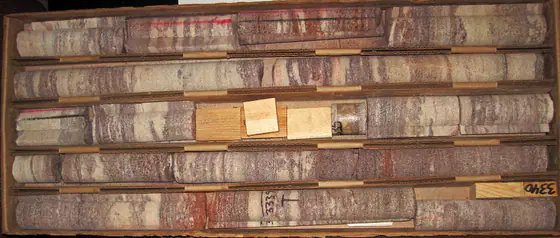
Shale-rich Eau Claire Formation displayed in a deep Warren County drill core from Ohio

Late Cambrian

Eau Claire Formation

The Eau Claire Formation is a fine-grained Cambrian marine interval above the Mount Simon Sandstone, notable for trilobite-bearing beds and for acting as a regional groundwater confining unit.

Region
Upper Mississippi Valley and northern interior basins
Age
Late Cambrian; correlations and rank vary across the northern Midwest
Primary rocks
Fine sandstone, Siltstone, Shale
Read the formation guide
Iron-stained Mount Simon Sandstone displayed in a deep Warren County drill core from Ohio

Late Cambrian

Mount Simon Sandstone

The Mount Simon Sandstone is a thick basal Cambrian sandstone laid across ancient crystalline basement, serving today as a major deep aquifer and a target for subsurface fluid storage research.

Region
Upper Midwest and central interior basins
Age
Late Cambrian, resting on much older Precambrian basement
Primary rocks
Quartz sandstone, Conglomeratic sandstone, Shaly sandstone
Read the formation guide

Region 5 of 6

Appalachians

6 formation guides
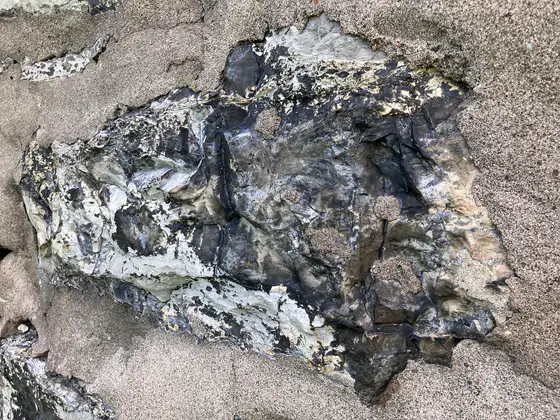
Dark Marcellus Shale exposed along a road near Marcellus, New York

Middle Devonian

Marcellus Shale

The Marcellus is an organic-rich Devonian marine shale of the Appalachian Basin, important both as a record of an ancient sea and as a deeply buried natural-gas reservoir whose name and rank vary across state lines.

Region
Appalachian Basin
Age
Early Middle Devonian, Eifelian; roughly 393–388 million years ago
Primary rocks
Black shale, Gray shale, Siltstone
Read the formation guide
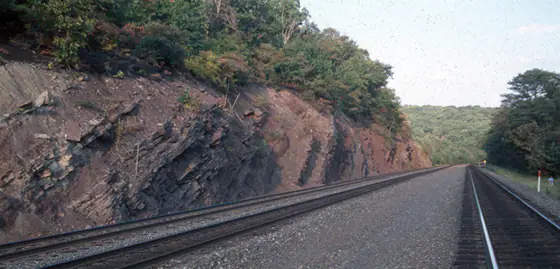
Red Catskill Formation rocks exposed along Horseshoe Curve in Pennsylvania

Late Devonian

Catskill Formation

The Catskill Formation is a thick Appalachian red-bed succession built by rivers carrying sediment westward from rising Acadian mountains during Late Devonian time.

Region
Appalachian Basin
Age
Mostly Late Devonian; upper limits and rank vary regionally
Primary rocks
Red sandstone, Siltstone, Shale
Read the formation guide
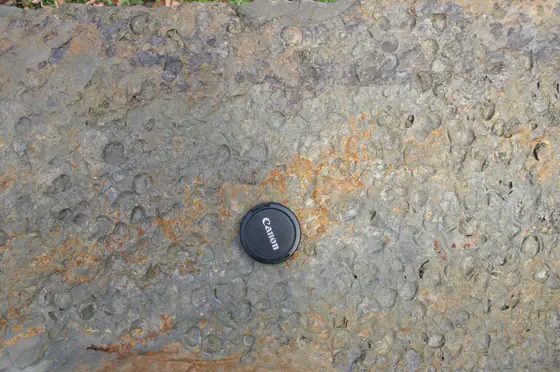
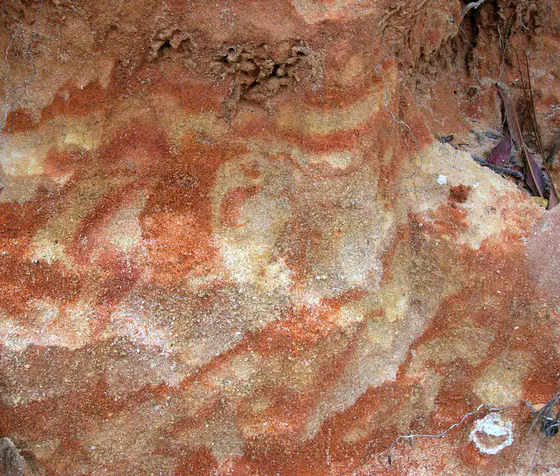
Dense brachiopod casts in Lock Haven Formation rock at Leberfinger Quarry, Pennsylvania

Late Devonian

Lock Haven Formation

The Lock Haven Formation is a fossil-bearing marine transition of shale, siltstone, and sandstone that records a Late Devonian shoreline advancing westward across Pennsylvania.
Region
North-central Appalachian Basin
Age
Late Devonian, between deeper-water Brallier rocks and the Catskill transition
Primary rocks
Shale, Siltstone, Sandstone
Read the formation guide
Blocky Pocono Formation rocks split by weathering at Ricketts Glen State Park, Pennsylvania

Early Mississippian

Pocono Formation

The Pocono Formation is a resistant Appalachian sandstone succession that records rivers, deltas, and shallow coastal settings near the beginning of Mississippian time.

Region
Central Appalachian Plateau and Valley and Ridge
Age
Mostly Early Mississippian; lower beds locally approach the Devonian boundary
Primary rocks
Sandstone, Siltstone, Shale
Read the formation guide
Resistant Tuscarora Formation sandstone outcrop in Pennsylvania

Latest Ordovician to Early Silurian

Tuscarora Formation

The Tuscarora Formation is a hard, quartz-rich ridge former of the central Appalachians, deposited around the Ordovician–Silurian transition as sand spread across a changing shallow sea.

Region
Appalachian Valley and Ridge
Age
Late Ordovician into Early Silurian, varying with regional definition
Primary rocks
Quartz sandstone, Quartzite, Conglomeratic sandstone
Read the formation guide
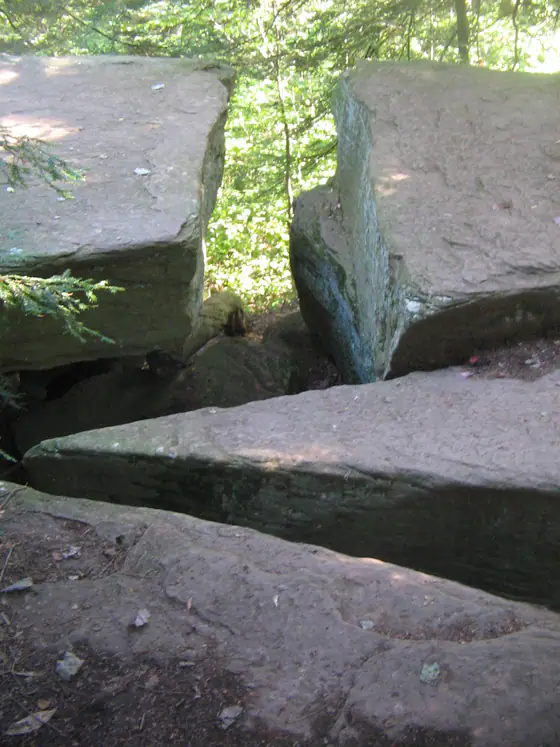
Blocks of fossiliferous Onondaga Limestone in the walls of Old Fort Erie

Middle Devonian

Onondaga Limestone

The Onondaga Limestone is a fossil-rich Devonian carbonate of the Appalachian Basin, forming a durable marine marker beneath younger black shales including the Marcellus.

Region
Northern and central Appalachian Basin
Age
Early Middle Devonian, with regional members and equivalent units
Primary rocks
Limestone, Cherty limestone, Shale
Read the formation guide

Region 6 of 6

Gulf / Atlantic

6 formation guides
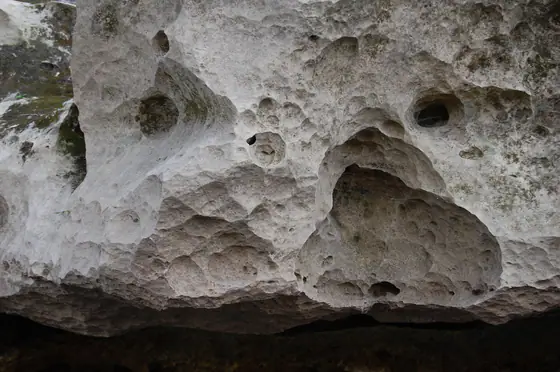
Pale fossiliferous Ocala Limestone exposed in Florida

Late Eocene

Ocala Limestone

The Ocala Limestone is a porous, fossil-rich Eocene carbonate spread across the Florida Platform and adjoining Coastal Plain, central to the region’s karst landscapes and groundwater system.

Region
Florida Platform and southeastern Coastal Plain
Age
Primarily late Eocene; mapped usage and subdivisions vary across the Southeast
Primary rocks
Fossiliferous limestone, Chalky limestone, Coquina
Read the formation guide
Pale Suwannee Limestone exposed at the surface in Florida

Oligocene

Suwannee Limestone

The Suwannee Limestone is an Oligocene marine carbonate beneath much of Florida and south Georgia, recognizable by fossil-rich limestone and important to regional groundwater and karst.

Region
Florida Platform and south Georgia Coastal Plain
Age
Mostly early Oligocene in current southeastern usage
Primary rocks
Limestone, Dolomitic limestone, Dolostone
Read the formation guide
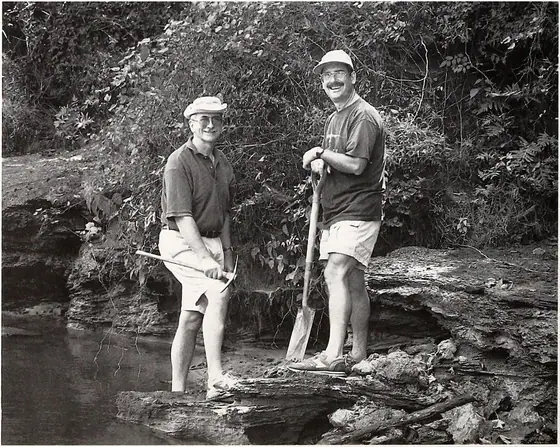
Historic photograph of a fossil-bearing Castle Hayne Limestone locality in North Carolina

Middle to late Eocene

Castle Hayne Limestone

The Castle Hayne Limestone is a highly fossiliferous Eocene carbonate of eastern North Carolina, formed from shell, bryozoan, and lime sediment on the Atlantic shelf.

Region
North Carolina Atlantic Coastal Plain
Age
Mainly middle Eocene, with broad age limits reported for some subsurface sections
Primary rocks
Fossiliferous limestone, Calcarenite, Calcirudite
Read the formation guide
Layered Yorktown Formation exposed at Carters Grove Bluffs in Virginia

Pliocene

Yorktown Formation

The Yorktown Formation is a shell-rich Pliocene marine deposit of the Atlantic Coastal Plain, preserving a diverse record of warm shallow seas before modern Chesapeake and Carolina landscapes formed.

Region
Central Atlantic Coastal Plain
Age
Mostly early to late Pliocene, approximately 4.5–3 million years old in well-dated sections
Primary rocks
Shelly sand, Clayey sand, Silt
Read the formation guide
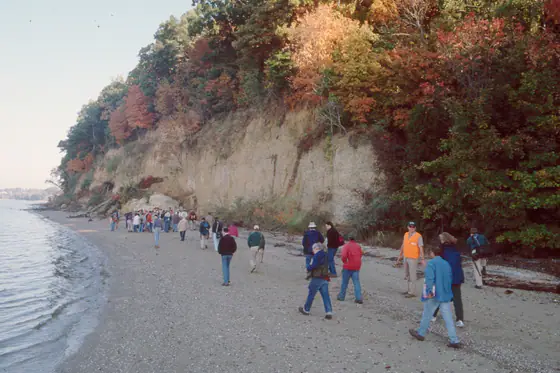
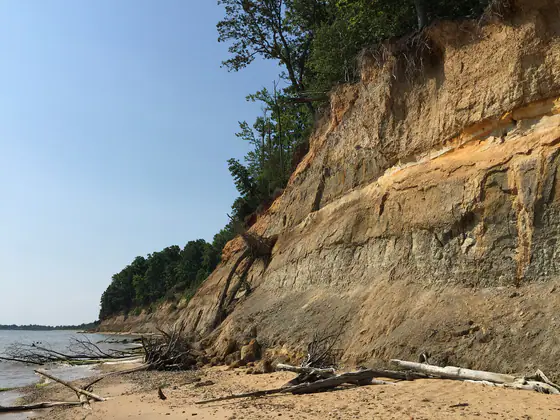
Sedimentary cliffs exposing the Calvert Formation at Calvert Cliffs State Park, Maryland

Early to middle Miocene

Calvert Formation

The Calvert Formation is a fossil-rich Miocene marine unit exposed spectacularly along Chesapeake Bay, recording changing shelf depths, productive waters, and repeated sedimentary cycles.

Region
Chesapeake Bay and central Atlantic Coastal Plain
Age
Mostly early to middle Miocene; local basal beds may be older
Primary rocks
Sand, Clay, Marl
Read the formation guide
Iron-stained Citronelle Formation sandstone with an Ophiomorpha burrow in Pensacola, Florida

Pliocene to possible early Pleistocene

Citronelle Formation

The Citronelle Formation is a weathered blanket of sand, gravel, silt, and clay across Gulf Coastal Plain uplands, recording large late Neogene river systems and a still-debated age.

Region
Northern Gulf Coastal Plain uplands
Age
Generally treated as Pliocene, with long-running regional debate over its upper age limit
Primary rocks
Sand, Gravel, Silt
Read the formation guide